Why SEO for LLMs and AI Search Fails Without Reliable First-Party Attribution Data
Your Shopify dashboard says you made $50,000 yesterday. Meta Ads claims it drove $30,000 of that. Google Ads takes credit for another $25,000. You look at your bank account and see only $45,000.
Where did the extra $10,000 go? It never existed.
Most D2C brands spend millions while guessing which half of their marketing budget actually drives revenue. Marketing chiefs are making multi-million dollar bets based on ghost numbers and broken signals. If you cannot see the full path from a first click to a final sale, you are not scaling predictably, you are relying on incomplete signals.
Here is why your data is broken and how to fix it.
Key Takeaways
- Most marketing data is incomplete due to browser limits and data silos. Safari ITP, adblockers, and disconnected tools erase large parts of the customer journey.
- Broken attribution weakens ROI decisions and indirectly impacts SEO for LLMs and AI Search by feeding AI systems incomplete performance signals.
- Event IQ creates a single source of truth. It unifies events, revenue, and engagement across channels so teams can see the full customer journey.
- Ingest IQ helps recover lost signals through server-side tracking by reducing browser-based data loss while remaining privacy-compliant.
- Ingest ID provides long-term, cross-device identity. Persistent first-party identifiers link customer actions over 180–365 days, revealing true attribution.
The Chaos of Disconnected Data Stores
Most D2C brands run on a stack of 10 to 15 different tools. You have your store on Shopify or Magento. You have your CRM in Klaviyo or HubSpot. You have your ads on Meta, Google, and TikTok. You track traffic in GA4.
The problem is that these tools operate in isolated systems with incompatible data models.
Isolated Pockets of Info
Each tool sees only a small slice of the customer. Shopify knows when a purchase happens. Meta knows when someone clicks an ad. GA4 knows someone visited a page.
But if a user clicks an ad on their phone, browses on their laptop, and buys three days later via an email link, your tools see three different people.
The Identity Crisis
Since these systems operate independently, they often fail to link a single customer across devices and sessions. Marketing heads end up with a messy view. They see “clicks,” and they see “sales,” but the line connecting them is gone.
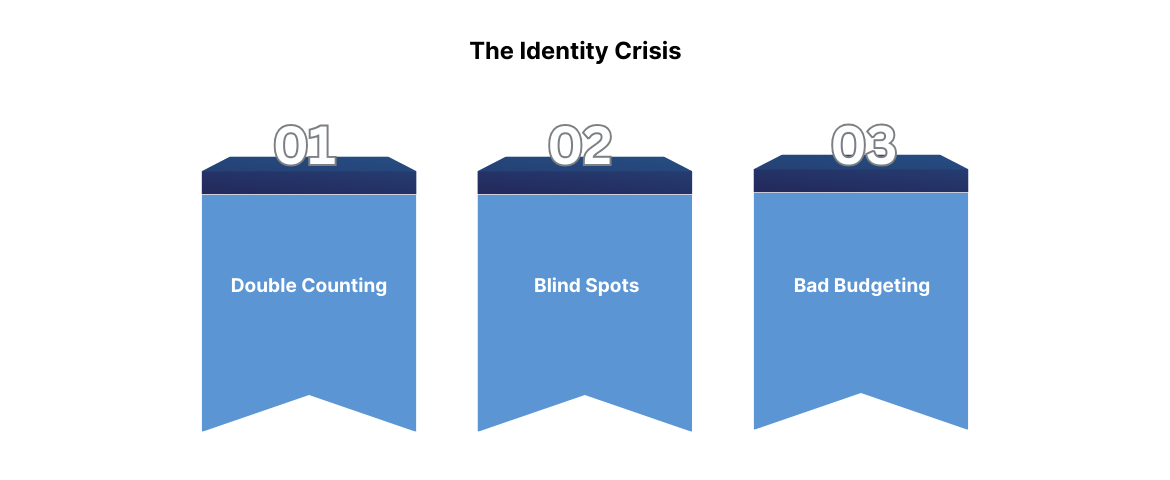
When you lack a single source of truth, you face these three big hurdles.
1. Double Counting: Multiple platforms take credit for the same sale. This makes your reports look better than reality.
2. Blind Spots: You cannot see which ads or emails actually moved the needle over a long period.
3. Bad Budgeting: You might cut spending on a channel that is actually driving your best leads because the data says it has zero conversions.
When these issues pile up, marketing leaders lose the one thing they need to lead with confidence: visibility.
Why Marketing Leaders Are Flying Blind on Attribution and ROI
When you lead a brand, you need to know one thing. If I put $1 into this machine, how much comes out?
Today, answering that accurately is increasingly difficult due to fragmented attribution and signal loss.
The Failure of Last-Click Reports
Most tools rely on “last-click” models. They give all the credit to the last thing the customer did. This ignores the months of brand building and early touches that made the sale possible.
If a customer watches three of your videos on YouTube but buys after clicking a Google Search ad, Google takes 100% of the credit. You might think YouTube is a waste of money. In reality, it was the engine of the sale.
Strategy Gaps
Without a clear picture, choosing how to spend becomes a guessing game. You cannot pick a path forward if you do not know where you are standing. Marketing leaders often fall back on “gut feeling.” In a high-speed market, gut feeling is a recipe for losing to competitors who have better facts.
And the consequences extend far beyond internal decision-making.
How This Problem Breaks SEO for LLMs and AI Search
AI-powered search engines increasingly rely on behavioral, engagement, and performance signals, not just keywords, to evaluate brand relevance. They rely on clean, persistent, and trustworthy data signals to understand which brands actually perform, convert, and retain customers.
When your tracking is fragmented, short-lived, or blocked by browsers, AI systems see an incomplete version of your business. That affects more than internal reports.
It impacts how your brand appears in:
- AI-generated search answers
- Conversational tools like ChatGPT, Gemini, and Perplexity
- Performance summaries used by marketers and decision-makers
If your attribution is broken, AI search models inherit that confusion. Broken data quietly weakens your SEO for LLMs and AI Search by limiting the quality of signals AI systems use to infer brand performance and trustworthiness.
The problem is not theoretical. It is enforced by the modern web.
The Silent Killers of SEO for LLMs and AI Search: Safari ITP and Adblockers
It is not just about bad tools. The internet itself is getting harder to track. Apple and Google are changing the rules. Safari Intelligent Tracking Prevention (ITP) is the main culprit.
The 7-Day Window
Safari now deletes most tracking cookies after just seven days. Some are even wiped out in 24 hours. For AI-driven attribution and LLM-based analysis, this creates massive blind spots. If your customer takes two weeks to decide on a purchase, Safari forgets who they are.
When they return to buy, they look like a brand-new visitor, not just to your analytics tools, but to AI systems that rely on consistent signals.
Your ads get zero credit. Your SEO data becomes unreliable.
Adblockers and Privacy Tools
Nearly 40% of web users now use some form of adblocker or privacy tool. These tools stop your tracking pixels from even loading.
If you rely on a browser-based pixel (like the standard Meta or Google pixel), you are likely missing 30% to 50% of your data.
For LLMs and AI search engines, missing data means distorted conclusions about what actually drives growth.
This signal loss is the reason your ROAS looks like it is crashing.
However, if browsers and blockers are breaking your signals, the solution cannot live inside the browser.
Next steps: How to fix the leak.
The Fix: Event IQ and Ingest IQ
To win in 2026, especially in SEO for LLMs and AI Search, you have to move your tracking out of the browser. You need a way to capture events that does not rely on fragile cookies and disappearing browser signals.
This is where Ingest Labs steps in.
Event IQ: One Hub for Every Interaction
Event IQ does what your separate tools cannot. It gathers every touchpoint into one place.
It captures web traffic. It tracks app activity. It pulls data from your ecommerce store and your CRM. It even sucks in ad logs from Meta and Google Ads.
Instead of five different versions of the truth, you get one.
Ingest IQ: Server-Side Power
Ingest IQ fixes the signal loss problem. Instead of sending data from the user’s browser, it sends it from your server.
Safari ITP and most ad blockers primarily restrict browser-based tracking, while server-side tracking significantly reduces but does not eliminate signal loss. This ensures you capture nearly 100% of your events.
When a customer buys, the signal goes straight to your dashboard. No data is lost in the middle.
Ingest ID: The 365-Day Memory
The biggest weakness of modern marketing and AI-driven search is the short memory of browsers.
Ingest ID helps create persistent first-party identities for consented users. We do not rely on cookies that die in a week.
Long-Term Tracking
Ingest ID can link consented user actions over extended windows (often 180 to 365 days), depending on implementation and data availability.
If a person clicks your ad in January and does not buy until June, Ingest ID knows. It links those two events. You finally see the true path to purchase, and AI systems see accurate performance signals.
Cross-Device Linking
Ingest ID uses first-party facts to tie a phone visit to a desktop purchase. It looks at emails, logins, and other signals to build a “golden record” of each customer.
This allows you to see the real impact of your top-of-funnel ads.
When identity, events, and revenue finally connect, clarity follows.
The Power of a Consolidated Dashboard
When you tie web traffic, store data, and ad logs together, you get a consolidated attribution dashboard, a single source of truth that supports accurate internal analysis and improves the quality of signals available to AI-driven systems.
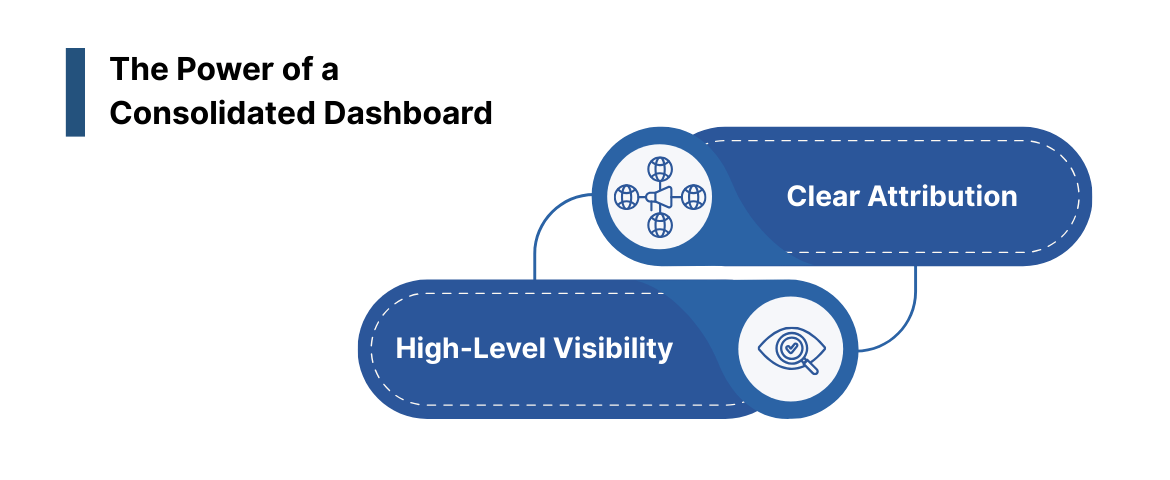
Clear Attribution
You no longer have to wonder which channel works. The dashboard shows you the full journey. You can see how an Instagram ad led to an email sign-up, which led to a sale a month later.
High-Level Visibility
Marketing heads get a single view of the whole brand. You can see your true Customer Acquisition Cost (CAC) across the entire business. You can see which segments of customers are the most profitable over time.
And once the data is clean, it becomes a growth engine — not just a reporting tool.
Advanced Growth Tactics: Segmentation and Activation
A single source of truth is not just for reports. It is for making more money.
Smart Cross-Sell and Upsell
Because you have all your data in one spot, you can create advanced segments.
You can find customers who bought a specific product but haven’t tried the matching accessory. You can find people who spend a lot but haven’t visited the site in 30 days.
Better Retargeting
Standard retargeting is often broken. You show ads to people who already bought the item.
With Event IQ, your ad platforms receive more accurate, timely purchase signals. You can stop wasting money on people who are already customers. You can focus your spend on winning new ones or bringing old ones back for a second buy.
To support this level of precision, the entire data pipeline must work as one system.
End-to-End Visibility for Marketers
To grow a D2C brand today, you need a factory-like approach to data. You need pipelines, connectors, and segments that work together.
Pipelines and Connectors
You don’t want to spend weeks on tech setup. Ingest Labs provides pre-built connectors. These pull data from your favorite tools without a mess.
Data flows through secure pipelines from your store and ads into your central hub.
Audiences and Activation
Once the data is in your hub, you can push it back out. You can sync your custom segments directly to Meta or Google.
This means your ads are always showing to the right people. Your email flows are always timed perfectly. You are not just seeing data; you are using it.
This is what modern, data-driven growth actually looks like in practice.
The Path to Real Growth
The market is moving fast. Privacy rules are getting tighter. The brands that win will be the ones that own their data.
Stop letting data silos ruin your strategy. Stop letting Safari hide your sales. Move to a system where more clicks are measured reliably, customer journeys are better connected, and revenue attribution is significantly more accurate.
Where do we go from here? You need to see your own data leaks to fix them.
Take Back Control of Your Marketing
Many leading D2C brands are already investing in server-side tracking and first-party identity resolution. Don’t get left behind with broken reports and wasted spend.
Get the full picture of your customer journey today.
[Book a demo of Event IQ and see your true attribution now.]
Would you like me to help you map out your current data silos so we can see where your biggest signal loss is happening?