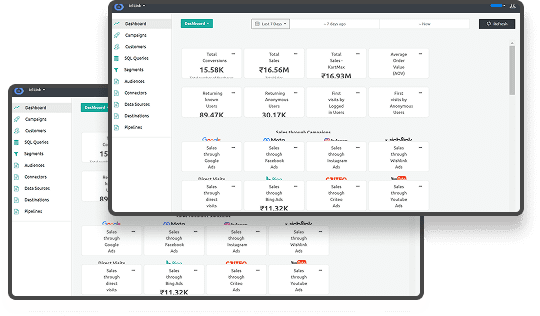




Today’s customers interact with brands across multiple channels, websites, apps, ads, social media, and even offline events. But when that data sits in silos, marketers can’t see the full picture of who their customers are or what drives them.
A Single Customer View (SCV) solves this by unifying all data points into one clear, accurate profile for each customer.
In this article, we’ll explain what an SCV is, why it matters, what data it includes, and how to build one effectively, with insights on how Ingest Labs’ privacy-first data solutions make this process seamless, compliant, and scalable.
Key Takeaways
- A Single Customer View (SCV) unifies every interaction and data point into one accurate, actionable customer profile.
- A strong SCV improves personalization, campaign performance, and compliance across all marketing channels.
- Clean, first-party data and real-time syncing are essential; outdated or siloed data kills accuracy.
- Ingest Labs helps marketers build reliable, privacy-first SCVs using tools like Ingest IQ, Ingest ID, and Event IQ.
What is Single Customer View (SCV)?
A Single Customer View (SCV) is a centralized, comprehensive record of every interaction a customer has with your brand. It merges data from multiple sources, online and offline, to create one unified, accurate profile.
Definition and Role
In simple terms, SCV combines data from:
- Websites and mobile apps.
- CRMs and marketing automation systems.
- Point-of-sale (POS) and transaction systems.
- Customer service and email interactions.
It forms a 360-degree perspective of each customer, showing what they buy, how they behave, and how they prefer to engage.
Why It Exists
Traditionally, businesses operated with fragmented systems, CRM data separate from analytics, support logs apart from sales. This fragmentation made it impossible to connect the dots between marketing actions and customer behavior.
An SCV breaks those silos, enabling data to flow seamlessly between departments.
The result: consistent messaging, accurate attribution, and smarter business decisions across marketing, sales, and service.
The Core Concept
At its heart, an SCV is built on three principles:
- Data Unification: Combine multiple data sources into a central, connected view.
- Identity Resolution: Recognize the same customer across devices, sessions, and touchpoints.
- Actionable Insight: Make that unified data usable for campaigns, personalization, and analytics.
Also Read: Building a Unified Customer Profile: Understanding Your User
Why SCV Matters: The Business Case for a Unified Customer Record
Having an SCV isn’t just a technical achievement; it’s a strategic necessity for data-driven marketing.
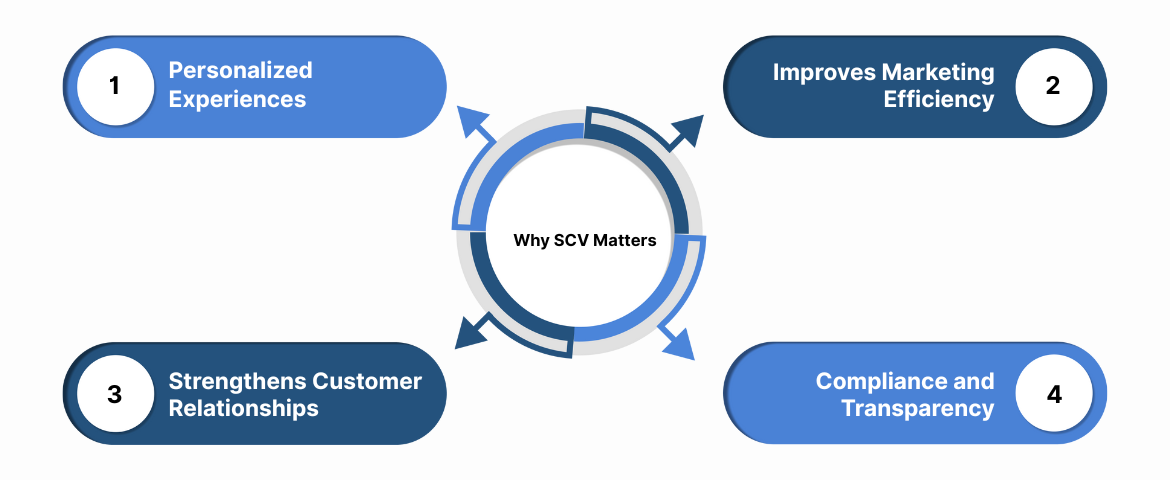
Here’s why forward-thinking businesses are investing in SCV platforms.
1. Enables Truly Personalized Experiences
When you understand each customer’s complete journey, you can deliver content and offers that feel personal. Instead of segmenting broadly (“returning visitors”), SCV lets you target precisely (“loyal customers who purchased twice in the past 90 days”).
Example: A retailer might use SCV data to show product recommendations based on both recent website behavior and in-store purchases, something impossible without unified profiles.
2. Improves Marketing Efficiency
SCV helps identify which channels actually drive results. By connecting ad data, website interactions, and conversions under one profile, marketers can attribute ROI accurately.
Result:
- Reduced wasted spend on underperforming campaigns.
- Clearer insight into customer lifetime value (CLV).
- Smarter budget allocation across touchpoints.
3. Strengthens Customer Relationships
Customers expect consistent experiences. With an SCV, your marketing, sales, and service teams see the same information, ensuring messaging is aligned at every stage of the journey.
For instance, Support agents can access a customer’s full purchase and communication history, resolving issues faster and with context.
4. Ensures Compliance and Transparency
Under privacy laws like GDPR and CCPA, companies must handle data responsibly and offer customers visibility into how their data is used.
An SCV helps you:
- Track consent preferences accurately.
- Manage and delete user data easily upon request.
- Prove compliance through auditable, centralized records.
With Ingest Labs, all this happens within a privacy-first, first-party framework, meaning data stays secure, accurate, and compliant at every stage.
Also Read: Basics of Customer Journey Orchestration
What Data Powers an SCVL: Sources, Formats & Data Types
Building a Single Customer View starts with understanding what kinds of data feed into it. A true SCV combines behavioral, transactional, demographic, and consent data from multiple systems to form a unified, privacy-compliant customer profile.
1. Website and App Interaction Data
This includes:
- Page views, clicks, and scroll depth.
- Time spent on key pages.
- Campaign attribution (UTMs, referrers).
- Form submissions and downloads.
- App interactions, session duration, and feature usage.
This behavioral data reveals what customers do, how they navigate your digital properties, and where they engage most.
Ingest IQ captures this interaction data server-side, ensuring accuracy even if cookies or client-side scripts are blocked.
2. CRM and Marketing Automation Data
Your CRM is a goldmine of identity and relationship data:
- Customer names, emails, and account details.
- Lead source and lifecycle stage.
- Sales touchpoints and notes.
- Communication preferences and opt-ins.
This provides who the customer is and how they’ve interacted with your team.
3. Transactional and E-commerce Data
Purchase history adds the most tangible layer of context:
- Past orders and purchase frequency.
- Cart abandonments and average order value.
- Refunds, renewals, and subscriptions.
Why it matters: Transaction data helps segment high-value customers and tailor offers that increase lifetime value (LTV).
4. Customer Service and Feedback Data
Support tickets, chatbot interactions, and survey results show how customers feel about your brand. By linking these insights with behavioral and transactional data, businesses can detect friction points early and improve retention.
5. Offline and Event Data
If your business operates physical stores, events, or phone sales, those interactions must also be captured. Integrating POS or call center data ensures your SCV truly reflects omnichannel behavior.
6. Consent and Privacy Preferences
Every SCV must respect the user’s right to privacy. Track:
- Consent to marketing communications.
- Data collection opt-ins and withdrawals.
- Preferences for contact channels.
Ingest Labs automates consent synchronization across systems, ensuring compliance with GDPR, CCPA, and evolving North American privacy laws.
Also Read: Ethical Data Collection driving customer loyalty and boosting business outcomes
Key Benefits of a Single Customer View
The value of an SCV lies in its ability to connect fragmented data into one accurate, actionable customer record.
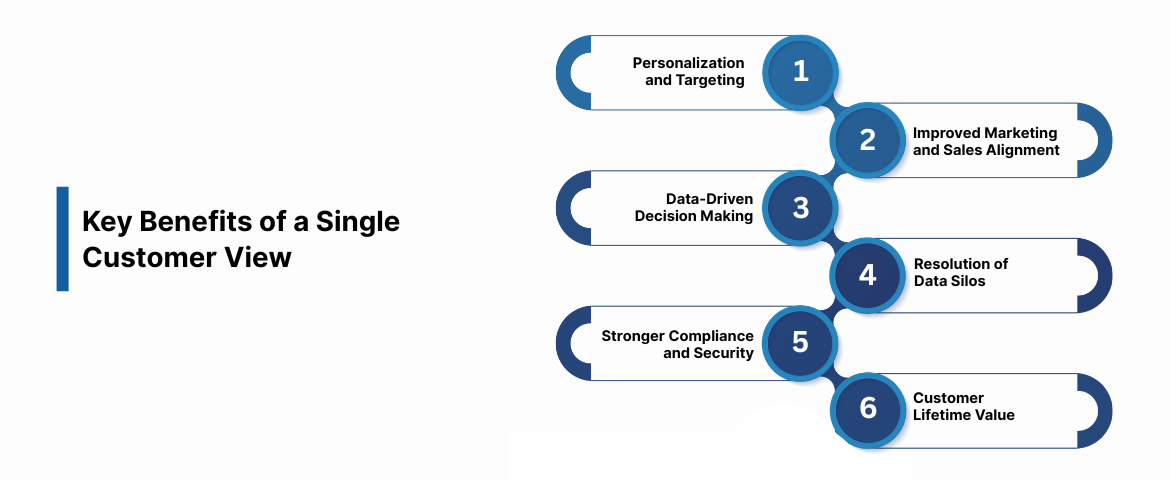
Here’s how this unification translates into measurable business outcomes.
1. Enhanced Personalization and Targeting
With an SCV, every marketing message can be personalized in real time based on unified customer history.
Example: An e-commerce store can send a discount email for products the customer viewed but didn’t buy, instead of a generic promotion.
Benefit: Increased engagement, higher conversion rates, and reduced ad fatigue.
2. Improved Marketing and Sales Alignment
An SCV allows marketing and sales teams to work from the same data foundation. Leads generated through campaigns can be tracked through to conversion and revenue, closing the gap between acquisition and retention.
Impact:
- Accurate attribution across channels.
- Shared performance insights between departments.
- Better ROI forecasting.
3. Data-Driven Decision Making
Unified data = better insights. When all metrics, engagement, purchase history, and support interactions are analyzed together, patterns emerge that individual tools can’t reveal.
For instance:
- Which channels drive repeat customers?
- Which messages perform best per customer segment?
- How engagement correlates with revenue.
Event IQ from Ingest Labs provides these insights in real time, turning SCV data into actionable intelligence for campaign optimization.
Also Read: Key Strategies in Data-Driven Marketing and Their Benefits
4. Resolution of Data Silos
Most organizations store customer data across 5–10 disconnected platforms. An SCV eliminates these silos by creating a single source of truth.
Result:
- Less duplication, fewer errors.
- Smoother data flows between tools.
- Consistent analytics across departments.
5. Stronger Compliance and Security
SCVs make compliance management far easier by centralizing how data is stored and accessed. With consent data embedded in each profile, you can honor opt-outs instantly and maintain transparency.
Centralization reduces data risk, and fewer handoffs mean fewer exposure points.
6. Better Customer Lifetime Value (CLV) and Retention
When you understand the complete customer journey, you can predict churn risks early and deliver proactive retention campaigns.
Example: Identify customers whose engagement drops after 90 days and trigger reactivation campaigns automatically.
Ingest Labs strengthens every stage of this process by ensuring your SCV operates on clean, first-party data, updated in real time through server-side tracking and identity resolution.
Step-by-Step: How to Build a Single Customer View for Your Organization
Creating an SCV requires both strategic alignment and technical execution. Here’s a simplified framework to follow, adaptable for businesses of all sizes.
Step 1: Conduct a Comprehensive Data Audit
Identify all systems holding customer data, CRMs, analytics tools, ad networks, e-commerce platforms, and offline databases.
Checklist:
- Map data fields and ownership (marketing, sales, IT).
- Identify duplication and inconsistencies.
- Evaluate data quality and compliance posture.
This audit forms the foundation for a unified, trustworthy SCV.
Step 2: Define Clear Business Goals
Not all organizations need the same SCV structure. Define what you want to achieve: better personalization, accurate attribution, or stronger reporting.
Tip: Link each SCV use case to a measurable KPI (conversion rate, CLV, churn rate, etc.).
Step 3: Integrate Data Across Systems
Use APIs or secure connectors to merge customer data from every touchpoint.
This may include:
- CRM and marketing automation platforms.
- E-commerce and payment systems.
- Customer support and survey tools.
Best Practice: Use a data orchestration layer to manage data flow securely, something Ingest Labs’ Ingest IQ does seamlessly through server-side integration.
Step 4: Resolve Customer Identities
Once the data is unified, identify overlapping profiles and merge them into one.
Process:
- Apply deterministic matching (e.g., email, user ID).
- Use probabilistic signals (e.g., device fingerprints, IPs) where direct IDs are missing.
- Assign a single, persistent ID using Ingest ID.
This step ensures accuracy and prevents duplicated or fragmented profiles.
Step 5: Create a Centralized SCV Database
After merging data, store it in a secure, structured database or CDP. This database becomes your single source of truth for all customer insights.
Include:
- Core attributes (demographics, behavior, transactions).
- Engagement metrics.
- Consent and compliance metadata.
Step 6: Test, Validate, and Enrich
Before rolling out SCV-driven campaigns, validate accuracy.
Methods:
- Compare data samples with source systems.
- Run test queries to detect missing values or duplicates.
- Enrich records with external or behavioral data for deeper insights.
Step 7: Activate and Measure
Put your SCV to work across marketing, analytics, and service platforms.
Examples:
- Personalize website content dynamically.
- Segment audiences for targeted campaigns.
- Measure lifetime value and churn trends.
Tools like Event IQ help marketers translate unified data into real-time segmentation and campaign execution.
Also Read: Using first party data to Create Personalized Customer Experience
Common Challenges When Creating an SCV
Building a Single Customer View sounds simple in theory, but in practice, it requires solving complex data, privacy, and technology challenges. Below are the main obstacles that often prevent teams from achieving a unified, accurate customer profile.
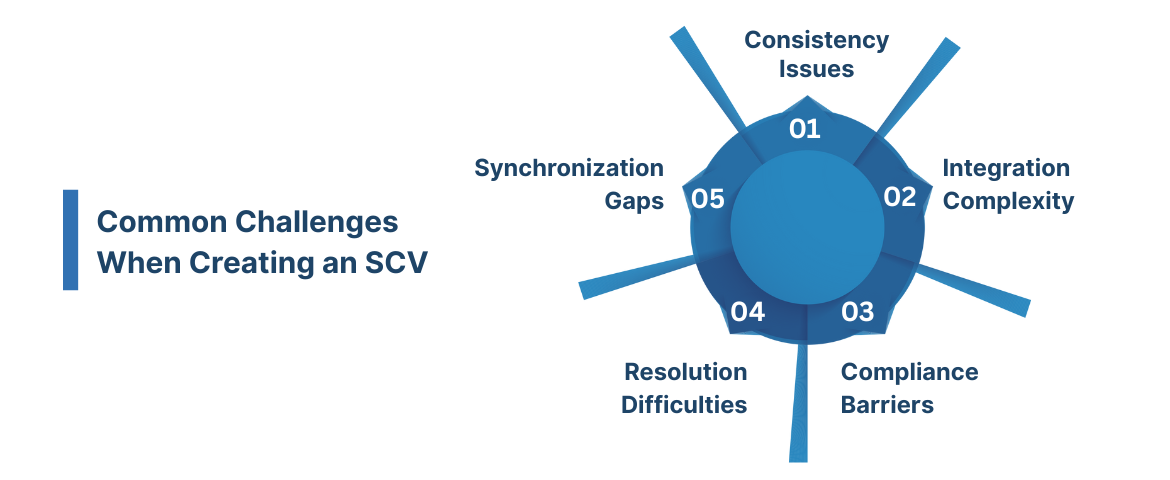
1. Data Quality and Consistency Issues
When customer data originates from multiple systems, it often varies in format, accuracy, or completeness.
Examples:
- Different spellings of the same customer name.
- Missing or duplicated email addresses.
- Inconsistent time zones or identifiers.
Impact: Dirty or mismatched data leads to inaccurate insights, incorrect segmentation, and wasted ad spend.
Solution: Implement ongoing data cleansing and validation routines. Ingest IQ automates data normalization and syncs it across connected tools in real time.
2. Integration Complexity
Many organizations run disconnected tech stacks, CRMs, analytics tools, ad platforms, and offline systems that don’t talk to each other.
Challenge: Integrating all of them into one cohesive system without losing fidelity.
Solution: Adopt a modular integration strategy, connect systems through APIs and data connectors rather than point-to-point setups.
Use a Customer Data Platform (CDP) or a first-party data hub (like Ingest Labs’ Event IQ) to unify and route data automatically.
3. Privacy and Compliance Barriers
With growing privacy laws (GDPR, CCPA, Quebec Bill 64), companies must collect, store, and use customer data responsibly.
Challenges include:
- Tracking consent and preferences across systems.
- Deleting or updating personal data upon request.
- Preventing unauthorized data sharing.
Solution: Embed privacy-by-design principles from the start. Ingest Labs enables businesses to maintain compliance through first-party data storage, server-side consent management, and transparent data flows.
4. Identity Resolution Difficulties
Customers interact across multiple touchpoints, desktop, mobile, app, and in-store, often without logging in. Without identity resolution, these behaviors appear as separate users.
Solution: Leverage deterministic and probabilistic matching methods to unify sessions into a single customer ID. Ingest ID assigns a persistent first-party identifier for each visitor, ensuring cross-device continuity.
5. Real-Time Synchronization Gaps
An SCV that updates weekly or monthly quickly becomes outdated. If marketers can’t act on fresh data, personalization efforts lose relevance.
Solution: Implement real-time or near-real-time streaming between platforms. Event IQ ensures every new interaction is instantly reflected in the customer profile, keeping insights timely and actionable.
Also Read: How to Set Up a Customer Retargeting Campaign
Tools & Technologies to Enable SCV
The success of an SCV depends on the right blend of tools for data collection, integration, storage, and activation. Here’s what typically powers a modern Single Customer View ecosystem.
1. Customer Data Platforms (CDPs)
A CDP centralizes first-party data, connects sources, and makes unified profiles accessible for marketing and analytics. They handle:
- Data ingestion and cleaning.
- Identity resolution.
- Real-time audience activation.
Examples: Ingest Labs’ Event IQ.
2. Data Integration and ETL Tools
These systems extract, transform, and load data between platforms. They ensure consistent formatting, tagging, and delivery.
Examples:
- Ingest IQ (server-side ETL and data streaming).
- Fivetran, Snowflake, or Stitch.
3. Identity Resolution and Tag Management
Identity tools unify multiple identifiers into one consistent ID, a core part of SCV creation.
Example: Ingest ID provides a first-party identifier to link customers across browsers, devices, and sessions securely.
4. Analytics and Visualization Tools
To turn unified data into insight, teams use analytics dashboards or BI tools.
Examples:
- Event IQ Dashboard for real-time analysis.
- Google Looker Studio, Tableau, and Power BI.
5. Data Governance and Compliance Tools
Maintain data accuracy, transparency, and privacy compliance.
Features include:
- Consent tracking and audit logs.
- Data lineage visualization.
- Access control for internal teams.
Ingest Labs integrates these features natively, offering a compliant foundation for every SCV.
Also Read: Best Tools for Tracking digital properties
Best Practices for Maintaining and Governing Your SCV Over Time
Creating a Single Customer View is not a one-time project; it’s a continuous process of improvement, governance, and accuracy checks. Without proper maintenance, even the best SCV can lose reliability over time.
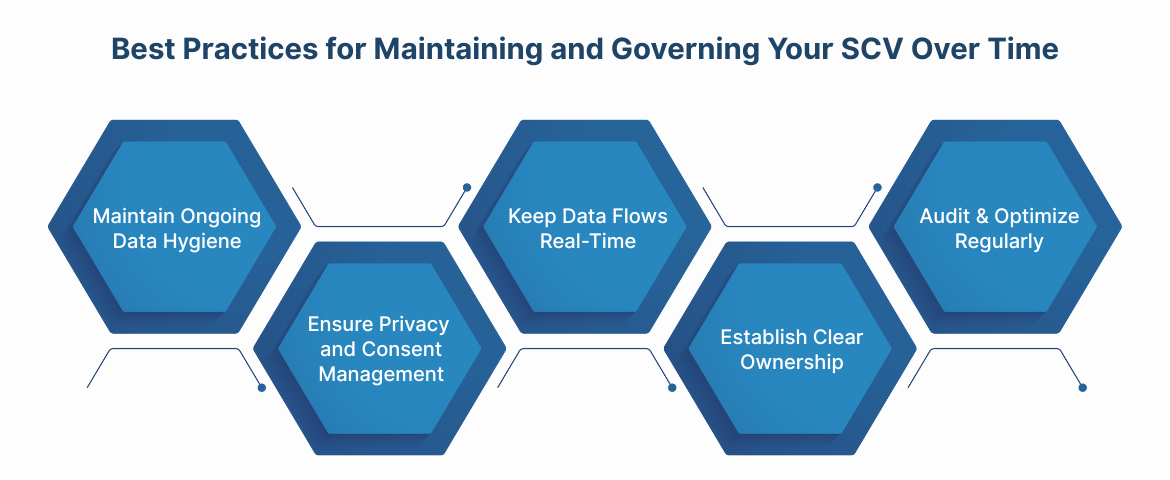
Here are the key best practices to keep it clean, compliant, and effective.
1. Maintain Ongoing Data Hygiene
- Schedule regular data validation to detect duplicates or incomplete entries.
- Remove inactive or obsolete profiles periodically.
- Reconcile new data with existing profiles using consistent identifiers (Ingest ID simplifies this automatically).
2 Ensure Privacy and Consent Management
- Store and track customer consent preferences directly in each profile.
- Automate updates when users change permissions.
- Regularly review compliance logs for GDPR and CCPA readiness.
Ingest Labs’ privacy-first infrastructure includes built-in consent governance, ensuring every SCV update respects user rights.
3. Keep Data Flows Real-Time
Customer behavior changes daily; your SCV should reflect that.
- Implement event-based data streaming between platforms.
- Use server-side pipelines (Ingest IQ) to ensure accurate updates even when browser cookies fail.
- Sync your SCV to analytics dashboards and campaign tools for instant visibility.
4. Establish Clear Ownership and Data Governance
- Assign data stewardship roles (who monitors, updates, and approves).
- Create documented data definitions and field naming conventions.
- Use access controls to prevent accidental overwriting or unauthorized use.
5. Audit and Optimize Regularly
Treat your SCV as a living system:
- Review performance metrics quarterly (speed, match rate, data completeness).
- Update integrations as new tools join your stack.
- Use SCV metrics (engagement rate, attribution accuracy) as KPIs in marketing and analytics reviews.
Also Read: UTM Parameters and Best Practices for Tracking Campaigns
How Ingest Labs Helps You Build a Reliable, Privacy-First Single Customer View
Ingest Labs simplifies every stage of SCV creation, from data collection to activation, through a unified, first-party data ecosystem designed for compliance and scalability.
Here’s how its tools work together:
| Ingest Labs Product | SCV Use Case |
| Ingest IQ | Server-side tracking and data integration collect, transform, and stream customer data securely from all touchpoints. |
| Ingest ID | Creates persistent, first-party identifiers to unify users across browsers, devices, and sessions without relying on cookies. |
| Event IQ | Builds actionable intelligence, real-time analytics, behavioral tracking, and audience segmentation to enhance engagement and personalization. |
Whether you manage campaigns, analyze performance, or optimize customer experiences, Ingest Labs ensures your data stays unified, compliant, and conversion-ready.
Conclusion
A Single Customer View is more than a database; it’s the foundation of modern, data-driven marketing. It empowers teams to deliver consistent, personalized experiences across every channel while ensuring data accuracy and compliance.
But to achieve a truly reliable SCV, you need real-time data orchestration, privacy-first tracking, and identity resolution, exactly what Ingest Labs provides.
With Ingest Labs, you can:
- Collect data confidently.
- Unify customer profiles seamlessly.
- Activate insights instantly, without breaking privacy rules.
Book a Demo today to see how Ingest Labs can help your organization build a secure, scalable Single Customer View that turns data into growth.
FAQs
1. What is a Single Customer View in simple terms?
A Single Customer View (SCV) is a unified profile combining all interactions and data about a customer across online and offline channels. It gives marketers a 360° understanding of behavior and preferences.
2. How does an SCV differ from a Customer Data Platform (CDP)?
A CDP is the technology that enables SCV creation. The SCV is the output — a single, consolidated customer record derived from multiple sources managed within or through the CDP.
3. Why is a Single Customer View important for marketing?
It enables better segmentation, accurate attribution, and personalized campaigns. Marketers can track customer journeys holistically and deliver targeted, context-aware experiences.
4. What types of data are used in SCV creation?
An SCV combines behavioral, transactional, CRM, and consent data from sources like websites, CRMs, eCommerce systems, and offline channels.
5. How can I ensure my SCV is compliant with privacy regulations?
Centralize consent management, store first-party data securely, and avoid third-party trackers. Ingest Labs tools handle compliance automatically across regions.
6. How often should a Single Customer View be updated?
Ideally, in real time or near-real time. Static or weekly updates can cause outdated profiles, leading to poor personalization.
7. Can small businesses create an SCV without enterprise tools?
Yes, smaller companies can start simple, integrating CRM, analytics, and email systems, then scale with solutions like Ingest IQ as their needs grow.