




Most marketing teams are still trying to optimize data pipelines built for a world that no longer exists. Third-party cookies are fading, device IDs are being masked, and even “first-party” tracking is under scrutiny as browsers block client-side scripts. The result? Shrinking visibility, unreliable attribution, and growing compliance risk.
Marketers have responded by patching data gaps like server-side tagging, API integrations, clean rooms, but none of it solves the core problem: users never asked to be tracked this way. The more brands try to collect data behind consent banners, the faster trust erodes.
That’s why leading marketing teams are turning to zero-party data, information customers choose to share directly through preference centers, interactive forms, quizzes, and feedback touchpoints. It includes details like purchase motivations, communication preferences, or intent signals that can’t be inferred from clicks.
In this blog, we’ll break down how zero-party data works, why it’s gaining urgency in modern marketing, and how it’s reshaping data strategies built for a privacy-first world.
key Takeaways
- Unlike behavioral or third-party data, zero-party data comes straight from the user, ensuring accuracy and relevance for personalization.
- Explicitly collected data aligns more naturally with GDPR/CCPA requirements when supported by proper consent management, reducing compliance friction.
- Integrating zero-party data with first-party and CRM systems enables hyper-personalized experiences that boost conversions and loyalty.
- Zero-party data strengthens attribution, improves cross-channel consistency, and supports resilient personalization as third-party cookies fade.
What Is Zero-Party Data?
Zero-party data, a term introduced by Forrester Research, refers to information that a customer intentionally and proactively shares with a brand. It includes declared preferences, purchase motivations, or communication choices, as well as details customers provide directly through forms, surveys, or interactive touchpoints.
For example, when a user selects “weekly product updates” in an email preference center or tells a retail brand what styles they like in a quiz, that’s zero-party data. It’s voluntarily offered, not inferred.
What makes zero-party data different from first-, second-, or third-party data is control and transparency. Instead of tracking behavior or relying on external sources, brands collect this data through direct consent, creating accuracy without intrusion.
Because it’s self-reported, zero-party data doesn’t need interpretation. It reflects what customers say they want, making it a more reliable foundation for personalization, compliance, and long-term trust in a privacy-conscious market.
Zero-Party Data vs. Other Data Types
Customer data has evolved through decades of digital marketing. It began with third-party data, which offered massive reach but little accuracy, then shifted toward first-party collection, giving brands more control and consent-driven insights. Partnerships later introduced second-party data to fill in audience gaps.
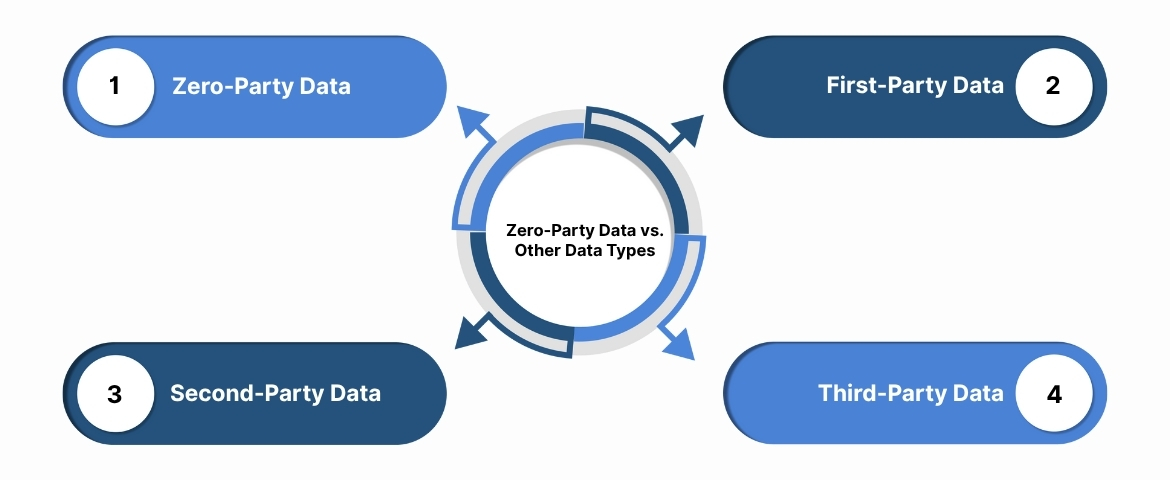
Each stage advanced how brands understand customers, but most forms still rely on observation or shared information rather than direct intent. Zero-party data changes that by replacing inference with transparency.
Here are the various types of data and how they differ:
1. Zero-Party Data
Shared voluntarily by users, this includes preference data, purchase intent, and communication choices. Because it’s declared directly, it offers accuracy and transparency that behavioral tracking can’t match.
Its main strength lies in consent: customers know what they’re sharing and expect something of value in return, such as personalization or exclusive content.
2. First-Party Data
Collected from direct interactions on owned platforms like websites, apps, or emails. It’s behavioral and transactional, what users do rather than what they say.
This data is reliable and privacy-safe since your brand gathers it, but the downside is scale: building meaningful datasets takes time and traffic, especially for new businesses.
3. Second-Party Data
This is another company’s first-party data shared under a mutual agreement. It extends visibility into new audiences and helps fill gaps in your own customer profiles.
The trade-off is dependency; data quality and compliance depend on the partner’s standards, which can vary.
4. Third-Party Data
Collected by aggregators from multiple external sources and sold on large-scale data marketplaces. Its advantage is breadth, providing demographic and behavioral insights at volume.
However, it’s the least trustworthy and hardest to validate. With tightening privacy laws and browser restrictions, third-party data is rapidly losing its reliability and long-term viability.
Zero-party data supports more transparent and durable customer relationships because it’s willingly shared. First-party data deepens understanding through behavior. Second- and third-party data offer scale but demand scrutiny. The future of data-driven marketing lies in balancing these layers with consent at the core.
Also Read: Understanding First-Party, Second-Party, and Third-Party Data: Strategies and Benefits
Why Zero-Party Data Matters in 2025
As privacy laws expand and tracking transparency increases, consent has become the cornerstone of customer engagement. Old data models built on third-party cookies and behavioral inference can’t deliver the same level of trust or personalization.
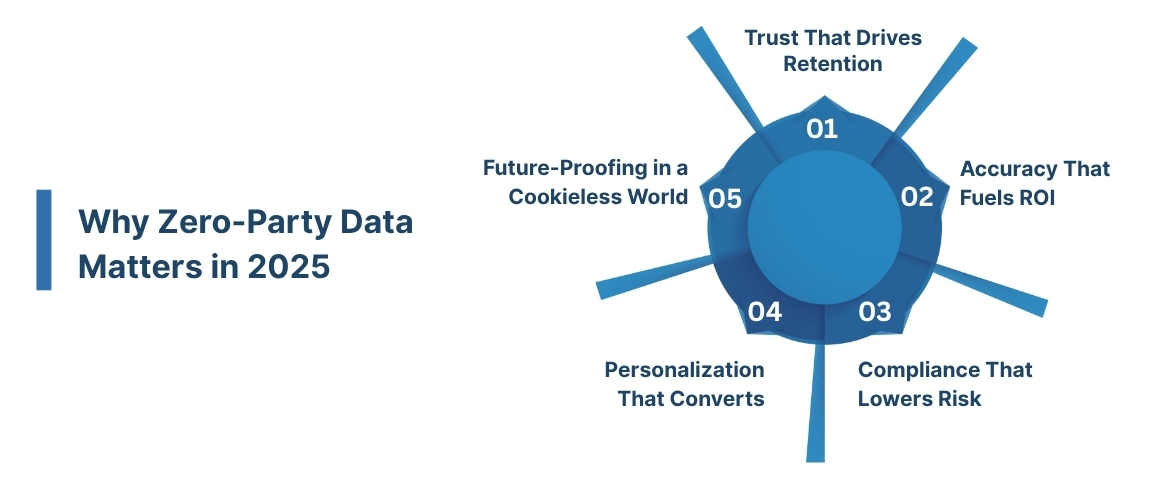
That’s why 55% of marketers expect zero-party data to become more important over the next two years. It bridges the gap between personalization and privacy, giving brands a reliable, compliant way to understand what customers actually want.
Here are the key ways zero-party data benefits marketers and drives measurable business impact:
1. Trust That Drives Retention
When customers volunteer their preferences and intentions, they give brands more than data; they give permission. That permission reduces opt-outs, boosts open rates, and strengthens long-term relationships.
Trust-based personalization means users stay engaged longer and are more likely to repurchase or recommend the brand. In competitive industries, that retention advantage compounds fast.
2. Accuracy That Fuels ROI
Zero-party data removes the guesswork. Instead of relying on inferred signals or incomplete click trails, marketers work with explicit inputs—what customers say they like, need, or plan to do.
Campaigns built on this data see higher conversion rates and lower media waste, because offers, messages, and product recommendations align with verified intent.
3. Compliance That Lowers Risk
Regulatory standards like GDPR and CCPA are rewriting the marketing playbook. Every data point collected without clear consent increases exposure to penalties and reputation damage.
Zero-party data inherently meets compliance benchmarks, reducing the burden on legal teams and safeguarding brand credibility. For enterprises, it’s not just safer—it’s operationally smarter.
4. Personalization That Converts
Customers are more likely to engage with experiences they helped shape. Zero-party insights, gathered through quizzes, preference centers, or surveys, let brands design journeys that feel custom-built.
That relevance translates to higher click-through rates, stronger loyalty program participation, and better lifetime value across channels.
5. Future-Proofing in a Cookieless World
As browsers phase out third-party cookies and ad platforms tighten privacy controls, brands that depend on external tracking face diminishing visibility. Zero-party data improves visibility and supports stronger performance metrics as third-party cookies decline.
How to Collect Zero-Party Data (With Examples)
Traditional data collection methods, like tracking clicks, cookies, or transactional logs, capture behavior, not intent. These approaches fail for zero-party data because they rely on inference rather than explicit customer consent, often missing the context and preferences that truly drive engagement.
To gather zero-party data effectively, marketers need strategies that invite customers to share information willingly, with clear value in return. The key is to combine creativity with consent, ensuring every touchpoint feels transparent, engaging, and rewarding. Here are the main ways to capture zero-party data:
1. On-Site Interactive Experiences
Use quizzes, product recommendation tools, surveys, or interactive forms to let visitors define their preferences.
For example, a retailer could run a style quiz that matches users with products they love, while capturing preference data for future personalization. These experiences feel helpful, not intrusive, and provide immediate value to the user.
2. Email and SMS Engagement
Encourage customers to self-segment or share feedback through targeted campaigns. Tools like progressive profiling, preference centers, and short surveys allow users to indicate content preferences, frequency of communication, or product interests. This builds trust while improving future targeting accuracy.
3. Social and Paid Media
Polls, gated content, or contests on social platforms can gather user preferences while keeping engagement fun and interactive.
Personalized offers linked to these interactions strengthen the perception of a brand that listens, enhancing both reach and relevance.
4. Post-Purchase Feedback
Collect zero-party data after transactions through review prompts, loyalty program sign-ups, or customer satisfaction surveys.
These touchpoints capture insights at moments of high engagement, helping brands optimize retention and deliver more relevant follow-ups.
Best Practices for Utilizing Zero-Party Data
Many brands collect zero-party data but treat it like any other dataset, such as storing it in silos, using it only for basic personalization, or failing to follow up on customer inputs. This approach wastes the trust customers give and limits the potential impact on engagement and revenue.
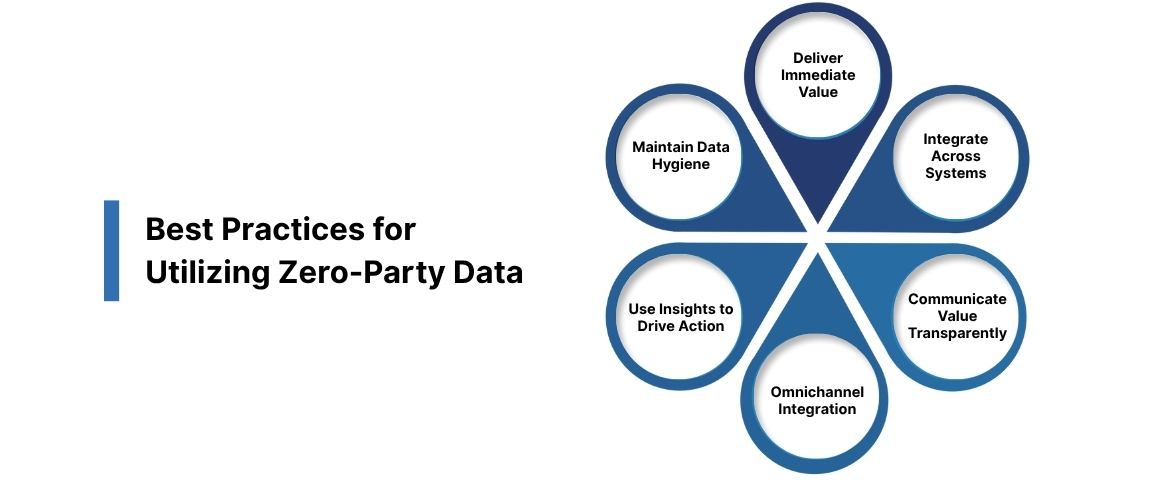
A strategic zero-party data approach goes beyond collection: it integrates insights across channels, honors customer intent, and actively uses the data to drive personalized experiences, improve segmentation, inform product decisions, and enhance overall marketing ROI.
Here are the best practices to turn zero-party data into actionable insights and measurable business impact:
1. Deliver Immediate Value
Every data point collected should produce a tangible benefit for the customer. If a visitor indicates a preference in a quiz or survey, ensure subsequent experiences reflect that choice.
For example, if someone selects “red” as their preferred product color, the website, recommendations, and emails should reinforce that preference until updated by the customer.
2. Integrate Across Systems
Zero-party data is most powerful when combined with first-party data and synchronized across platforms like CRMs, email tools, analytics, and tag management tools.
Avoid data silos to create seamless personalization across channels, from email and SMS to web and app experiences.
3. Communicate Value Transparently
Explicitly convey how customer data will be used and how it improves their experience. Transparency builds trust, encourages sharing, and reduces opt-outs, creating a virtuous cycle of engagement.
4. Make It Part of the Omnichannel Experience
Leverage zero-party data in all touchpoints, like on-site forms, emails, SMS, in-app messages, social media, or loyalty programs. Every interaction is an opportunity to reinforce personalization while respecting consent.
5. Use Insights to Drive Action
Zero-party data should influence marketing, product, and AI strategies:
- Deepen personalization: Tailor messaging, recommendations, and campaigns to customer preferences to increase engagement and conversion.
- Enhance segmentation: Combine zero- and first-party data to create precise audience segments for hyper-targeted campaigns.
- Guide product development: Validate features, new products, or service updates based on expressed customer intent, reducing wasted investment.
6. Maintain Data Hygiene
Regularly update, clean, and remove inactive or outdated data. Accurate zero-party data ensures relevance in personalization, reduces friction, and supports long-term trust with your audience.
How Ingest Labs Helps Marketers Build a Zero-Party Data Strategy
Many marketers struggle to collect and activate zero-party data effectively. Traditional methods, like static forms, fragmented surveys, or inconsistent preference tracking, often fail to capture customer intent, erode trust, and limit personalization opportunities.
Without a unified approach, the valuable insights customers willingly provide go underutilized.
Ingest Labs marketers operationalize zero-party data by unifying preference signals, stabilizing event delivery, and connecting zero-party inputs to downstream destinations. With Ingest IQ, you can securely ingest and route consented customer preferences collected through your forms and touchpoints. Ingest ID helps link these inputs across channels when identifiers are available and consented, enabling more unified customer profiles, while Event IQ can activate zero-party insights in near real time, depending on your destination platforms, product recommendations, and tailored experiences, all while maintaining privacy and compliance.
Book a personalized demo with Ingest Labs today to start building trust-driven, privacy-compliant marketing experiences.
FAQ
1. How does zero-party data reduce marketing waste?
Zero-party data comes directly from customer input, so you know exactly what they want. This eliminates guesswork and reduces spending on irrelevant campaigns or ads, allowing marketers to focus on personalized messaging that actually resonates and drives conversions.
2. Can small businesses collect effective zero-party data without big budgets
Absolutely. Small businesses can use simple tools like surveys, quizzes, polls, and preference centers integrated into their website or email campaigns. The key is offering clear value in exchange for customer input—like personalized recommendations or exclusive offers, without needing expensive tech stacks.
3. What are the best types of questions to ask in zero-party data collection?
Questions that uncover customer preferences, intent, and context work best. Examples include product interests, content preferences, communication frequency, or lifestyle habits. Avoid overly broad or intrusive questions; keep it relevant and tied to a tangible value exchange for the customer.
4. How should you integrate zero-party data with your existing first-party and behavioral data?
Zero-party data is most powerful when combined with first-party behavioral data. By unifying explicit customer inputs with observed interactions, marketers can build richer profiles, deliver hyper-personalized experiences, and improve targeting across email, SMS, web, and ads.
5. What mistakes cause zero-party data initiatives to fail or underperform?
Common pitfalls include: collecting data without a clear plan to use it, ignoring the value exchange, failing to integrate data across systems, or overloading customers with requests. A successful strategy focuses on meaningful engagement, real-time activation, and using insights to improve customer experiences directly.