




Are you confident in the numbers guiding your growth decisions? In 2026, many B2B teams quietly aren’t. Third-party cookies that once tracked behavior across sites are increasingly restricted or unavailable. That means marketers can no longer see every touchpoint in long, multi-step buying journeys.
As a result, 76% of B2B marketing teams report major challenges attributing leads and conversions after cookie deprecation. Without accurate data, attribution gaps appear, campaign results seem weaker than they are, and growth forecasts lose precision.
In this blog, we explain what B2B customer analytics actually means today, why it matters now, the insights that drive growth, and how teams can succeed without relying on cookies.
At a Glance
- B2B customer analytics helps teams understand multi-touch account journeys, optimize campaigns, and make data-driven decisions without relying on third-party cookies.
- Accurate, privacy-compliant tracking is essential in 2026; server-side tracking and first-party identifiers ensure actionable insights across channels.
- Real-time analytics and unified customer profiles empower marketers to improve lead quality, retention, and pipeline forecasting while respecting consent and compliance.
- Challenges like data silos, fragmented tech stacks, and attribution gaps can be overcome by centralizing data, connecting tools, and leveraging predictive analytics.
- Platforms like Ingest Labs enable B2B teams to turn raw customer signals into measurable growth, ensuring smarter decisions, higher ROI, and stronger account engagement.
What Is B2B Customer Analytics and Why It Matters Now?
B2B customer analytics is the process of collecting and analyzing data about business buyers. It helps teams understand how accounts interact with your brand, which campaigns work, and where opportunities are lost. In short, it turns scattered signals into clear insights that guide growth decisions.
In 2026, this matters more than ever. As third-party cookies decline and traditional tracking captures fewer touchpoints, teams often struggle to see which campaigns drive engagement and revenue.
Here are five reasons B2B customer analytics is critical today:
- Understand multi-touch customer journeys across accounts.
- Identify high-value accounts and opportunities faster.
- Measure campaign impact even without cookies.
- Optimize marketing budgets for better ROI.
- Enable data-driven decisions across marketing, sales, and customer success.
These benefits aren’t theoretical. They’re grounded in what B2B customer analytics actually does. Let’s break down the concept and explore why it’s critical for growth today.
5 Types of B2B Customer Analytics Insights for Business Growth
To grow in 2026, teams need more than raw data. They need insights that reveal behavior, intent, and opportunity. Here are the five types of B2B customer analytics insights every team should track.
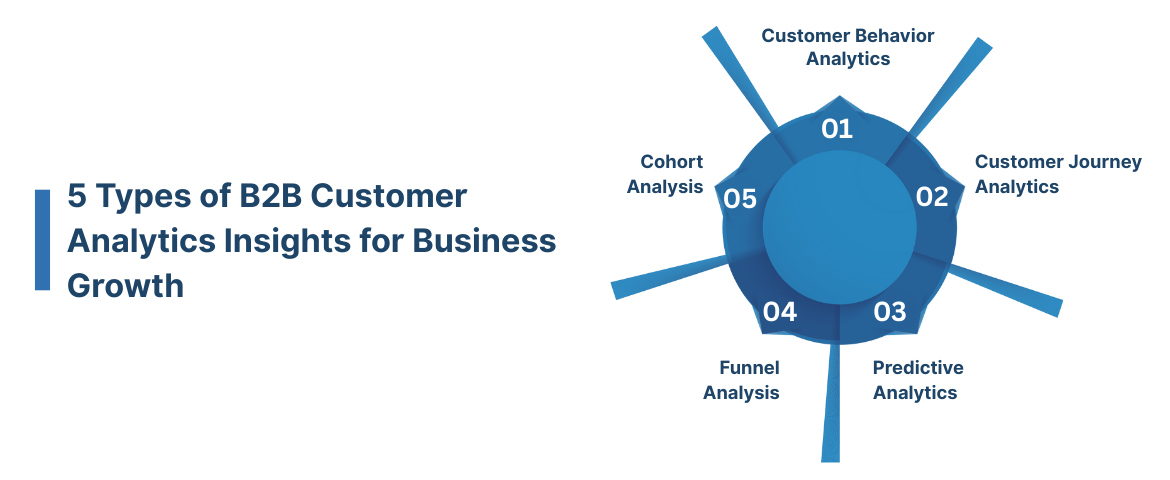
- Customer Behavior Analytics: Tracks how accounts and users engage with your brand. It shows which pages, content, or campaigns drive attention and which are ignored.
- Customer Journey Analytics: Maps the steps a buyer takes across multiple touchpoints. It identifies where prospects drop off and which channels influence decisions most.
- Predictive Analytics: Uses past behavior to forecast future actions. Teams can anticipate purchase intent, potential churn, or upsell opportunities.
- Funnel Analysis: Examines each stage of the sales process. It highlights bottlenecks and points where leads fail to convert.
- Cohort Analysis: Groups customers with similar behaviors or traits. It helps teams measure retention, loyalty, and the impact of campaigns over time.
Also Read: What Data is Google Analytics Unable to Track
Collecting these insights typically requires reliable data sources, privacy-compliant tracking, and unified systems that combine touchpoints from web, mobile, and CRM platforms. Together, they give teams a complete picture and actionable steps to grow revenue and engagement. Here’s how it drives actual growth.
10 Ways B2B Customer Analytics Drives Measurable Growth
B2B customer analytics isn’t about dashboards. It’s about understanding buyers, improving decisions, and generating results that matter. In 2026, analytics helps teams grow with confidence. Here are ten ways it helps teams succeed in 2026:
1. Improve Lead Targeting and Conversion Quality
Data reveals which prospects match your ideal customer profile. When teams focus on quality over quantity, conversion rates increase, and sales spend goes further. Accurate targeting reduces wasted outreach and raises the percentage of marketing qualified leads (MQLs) that become sales qualified leads (SQLs).
2. Shorten Sales Cycles Through Behavior Signals
Analytics can surface patterns in buyer behavior that indicate purchase readiness. Teams that act on these signals engage leads at the right time, speeding deals through the funnel. Real‑time data on engagement helps sales reps focus on the hottest prospects first.
3. Boost Retention and Expansion Revenue
It costs far more to acquire a new customer than keep one. By analyzing usage and engagement, teams can flag accounts at risk of churn and proactively intervene. Tracking renewal rates and expansion revenue helps teams evaluate long-term value and profitability trends.
4. Optimize Marketing Spend and ROAS
Not all channels perform the same. Analytics helps marketers measure which efforts truly generate pipeline and revenue. By reallocating budget based on performance data, teams reduce cost per lead (CPL) and improve return on ad spend (ROAS).
5. Enable True Account‑Based Marketing (ABM)
Complex buying groups need coordinated engagement. Analytics stitches together signals from multiple buyers at the same account. This deeper view lets teams personalize initiatives and improve engagement and response rates among key stakeholders.
6. Predict Future Behavior and Pipeline Trends
Historical data reveals patterns that point to future outcomes. Predictive analytics helps forecast which accounts are most likely to buy, renew, or expand. This improves sales forecasting confidence and guides resource planning.
7. Measure Full‑Funnel Impact Across Channels
Analytics links activities from first touch to purchase. When teams unite web, email, CRM, and ad data, they see which touchpoints drove influence — not just clicks. This full‑funnel view connects behavior to revenue, making campaign results more actionable.
8. Increase Operational Efficiency and Data Confidence
Many B2B teams struggle with unconnected data and mistrust their analytics. Real‑time data quality practices can reduce errors and obsolete records, saving time and increasing conversion accuracy. Better data leads to clearer strategies and smoother execution.
9. Power Advanced Segmentation and Personalization
Segmentation uncovers high‑value segments based on behavior and intent. Teams can target these segments with tailored messaging, offers, and campaigns. This increases engagement rates and lifts conversion outcomes compared to generic audiences.
10. Support Privacy‑Compliant, Sustainable Measurement
With cookies fading, first‑party customer identifiers and privacy‑compliant tracking are essential for durability. Analytics built on consent and privacy rules ensures teams can still measure journeys, reduce blind spots, and protect customer trust — all while driving growth insights.
When teams apply these insights consistently, they turn scattered signals into clear actions. Decisions are faster, campaigns work better, and growth becomes predictable. However, turning these insights into results requires the right technology.
How Technology Enables Real-Time, Privacy-Compliant Analytics for B2B Marketers
B2B customer analytics only works if the data behind it is accurate, actionable, and compliant. In 2026, technology is what makes this possible.
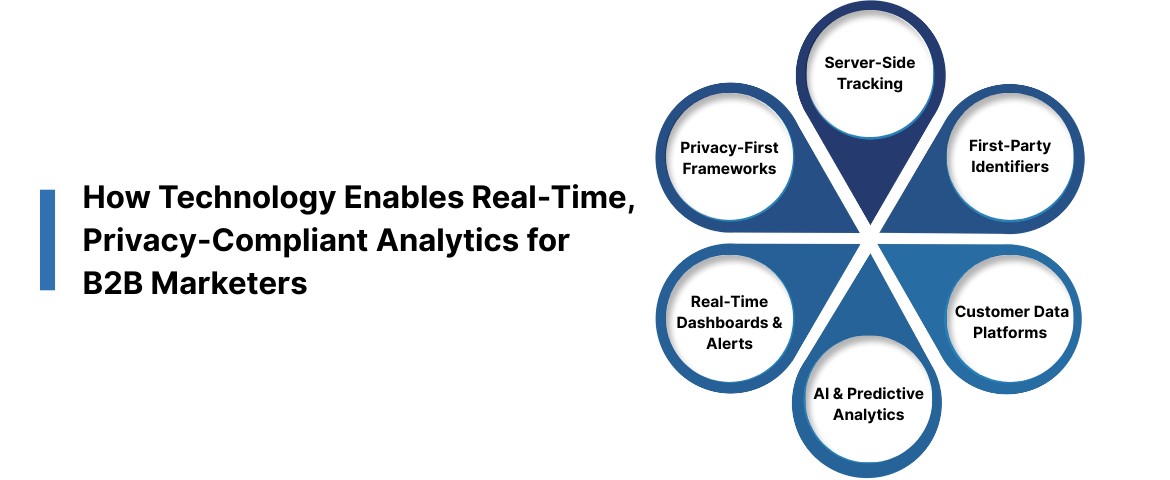
1. Server-Side Tracking: Capture Signals Without Losing Accuracy
Traditional browser-based tracking misses conversions due to ad blockers, cookie restrictions, and mobile privacy settings. Server-side tracking moves data collection to the backend, ensuring marketers still see crucial signals. For example, you can track which content downloads, demo requests, or trial sign-ups lead to real revenue, even across multiple devices.
2. First-Party Identifiers: Build Unified Customer Profiles
Instead of relying on third-party cookies, first-party identifiers assign a consistent ID to each unique visitor. This allows teams to consolidate touchpoints, understand account behavior holistically, and personalize engagement. Unified profiles can improve campaign relevance and reduce inefficiencies in targeting and measurement.
3. Customer Data Platforms (CDPs): Centralize and Connect Data
CDPs unify data from web, mobile, CRM, email, and ad platforms. This enables cross-channel insights and simplifies segmentation. By connecting data silos, teams can track full account journeys and link marketing activities directly to revenue outcomes.
4. AI & Predictive Analytics: Turn Data Into Actionable Insights
Advanced analytics uses AI to detect patterns, forecast purchase intent, and identify high-value accounts. Predictive insights allow marketers to prioritize high-probability leads, plan campaigns ahead, and optimize resource allocation.
5. Real-Time Dashboards & Alerts: Make Decisions Faster
Analytics isn’t useful if it arrives too late. Real-time dashboards provide visibility into campaign performance, account activity, and funnel health. Teams can respond immediately, adjust campaigns, and capture opportunities before they slip away.
6. Privacy-First Frameworks: Compliant Data Collection That Builds Trust
With growing privacy regulations, marketers must collect and use data ethically. Consent management tools and privacy-first architectures ensure tracking respects user preferences. Compliant analytics protects both customers and your brand while maintaining reliable insights.
Also Read: The Power of Predictive Customer Analytics
Using these technologies together, B2B teams can see the complete customer journey, make faster, smarter decisions, and grow revenue predictably, all in a cookieless, privacy-conscious world. Although even with the right tools, marketers face hurdles that can slow growth.
5 Challenges in B2B Analytics and How to Overcome Them
In 2026, U.S. B2B marketers face common challenges that slow decisions, reduce accuracy, and increase costs. Here’s how to tackle them.
- Data Silos: Data silos across CRM, email, and web platforms make it hard to see the full account picture, causing missed opportunities and wasted budget. Centralize data in a CDP to unify touchpoints. One view of accounts and campaigns improves visibility and drives smarter decisions.
- Attribution Gaps: Without connecting marketing activity to revenue, teams misjudge campaign impact and misallocate budgets. Implement multi-touch, server-side tracking to link web, email, CRM, and ad data to outcomes. Accurate attribution helps teams invest in the tactics that actually drive growth.
- Cookieless Tracking Issues: The decline of third-party cookies leaves many buyer signals untracked, making leads appear weaker than they are. Use first-party identifiers and consented tracking to capture reliable customer journeys while staying compliant. This ensures insights remain actionable and trustworthy.
- Fragmented Tech Stacks: Multiple disconnected tools create errors, slow execution, and reduce efficiency. Streamline your stack or use an integrated platform that combines analytics, segmentation, and campaign orchestration. Connected tools save time and help teams act quickly on insights.
- Signal Loss and Forecasting Gaps: Incomplete or delayed data clouds pipeline visibility and weakens sales forecasting. Leverage real-time dashboards and predictive analytics to anticipate account needs, prioritize high-value opportunities, and make faster, confident decisions.
Also Read: How to Make Data-Driven Attribution Work Better in 2026
Solving these challenges consistently calls for a platform that unifies data and delivers actionable insights. That’s where Ingest Labs helps.
Turn B2B Analytics Into Actionable Growth with Ingest Labs
As you navigate the complexities of customer analytics in a cookieless world, one thing becomes clear: data alone isn’t enough. You need trustworthy, privacy-compliant, and actionable insights that power decisions across marketing, product, and revenue teams.
This is where platforms designed for privacy-first analytics can play a role.
Whether you’re trying to:
- Understand multi-touch customer journeys with precision
- Attribute revenue across channels accurately
- Build unified customer profiles without third-party cookies
- Optimize campaigns in real time while staying fully compliant
You need a platform that not only collects data but makes it actionable for growth.
With Ingest IQ, Ingest ID, and Event IQ, you get a privacy-first analytics foundation that:
- Captures customer signals reliably through server-side tracking
- Unifies identities via first-party identifiers
- Surface behavior insights across devices and touchpoints
- Powers personalization, segmentation, and optimization at scale
For teams focused on improving decision quality, customer understanding, and measurement resilience, Ingest Labs provides infrastructure designed for a cookieless, privacy-conscious environment.”
Conclusion
Data alone doesn’t drive growth. Insights must be accurate, timely, and actionable. In 2026, B2B teams that unify customer data, track every touchpoint, and act on real-time analytics gain a clear competitive advantage.
By addressing challenges like attribution gaps, cookieless tracking, and fragmented tech stacks, marketers can make smarter decisions, optimize spend, and guide accounts through multi-step buying journeys with confidence. Privacy-first, first-party data strategies ensure these insights remain trustworthy while protecting customer consent.
Platforms like Ingest Labs make this possible. With server-side tracking (Ingest IQ), unified customer identifiers (Ingest ID), and actionable journey insights (Event IQ), teams can turn scattered signals into measurable growth.
Explore how Ingest Labs can help you capture every signal, unify your data, and turn insights into predictable growth.
FAQs
1. Can B2B customer analytics work without third-party cookies?
Yes. Modern B2B analytics relies on first-party data, server-side tracking, and privacy-compliant identifiers instead of third-party cookies.
2. What teams should own B2B customer analytics?
Customer analytics works best when shared across marketing, sales, product, and customer success teams, with clear ownership over data quality and insights.
3. How does B2B customer analytics support account-based marketing (ABM)?
It enables account-level insights, intent tracking, and engagement analysis across multiple stakeholders within a single organization.
4. What metrics matter most in B2B customer analytics?
Common metrics include pipeline velocity, conversion rates, retention, expansion revenue, engagement depth, and attribution accuracy.
5. How do privacy regulations impact B2B customer analytics?
Privacy laws require transparent data collection, consent management, and ethical data usage, making privacy-first analytics essential for long-term growth.