




Are you confident that the data your marketing team relies on is accurate, compliant, and ready to act on? Many marketers struggle with inconsistent tracking, scattered consent, and data that doesn’t tell the full story.
Current practices can be too rigid and disconnected from business needs. By 2027, 60% of organizations are expected to fail in realizing the value of their AI initiatives because their data governance frameworks don’t align with business goals. That gap slows decision-making and limits campaign performance.
This blog walks you through what marketing data governance is, why it matters, and how to build a framework that works in practice. Read along to get actionable insights on improving data quality, compliance, and activation, so your marketing data can truly drive growth.
Key Takeaways:
- Marketing data governance ensures data is accurate, compliant, and accessible for confident, informed marketing decisions.
- The four key pillars are data quality, security and access, consent management, and centralized documentation.
- Building a framework requires mapping data, defining policies, assigning ownership, and implementing technical controls.
- Track error reduction, data freshness, and faster privacy request handling to measure operational efficiency.
- Get executive buy-in and align teams to implement governance policies consistently across campaigns and tools.
What Is Marketing Data Governance, and Why Is It Important?
Marketing data governance defines how your marketing data is collected, stored, accessed, and shared across platforms. It sets clear rules, so teams know what data they can use and how systems should handle it.
At a practical level, governance removes guesswork from daily decisions. Instead of debating consent rules or data access, your team follows documented standards that apply consistently.
Marketing data governance helps you:
- Campaign Monitoring and Reporting: Automate tracking of budgets, conversions, and performance to reduce manual errors.
- Performance Insights: Maintain data consistency across channels for accurate ROI and journey analysis.
- Data Activation: Use structured data to deliver personalized campaigns across platforms, like CRM-based lookalike audiences.
Now that you know what marketing data governance is, let’s explore the specific benefits it can bring to your business.
What Are The Key Benefits Of Marketing Data Governance?
Strong governance supports better marketing outcomes, not just safer data handling. It brings structure to decisions that directly affect performance and customer experience.
- Clear Support for Decision-Making: Well-governed data allows your teams to make informed decisions with confidence, backed by accurate insights.
- Legal Protection and Compliance: Governance reduces the risk of data breaches, ensures proper storage, and helps you comply with privacy laws like GDPR and CCPA.
- Defined Roles and Responsibilities: Clear ownership ensures accountability. Everyone, from data managers to analysts, knows their responsibilities and access limits.
- Reliable Data Sources: Governance defines acceptable sources of customer and operational data, helping teams make strategic decisions confidently.
- Efficient Management of Global Data: By standardizing how data is collected and stored across regions, governance prevents errors and ensures consistency.
These benefits depend on the structure. That structure comes from a few foundational pillars working together.
4 Key Pillars Of Marketing Data Governance
Good marketing decisions depend on accurate, secure, and compliant data. These four pillars create the foundation:
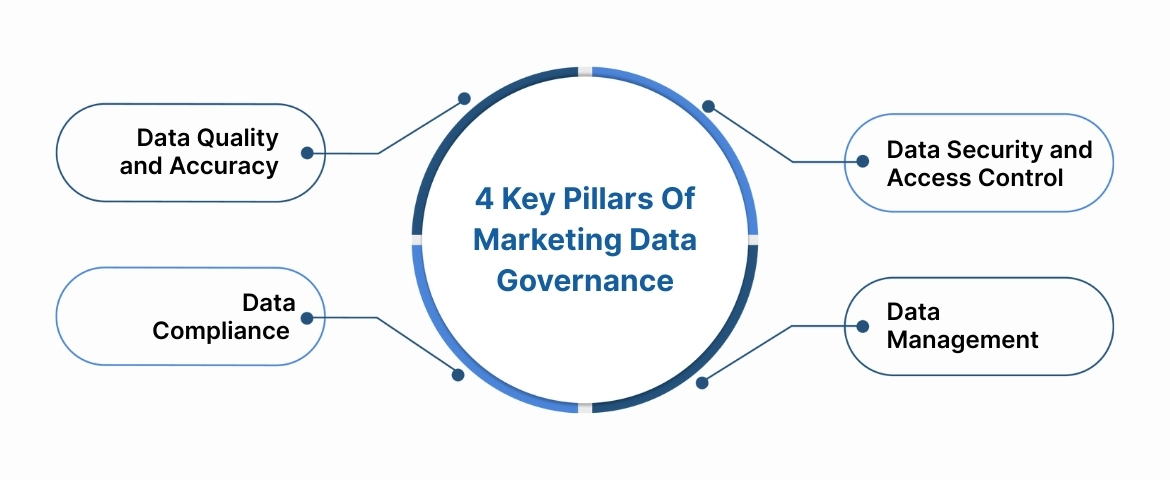
1. Data Quality and Accuracy
Good data quality starts at collection, not analysis. Validation rules, consistent formats, and duplicate prevention stop small issues from spreading across systems.
When quality checks happen early, your reporting stays reliable. Campaign targeting improves, and teams spend less time fixing downstream problems.
2. Data Security and Access Control
Not every user or tool needs full data access. Role-based permissions ensure teams see only what they need to perform their tasks.
Limiting access reduces exposure and strengthens internal trust. Audit logs also help track who accessed data and when.
3. Data Compliance and Consent Management
Privacy laws require clear consent and consistent enforcement. A centralized consent system ensures user choices apply across every connected platform.
When someone opts out, that preference updates everywhere. You avoid outdated records and show customers that their choices matter.
4. Data Management and Documentation
Knowing where data comes from and where it goes removes guesswork. Data lineage and catalogs provide that visibility.
Clear documentation helps teams troubleshoot faster. It also ensures new team members follow established standards from day one.
Together, these pillars create stability. The next step is turning them into a framework your team can actually use.
How Can You Build A Marketing Data Governance Framework?
Building governance works best when you start simple and expand over time. Focus on clarity first, then add controls where they matter most.
Step 1: Map Your Marketing Data
Begin by listing every system that collects or processes customer data. Include analytics tools, ad platforms, CRMs, and internal databases.
This mapping step highlights gaps and overlaps. You often uncover tools collecting data without clear consent handling or retention rules.
Document for each system:
- Data collected and sources
- Retention period
- User access levels
- Connected platforms
Step 2: Define Policies and Standards
With visibility in place, set clear rules for future data handling. Policies should explain what gets collected, how consent works, and where data can flow.
Be specific and actionable. Clear instructions reduce interpretation errors and speed up decision-making.
Cover policies for:
- Data collection and validation
- Storage and retention timelines
- Role-based access
- Approved external sharing
Step 3: Assign Ownership and Accountability
Governance fails without clear responsibility. Assign owners for data quality, access approvals, and compliance oversight.
These roles do not need to be full-time positions. What matters is knowing who decides and who enforces standards.
Step 4: Implement Technical Controls
Systems must support your policies. Consent management platforms, access controls, and server-side tagging enforce rules automatically.
Server-side tracking creates a controlled checkpoint. You can filter data, apply consent rules, and limit what reaches external tools.
Focus your setup on:
- Centralized consent enforcement
- Validation at data collection
- Role-based system permissions
- Audit logging for visibility
Once your framework is in place, the next step is making sure the strategy behind it can actually hold up as your data grows.
Built your data governance framework, but struggling to enforce it consistently? Ingest Lab’s tools, like Ingest IQ adds server-side control, helping you validate events, apply consent rules, and manage data flows without manual fixes.
What Makes A Data Governance Strategy Effective?
An effective governance strategy supports daily marketing work while staying flexible enough to scale. It balances protection, performance, and clarity without creating friction for teams.
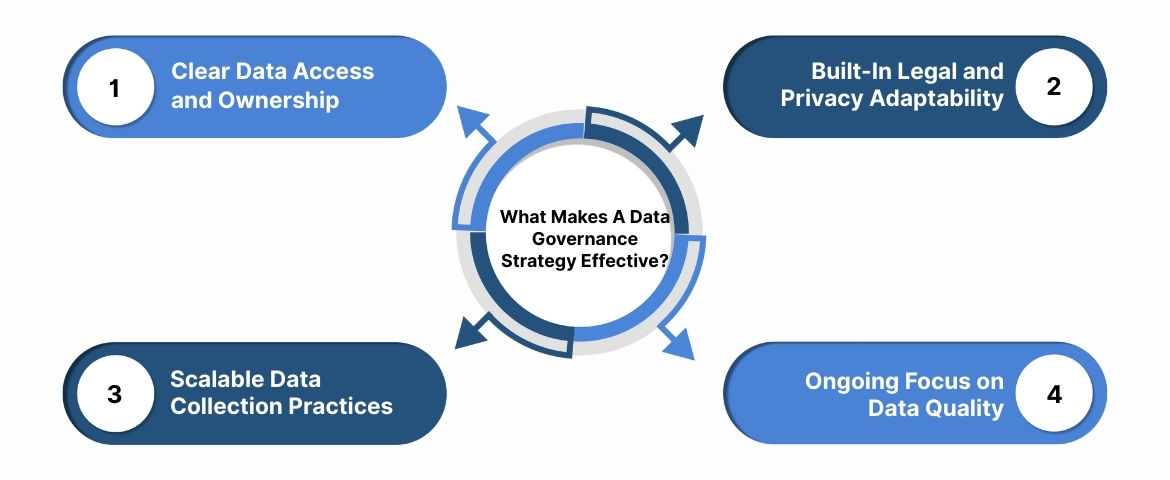
Clear Data Access and Ownership
A strong strategy defines who can access data, why they need it, and how far that access goes. When roles are unclear, data misuse and security gaps follow quickly.
- Tip: Create a simple access agreement that maps roles to permissions across all marketing and analytics tools.
Built-In Legal and Privacy Adaptability
Privacy laws continue to expand across regions. A good strategy plans for change instead of reacting when new rules appear. This means defining how consent is stored, how data is deleted, and how quickly requests are handled.
- Tip: Document exact consent and deletion workflows instead of relying on general compliance statements.
Scalable Data Collection Practices
Data volume increases fast as campaigns expand, and if your strategy only works at today’s scale, it will break tomorrow. Scalability means standardizing naming conventions, tagging structures, and validation rules early.
- Tip: Review your tagging and naming standards every quarter as new tools or regions are added.
Ongoing Focus on Data Quality
Data quality does not fix itself. Without regular checks, small issues quietly grow into reporting errors and wasted spend. An effective strategy includes routine audits that flag duplicates or misfiring events before campaigns rely on them.
- Tip: Schedule recurring quality reviews for high-impact events like conversions and checkout actions.
So, you've got a solid strategy in place, but how do you know it’s actually working? That’s where tracking the right signals helps.
How To Measure The Success Of Your Data Governance System
Good marketing data governance should improve performance and reduce risk at the same time. The indicators below help you track both:
- Coverage of Governed Data Sources: Measure how many tools and platforms actively follow documented governance rules. Higher coverage means fewer unapproved tools and lower exposure to risk.
- Reduction in Tracking and Consent Errors: Fewer mismatches between consent status and data collection show your systems are enforcing rules consistently across platforms.
- Data Freshness and Consistency: Track how quickly customer actions become available for reporting and activation. Shorter delays support better personalization and higher conversion rates.
- Speed of Privacy Request Handling: Faster responses to access or deletion requests signal strong internal processes and reduce compliance overhead.
- Fewer Unapproved Tags or Data Flows: A decline in unauthorized tags indicates better control over your digital properties and often improves site performance as well.
After you measure success, the final step is strengthening governance through everyday habits and smarter processes.
Practical Tips To Strengthen Marketing Data Governance
Improving governance is an ongoing effort, which does not require a full reset. Small, focused changes often deliver the biggest gains.
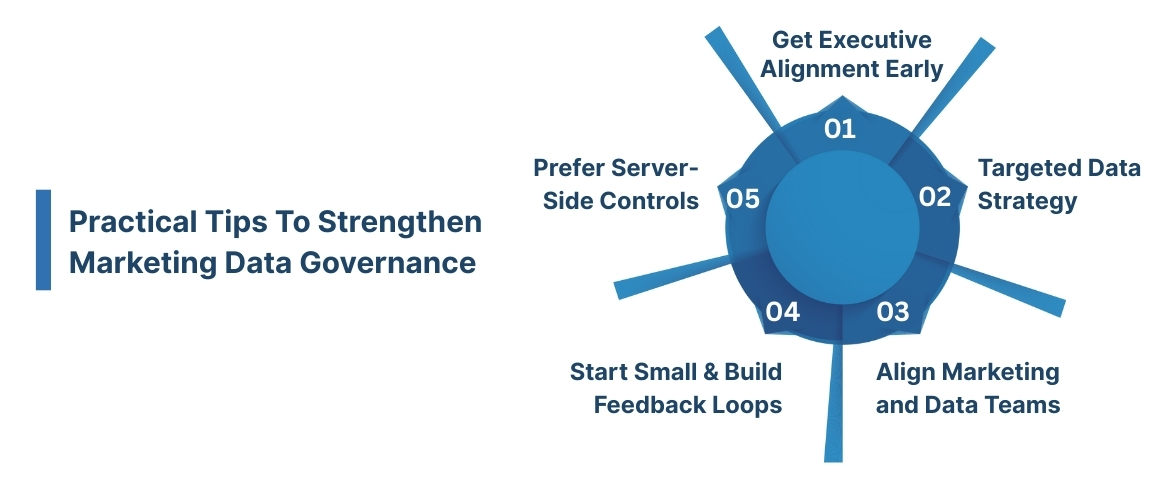
Get Executive Alignment Early
- Tie governance goals to reporting accuracy and conversion measurement
- Highlight risk reduction tied to privacy and consent enforcement
- Agree on ownership for approvals and policy changes
Define a Focused Data Collection Strategy
- Collect only data that supports clear marketing use cases
- Document why each data point is needed
- Remove signals that add complexity without value
Align Marketing and Data Teams
- Standardize naming conventions before campaigns launch
- Define approval steps for new tags or integrations
- Document access rules by role, not by tool
Start Small and Build Feedback Loops
- Begin with high-impact conversion events
- Expand governance coverage gradually
- Review issues and feedback on a set schedule
Use Server-Side Controls Where Possible
- Filter data before it reaches external platforms
- Enforce consent rules centrally
- Reduce unauthorized data sharing
- Improve data consistency across tools
How Ingest Labs Supports Smarter Marketing Data Governance
Strong marketing data governance only works when rules are enforced consistently across your stack.
Ingest Labs helps you move from documentation to execution by applying governance directly where data is collected and shared. Instead of relying on manual checks, your team gains control at the source.
Here’s how Ingest Labs supports you:
- Server-Side Tracking and Tag Control: Ingest IQ centralizes web and app tagging, validates events in real time, and controls what data reaches external platforms.
- First-Party Identity and Data Orchestration: Ingest ID assigns privacy-compliant identifiers and unifies customer data across tools for consistent attribution and access control.
- Consent, Compliance, and Data Visibility: Event IQ enforces consent across systems, supports GDPR and CCPA compliance, and keeps data flows transparent and auditable.
- Governed Data Integration: Syncs approved data with CRMs, analytics tools, and marketing platforms to maintain quality and consistency everywhere.
By enforcing governance through technology, Ingest Labs helps your marketing data stay accurate, compliant, and ready to support growth.
Final Thoughts
Marketing data governance plays a direct role in how confidently you can collect, use, and activate customer data. When rules around quality, access, and consent are clear, your teams spend less time fixing issues and more time improving performance.
A strong governance approach combines a clear strategy with systems that enforce it consistently. Server-side controls, first-party identity, and centralized consent help keep data reliable as tools, channels, and regulations continue to change.
If you’re ready to move from policy to practice, Ingest Labs can help. Contact us to see how our privacy-first solutions support accurate tracking, stronger compliance, and better marketing outcomes.
FAQ’s
1. What should a marketing team focus on first when setting up data governance?
Start by mapping all data sources and understanding how data flows across tools and platforms. Clear ownership, access rules, and consent processes should be defined early to avoid confusion and errors.
2. What comes first – data governance or data management?
Data governance sets the rules and policies, so it should come first. Data management then applies those rules to organize, store, and maintain data consistently.
3. What are the main challenges with implementing data governance in marketing?
Common challenges include inconsistent tracking, fragmented consent management, and difficulty maintaining data quality across channels. Solutions like Ingest Labs help automate enforcement, streamline consent, and unify data for easier governance.
4. Can data governance be scaled without overwhelming reporting and analytics teams?
Yes, by using automated controls and centralized monitoring, teams can maintain governance even as data volumes grow.