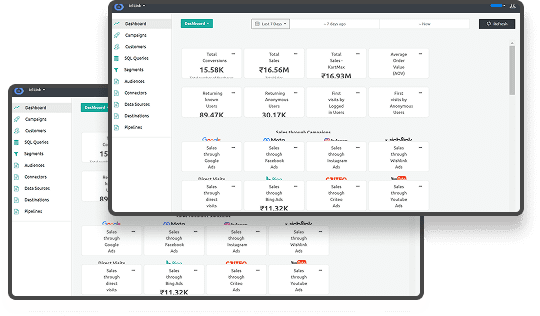





Marketing data analysis helps you stop guessing which campaigns work and start backing decisions with clear numbers. You turn clicks, views, and conversions into evidence you can use to plan budgets, defend spend, and improve outcomes across channels in the US and Canada.
This guide explains how to approach marketing data analysis as a beginner, how to use analytics in marketing without technical skills, and how platforms like Ingest Labs support privacy, accuracy, and scale while you stay focused on growth.
Key Takeaways
- Marketing data analysis turns raw metrics into decisions about where to spend, which audiences to prioritize, and what to fix in your funnel.
- You need marketing data and analytics to manage rising acquisition costs, shorter attention spans, and stricter privacy rules in the US and Canada.
- Strong marketing data analysis depends on first-party data, clear goals, consistent tracking, and a simple set of core metrics you monitor regularly.
- Your main challenges are data silos, messy attribution, consent requirements, and over-reliance on browser cookies that keep breaking your reports.
- Ingest IQ, Ingest ID, and Event IQ help you collect cleaner first-party data, track users across devices, and run compliant marketing data analysis without code.
What is Marketing Data Analysis and Why Do You Need It?
Marketing data analysis is the process of collecting, measuring, and interpreting data from your campaigns so you can decide what to start, stop, or scale. You look at metrics like impressions, clicks, costs, conversions, and revenue, then use patterns in that data to guide strategy instead of relying on intuition.
In practice, marketing data analysis covers three main stages: collecting data, analyzing it, and adjusting campaigns based on what you learn. You use marketing data and analytics to see how each channel contributes to the pipeline, where users drop off, and which segments respond best to different messages.
From a business perspective, you need marketing data analysis because your CAC keeps rising and leadership expects proof that spend ties to revenue. Without marketing data and analytics, you risk over-funding branded terms, under-funding high-intent audiences, and missing early signs of churn or margin pressure.
As marketing moves toward a cookieless future, dependency on first-party data and consent-aware tracking continues to grow. Platforms like Ingest Labs help anchor marketing data analysis on reliable, privacy-ready signals across web and mobile instead of fragile browser-based tags.
Once you understand what marketing data analysis covers, the next step is seeing why it has become a core requirement, not a nice-to-have, for modern marketing teams.
The Importance of Data Analytics in Marketing
Marketing data analysis matters because your channels are fragmented, your customers move across devices, and your ad platforms optimize for their own goals first. You need your own marketing data and analytics to cross-check platform numbers and keep control of strategy and budgeting.
Used well, data analytics in marketing gives you a feedback loop: you launch a campaign, track performance, learn what worked, and adjust spend accordingly. Over time, this loop improves ROAS, informs creative testing, and shapes product decisions based on how buyers in the US and Canada actually behave.
Regulation adds another layer of importance. Under GDPR, you generally need consent for non-essential analytics and advertising cookies, and you face serious fines for misuse. Under CCPA and CPRA in California, you must honor "Do Not Sell or Share" requests and give clear notice about how you use data for marketing analytics.
As cookies fade, many teams find reports harder to trust and begin looking for privacy-ready ways to stabilize marketing data analysis.
Knowing why analytics matters is only half the picture; the real value shows up when you see how it changes decisions across budgets, campaigns, and teams.
Benefits of Data Analytics in Marketing
When you treat marketing data analysis as part of daily operations, you gain concrete business benefits rather than just nicer dashboards. You start to see how marketing data and analytics support finance, sales, product, and customer success at the same time.
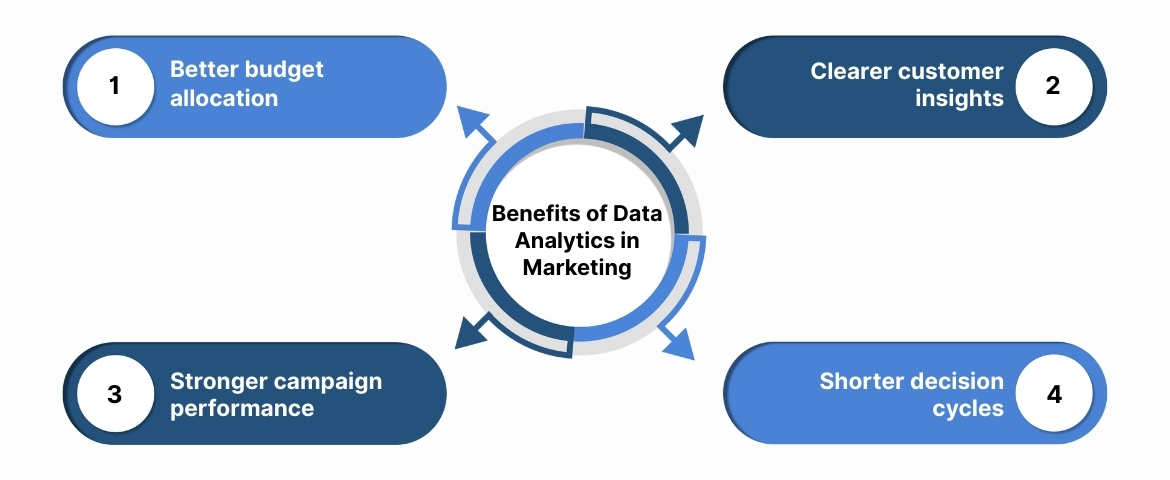
Key benefits include:
- Better budget allocation: You can shift spend from under-performing channels to those with stronger conversion rates and revenue per click. Over time, this reduces wasted spend and improves ROAS without increasing your overall budget.
- Clearer customer insights: Marketing data analysis helps you segment audiences by behavior, geography, and lifecycle stage. You learn which messages convert first-time buyers in Canada versus repeat buyers in the US, and adjust offers accordingly.
- Stronger campaign performance: With marketing data and analytics, you can run structured A/B tests on creative, landing pages, and offers. You then roll out winners with confidence instead of relying on opinions about what "should" work.
- Shorter decision cycles: When reports are automated and consistent, your team spends less time exporting CSVs and more time deciding what to do next. That keeps your marketing data analysis close to execution and lets you respond faster to shifts in demand.
Consistent marketing data analysis turns everyday signals into confident decisions that connect spend, performance, and growth. When insights arrive fast and trusted, marketers act decisively, improve outcomes, and prove impact without adding complexity.
These benefits are real, but many teams struggle to reach them because their data foundation was not built for today’s privacy and tracking realities.
The Challenges of Marketing Data Analytics
Marketing data analysis often breaks down when tracking depends on third-party cookies, fragile tags, and disconnected tools across teams. As privacy rules tighten and user journeys span devices and channels, these weaknesses turn everyday reporting into guesswork.
Typical challenges include:
- Data quality and silos: Different teams run their own tools, from email platforms to social ad managers, which leads to inconsistent fields and broken IDs. That fragmentation makes marketing data analysis hard because you cannot trust comparisons between channels or campaigns.
- Attribution and cross-device tracking: Users click an ad on mobile, browse on desktop, and purchase in-store or through another device. Cookie limits, ITP, and ad blockers mean your web analytics often miss pieces of this path, so your marketing data and analytics under-report some channels.
- Privacy and consent compliance: GDPR requires clear, informed consent for most tracking used in marketing data analysis, and bans dark patterns that pressure users into saying yes. In California, CPRA tightens the rules around sharing data and adds enforcement for ignoring global opt-out signals.
- Skill gaps and tool overload: Many marketing teams feel overwhelmed by dashboards, BI tools, and metric definitions. Without a clear plan for how to use analytics in marketing, people revert to vanity metrics or stop checking reports altogether.
These challenges compound over time, reducing confidence in reports and slowing decisions that depend on accurate, connected marketing data. Solving them requires stronger data foundations, clearer ownership, and analytics systems designed for privacy, scale, and real-world customer behavior.
If data silos, broken attribution, or consent rules keep slowing decisions, contact us to explore how Ingest Labs helps stabilize marketing data before performance suffers.
Solving these challenges does not require rebuilding everything at once; it starts with a clear process that teams can follow consistently.
How to Use Data Analytics in Marketing
To make marketing data analysis work for your business, you need a simple, repeatable process rather than a one-time "analytics project." You can start small, as long as you follow a clear sequence of steps.
Here is a practical way to use marketing data and analytics in your campaigns:
1.Define business and marketing goals: Start by linking marketing data analysis to concrete business outcomes like pipeline, revenue, or retention. For example, you might set a goal to reduce cart abandonment in your US store by a specific percentage within one quarter.
2. Decide the questions you want to answer: Translate goals into questions your marketing data and analytics can support. Common questions include "Which channels bring the highest-quality leads?" or "Which campaigns drive repeat purchases in Canada?"
3. Map data sources and tracking: List where your data lives today: web analytics, ad platforms, CRM, e-commerce, and email tools. Then, map which events you need to track, such as page views, add-to-cart, checkout, and subscription renewals, across each system.
4. Set up consistent data collection: Make sure each tool uses consistent naming for events, campaigns, and UTM parameters. Under GDPR and North American privacy rules, confirm that any non-essential tracking only runs after consent and honors opt-outs correctly.
5. Build basic reports and dashboards: As a beginner, focus marketing data analysis on a small set of core views: channel performance, funnel conversion, and key segments. You can use tools like Google Analytics, ad platform reports, or a CDP to build these views before moving into more advanced modeling.
6. Run tests and compare results: Use marketing data and analytics to plan simple experiments: new landing page layouts, different offers, or updated email sequences. Track each test with clear naming so you can compare conversion rates and revenue impact across groups.
7. Fold privacy into every step: For audiences in the US and Canada, document how you collect, store, and use data for marketing data analysis. Review your cookie banners, consent flows, and data-sharing agreements to ensure they match GDPR and CCPA / CPRA expectations for transparency and rights.
8. Iterate and scale what works: Marketing data analysis is not finished after one report cycle; you keep refining goals, questions, and data quality over time. As analytics maturity increases, teams can add cohort analysis, LTV modeling, and channel-specific metrics without losing sight of revenue and compliance.
When marketing data analysis follows a clear sequence, teams move faster, trust results more, and avoid chasing disconnected metrics. Over time, this approach builds reliable insight, stronger performance, and analytics practices that scale without breaking privacy or focus.
Conclusion
Marketing data analysis is no longer optional if you want to grow profitably and stay compliant in the US and Canada. It gives you the marketing data and analytics you need to justify spending, respect privacy, and keep your funnel healthy across channels.
If current tracking feels unreliable or brittle, teams often move toward first-party, server-side data foundations to regain accuracy and control. Ingest IQ handles web and mobile tagging server-side, Ingest ID maintains a consistent first-party identifier, and Event IQ unifies events into usable journeys and insights, so your team can focus on decisions instead of debugging tags.
Learn how Ingest Labs supports privacy-ready marketing data foundations that improve accuracy while respecting consent and regional regulations.
FAQs
1. What is marketing data analysis in simple terms?
Marketing data analysis means using data from your campaigns, website, and customers to decide where to spend and what to improve. You use marketing data and analytics to connect activity to outcomes like leads, sales, and retention.
2. How do you start marketing data analysis if you are a beginner?
You start by setting clear goals, listing your data sources, and defining a short list of metrics tied to those goals. Then you set up basic tracking, build simple reports, and review them regularly to guide changes in your campaigns.
3. What metrics should you track in marketing data analysis?
Most teams track impressions, clicks, CTR, CPC, conversions, conversion rate, and revenue or pipeline created. As your marketing data analysis matures, you add metrics like CAC, LTV, retention, and segment-level performance.
4. How do GDPR and CCPA affect marketing data analysis?
GDPR generally requires explicit consent for analytics and advertising cookies, plus clear rights for users to withdraw that consent. CCPA and CPRA emphasize transparency, opt-out rights for selling or sharing data, and honoring signals like Global Privacy Control.
5. How does Ingest Labs help with marketing data analysis?
Ingest IQ collects events server-side, which improves accuracy and reduces reliance on fragile browser cookies. Ingest ID and Event IQ then link those events into customer journeys and insights, helping you run marketing data analysis that respects privacy laws in the US and Canada.