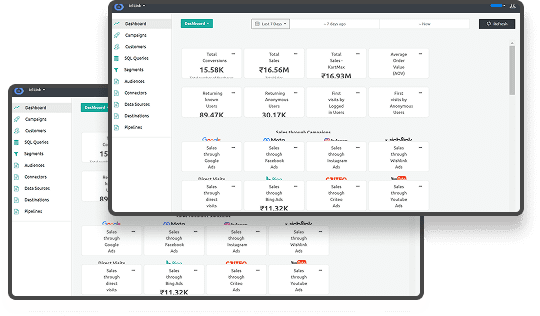





Ad-blockers, browser restrictions, and changing privacy policies have made digital tracking less reliable than ever. For marketing teams, this means gaps in visibility, inconsistent reporting, and less confidence in campaign performance.
As privacy laws tighten and traditional tracking methods lose accuracy, the need for a stronger data foundation has become critical. Businesses now rely on systems that can capture accurate first-party signals, connect data across channels, and maintain compliance in real time.
This shift is driving the rise of modern data platforms, tools designed to help marketing teams turn fragmented signals into measurable growth.
Key Takeaways:
- First-party data is replacing third-party tracking as the foundation of marketing insights.
- Unified data platforms connect collection, privacy, and analytics in one system.
- Compliance and consent are now built into the core data infrastructure.
- Real-time intelligence is turning data from reporting into immediate action.
- Purpose-built platforms scale faster and simplify long-term data management.
What Is a Data Platform and Why Marketers Need One?
Every campaign today produces thousands of user interactions across websites, mobile apps, and ad platforms. Without a connected system, much of that data remains scattered and underused.
A modern data platform brings these signals together to create a single, reliable source of marketing truth. It helps teams collect and process data in real time, connect customer journeys across devices, and feed insights into analytics tools, ad managers, and CRMs.
The result is not just cleaner data but more confident decisions. Marketers can identify which touchpoints truly drive conversions, shift budgets faster, and prove return on investment even as cookies disappear.
The Core of a Digital Data Platform
A modern data platform works by collecting raw signals from every digital touchpoint, unifying them into a governed identity layer, and transforming them into insights that flow seamlessly into analytics, activation, and decision-making systems. Instead of treating data as a series of disconnected events, the platform continuously links interactions, enriches context, and ensures every signal is accurate, compliant, and ready for real-time use.
A complete platform operates through four interconnected pillars:
1. Ingesting and Collecting Events in Real Time
A data platform continuously captures signals from websites, mobile apps, offline systems, and advertising platforms.
With Ingest Labs, this begins through server-side tracking and Tag Manager, ensuring clean, lossless event collection that isn’t blocked by browsers, devices, or cookies.
2. Unifying and Resolving Identities Across Channels
Customer interactions are stitched together into a single profile.
This identity layer links visits, clicks, purchases, and app sessions into one persistent first-party ID — enabling cross-device attribution and complete customer journey analysis.
3. Processing, Governing, and Transforming Data
Once unified, the platform validates, deduplicates, enriches, and structures the data so that it is trustworthy.
This includes schema enforcement, privacy governance, and automated quality checks that ensure every dataset meets compliance and accuracy standards.
4. Delivering Insights and Activating Audiences
Finally, the platform distributes clean, interpreted data into analytics tools, CRMs, ad platforms, warehouses, and dashboards.
Teams get actionable insights, real-time audiences, and attribution clarity, all powered by a single source of truth.
A data platform isn’t just storage or reporting. It is a connected ecosystem that transforms fragmented signals into consistent intelligence marketers can trust.
What Are the Different Types of Data Platforms?
Not all data platforms are built the same way. Different architectures serve different types of workloads, from operational systems to analytics environments. Understanding these categories helps marketers choose the right foundation for their data strategy.
1. Operational Data Platforms
These platforms support day-to-day business transactions and application activity.
Examples include CRM systems, eCommerce backends, and product databases.
Best for:
- Live user activity
- Inventory updates
- Customer service tools
2. Analytical Data Platforms
Built to process and analyze large volumes of historical and behavioral data.
These include data warehouses, data lakes, and BI environments.
Best for:
- Attribution modeling
- Trend analysis
- Machine learning predictions
3. Unified or Lakehouse Data Platforms
These combine both operational and analytical capabilities into a single architecture.
They store structured, semi-structured, and unstructured data in one environment.
Best for:
- Cross-channel customer intelligence
- Scalable multi-touch attribution
- Real-time + historical analysis together
4. Customer Data Platforms (CDPs)
Purpose-built to unify events into customer profiles and activate audiences.
These platforms enable personalized marketing, segmentation, and lifecycle automation.
Best for:
- Marketing activation
- Segmentation
- Personalization workflows
5. Event & Real-Time Data Platforms
Designed to ingest live event streams and deliver insights instantly.
Often used for server-side tracking, fraud detection, and real-time personalization.
Best for:
- On-site personalization
- Real-time triggers
- Live attribution and optimization
Modern marketing stacks increasingly rely on a hybrid platform that blends identity, analytics, activation, and governance, the exact approach taken by Ingest Labs.
What Are the Layers of a Data Platform?
A complete data platform is built on a layered architecture that ensures data is accurate, connected, privacy-safe, and ready for activation. Each layer has a specific responsibility, and together they form a unified intelligence foundation.
1. Data Ingestion Layer
This layer collects raw signals from every source: web, app, CRM, ad networks, offline systems, and APIs.
Ingest IQ powers this layer by capturing server-side events with high accuracy and resistance to browser limitations.
2. Identity & Unification Layer
This is where customer identities are stitched together.
Using deterministic logic, the platform merges sessions, devices, and interactions into a single first-party profile.
Ingest ID serves as the persistent identifier across devices and channels.
3. Data Processing & Governance Layer
Here, the platform validates, cleans, deduplicates, and enriches all incoming signals.
This includes:
- Schema validation
- Event normalization
- Privacy enforcement
- Error handling
- Consent-aligned data shaping
Event IQ governs this layer, ensuring data remains compliant and high-quality.
4. Analytics & Intelligence Layer
This layer transforms data into dashboards, insights, and predictive signals.
Marketers can analyze journeys, conversions, drop-offs, and audience segments, in real time.
5. Activation & Delivery Layer
Finally, clean data flows out to tools such as:
- Google Ads, Meta, TikTok (via server-side conversions)
- CRMs and email platforms
- Data warehouses and analytics systems
- Personalization engines
This layer closes the loop, ensuring insights immediately power performance.
Data as a Platform: Turning Signals into Strategy
Modern marketing data needs to move, connect, and act. A data platform becomes valuable when it transforms scattered signals into measurable outcomes.
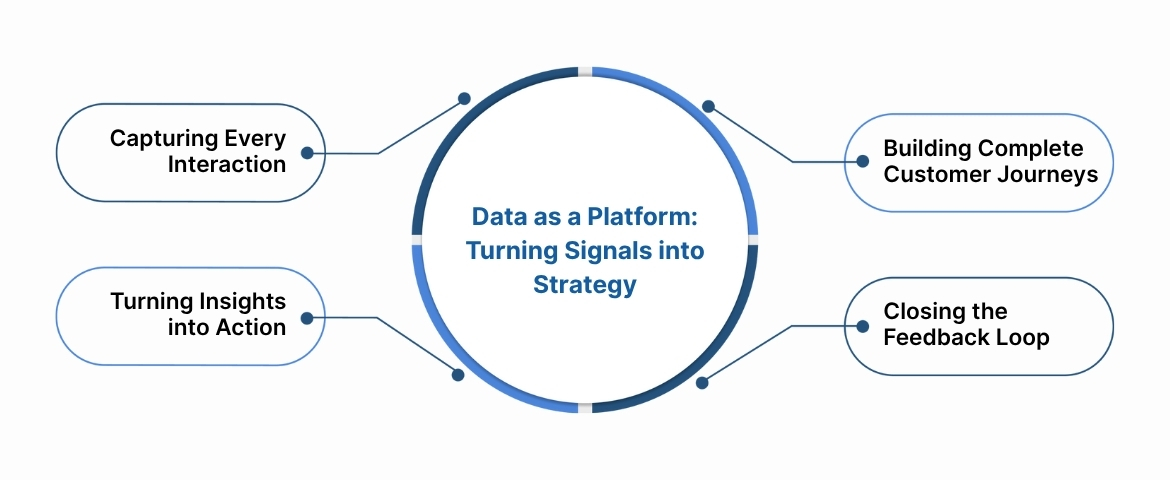
1. Capturing Every Interaction: Using Ingest Labs' Tag Manager, marketers can track events such as page views, clicks, form fills, and purchases in real time. Each event feeds directly into the platform without dependency on third-party cookies or browser tracking.
2. Building Complete Customer Journeys: The Media Data Platform (MDP) consolidates this event data into unified profiles. It maps user behavior across websites and apps, tracking key engagement points like Abandoned Carts, Wishlists, and Purchase Details.
3. Turning Insights into Action: Through MDP's Audiences feature, marketing teams can view audience-level insights and download detailed audience reports directly from the dashboard. These can be integrated into campaign tools, analytics systems, or CRM workflows.
4. Closing the Feedback Loop: As campaigns run, the same data flows back through the platform. Tag Manager and MDP together form a closed loop that continually refines targeting and improves attribution accuracy.
When each layer, from tagging to audience analysis, works in sync, data evolves from passive reporting to strategic direction. This is the essence of data as a platform: information that powers every decision, not just measures it.
Key Benefits for Marketing Teams
Marketing today depends on how well data moves between tools, teams, and touchpoints. A well-structured data platform makes that process seamless, giving marketers more clarity and control over their performance data.
- Reliable Tracking: Events from websites and mobile apps are captured through server-side tagging. This approach ensures every interaction is logged accurately, even when browsers limit traditional tracking scripts.
- Connected Customer Journeys: Each visitor’s activity is tied together across sessions and devices. Teams can see how users browse, interact, and purchase, creating a single view of customer behavior.
- Privacy and Compliance: Modern platforms now manage first-party cookies across domains, keeping all data collection aligned with privacy regulations like GDPR and CCPA. This protects both business accountability and user trust.
- Faster Campaign Adjustments
Audience-level insights highlight segments such as returning buyers or cart abandoners. These reports can be exported and activated quickly across advertising and engagement tools. - Performance Visibility: Built-in performance dashboards surface metrics like load speed and page responsiveness, helping teams identify where user experience impacts conversions.
When these capabilities work together, marketing teams spend less time reconciling numbers and more time refining strategy. The result is a clearer view of what drives results, and the ability to act on it faster.
The Future of Data Platforms in Marketing
The way marketing teams collect and use data is evolving quickly. As privacy laws tighten and third-party tracking declines, data platforms are being rebuilt to prioritize ownership, speed, and compliance.
This shift isn't theoretical; 88% of marketers now view first-party data as more important than ever, and 92% believe continuous use of it is critical for growth.
1. The Move to First-Party Data: With third-party cookies disappearing, businesses are restructuring their data ecosystems around first-party signals. Platforms that can collect, unify, and activate owned data will define the next era of performance marketing.
2. Real-Time and Predictive Intelligence: Modern systems are moving beyond dashboards. Machine learning now detects behavioral patterns, predicts campaign outcomes, and automates adjustments in real time.
3. Privacy as Core Infrastructure: Privacy is no longer an optional layer. Next-generation platforms are being built with consent tracking, encryption, and compliance for frameworks like GDPR and CCPA at their foundation.
4. Connected Activation Across Channels: The future lies in unified orchestration. Every data source, ad platforms, CRMs, and analytics tools will operate in sync, ensuring insights update instantly across systems.
5. Integration Beyond Marketing: Data will flow freely between marketing, product, and sales ecosystems, creating a shared operational view of the customer. This alignment will make insights more actionable across departments.
The data platform of the future will act less like a storage layer and more like a live intelligence network, always learning, always adapting, and always compliant.
Conclusion
As marketing evolves toward a privacy-first future, the ability to manage first-party data with precision will define long-term success. Platforms that combine ownership, compliance, and speed are setting the new standard for performance measurement and personalization.
Ingest Labs helps marketing teams achieve that edge. Its platform unifies event tracking, audience insights, and performance analytics into a single, compliant data foundation. With real-time visibility and accurate attribution, teams can focus on strategy.
Take control of your marketing data and prepare for the cookieless era with Ingest Labs.
FAQs
1. What is the main purpose of a data platform?
A data platform provides the infrastructure to collect, manage, and activate information from multiple sources. For marketers, it ensures every campaign insight — from clicks to conversions — is captured accurately and available for analysis or activation in real time.
2. How does a digital data platform differ from traditional data systems?
A digital data platform is designed for continuous, real-time data flow across web, app, and media environments. Unlike legacy databases that only store information, it connects analytics, privacy, and activation layers so teams can act on insights immediately.
3. What does “data as a platform” mean?
“Data as a platform” refers to the approach where data itself becomes a service layer — enabling automation, personalization, and predictive intelligence. It allows teams to build strategies and experiences directly on top of unified, live datasets.
4. What features should a strong data platform include?
Core data platform features include server-side event tracking, identity resolution, audience segmentation, privacy controls, and real-time analytics. Together, these elements ensure data is accurate, compliant, and ready for immediate decision-making.