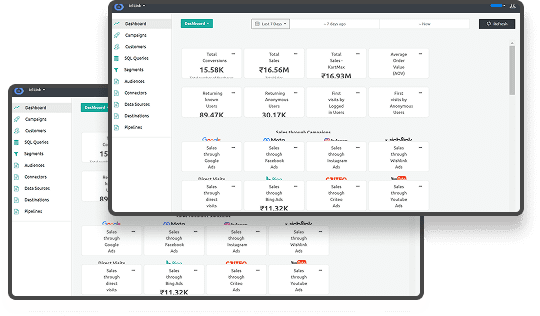





Are you struggling to turn fragmented digital interactions into actionable insights that improve performance and revenue?
With increasing online activity, data continues to grow exponentially, making accurate collection and management more challenging than ever. Inefficient data strategies can lead to lost conversions, underperforming campaigns, and missed opportunities for personalized experiences. The IT services market, projected to reach US$677.36 billion by 2030, reflects the rising demand for sophisticated tools that organize and utilize data effectively. Understanding what a Data Management Platform (DMP) is and how it works has become crucial for extracting value from complex datasets.
Key Takeaways
- A Data Management Platform (DMP) collects and organizes data from various sources like websites, apps, and CRM systems to improve marketing efforts.
- It segments audiences based on behavior, demographics, and interests to deliver more targeted, personalized campaigns.
- DMPs activate data across multiple marketing channels, ensuring consistent messaging and optimizing engagement across ads, emails, and websites.
- Privacy and compliance management is a key feature, ensuring adherence to regulations like GDPR and CCPA while maintaining data security.
What is DMP?
A Data Management Platform (DMP) helps you collect and organize data from websites, apps, and other digital channels easily. It lets you create meaningful audience segments so your campaigns reach the right people at the right time. With a DMP, you can improve targeting, personalize experiences, and make smarter marketing decisions while staying privacy-compliant.
Next, let’s take a closer look at how these capabilities actually power your marketing efforts.
Also read: Understanding the Process, Tools, and Types of Data Ingestion
How a Data Management Platform Powers Your Marketing?
A DMP works by collecting, organizing, and activating data to help you make smarter marketing decisions across channels.
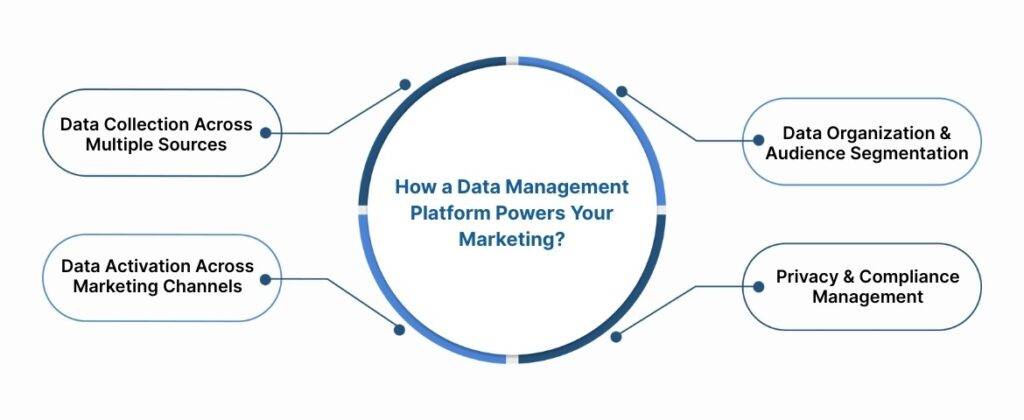
Here’s a closer look at the key steps that make a DMP so effective for driving results:
1. Data Collection Across Multiple Sources
A DMP collects information from multiple sources, such as websites, apps, CRMs, and advertising tools, then unifies it into a single dataset. This allows marketers to connect first-party data like site interactions with partner and third-party data for broader insights. When your data is integrated properly, you get a clearer understanding of customer behavior across every platform. Instead of managing isolated systems, you can analyze performance and engagement holistically, driving more informed decisions.
2. Data Organization and Audience Segmentation
Once collected, the DMP organizes data into audience segments based on behavior, demographics, or interests. For instance, you can identify shoppers who browse but don’t buy, or subscribers who frequently engage with specific content. Segmentation allows you to tailor campaigns to each audience type, improving relevance and conversion rates. The more refined your segmentation becomes, the more effectively you can deliver personalized messages that match real customer intent.
3. Data Activation Across Marketing Channels
Data activation turns insights into action. A DMP shares audience segments with ad networks, CRMs, and email platforms so your campaigns stay consistent across channels. This ensures that users receive relevant offers whether they’re on a website, social media, or mobile app. Activation also helps measure which segments respond best to each campaign, allowing continuous refinement for better ROI.
4. Privacy and Compliance Management
Every modern DMP includes built-in privacy and consent controls to align with regulations like GDPR and CCPA. You can manage user permissions, control data access, and maintain transparent audit trails for accountability. This ensures that your marketing remains responsible, secure, and compliant without sacrificing insight quality. By respecting privacy from the start, you build trust while still gathering meaningful data for decision-making.
With these capabilities, a DMP becomes the main source of audience targeting and personalized marketing. Next comes how to build segments that drive measurable results.
Building Effective Audiences with a DMP
Creating the right audience in a DMP is key to delivering personalized campaigns that drive engagement and conversions.
Here’s how you can strategically build and refine audiences to maximize marketing impact:
1. Define Your Audience Goals
Start by identifying what you want to achieve with your campaigns, such as increasing conversions or increasing engagement. Clear goals help determine which data points are most valuable for segmentation and targeting efforts. This ensures your audience creation process aligns with business objectives and campaign performance metrics.
2. Segment Based on Behavior and Demographics
Use behavioral data like clicks, purchases, and browsing history to understand user intent and preferences. Combine demographic information such as location, age, or device type to refine audience accuracy. Segmentation allows you to deliver highly relevant messages that resonate with specific groups.
3. Utilize Interest-Based and Contextual Data
Interest-based signals from browsing patterns or past interactions help anticipate what users may want next. Contextual data, like the type of content they engage with, further sharpens your targeting strategy. Together, these insights create audiences that respond better to personalization and drive higher engagement.
4. Test, Refine, and Optimize Audiences
Regularly monitor audience performance to identify which segments deliver the best results. Adjust criteria, combine segments, or remove underperforming audiences to improve campaign efficiency. Continuous optimization ensures your DMP audiences evolve with changing customer behaviors and market trends.
With that in mind, we can now explore the different ways a DMP can be used to elevate your marketing efforts and ensure you reach the right people.
The Main Use Cases of a DMP
A DMP isn’t just about collecting data; it’s about turning insights into actionable marketing strategies that drive results. Here are the primary ways businesses can use a DMP to strengthen their marketing and customer engagement strategies:

1. Improve Targeting for Online Media Campaigns
A DMP allows you to create precise audience segments and target them effectively across digital advertising channels. By utilizing behavioral, demographic, and interest-based data, you can reduce ad spend waste and increase campaign ROI. Precise targeting also helps deliver relevant messaging, improving engagement and conversion rates for digital campaigns. With Ingest IQ, Ingest Labs enables accurate server-side tracking and real-time data streaming, improving campaign targeting effortlessly.
2. Audience Extension
Audience extension helps you reach new potential customers who share similar behaviors and interests with existing high-value segments. It allows campaigns to scale beyond owned channels while maintaining relevance and performance efficiency. Extending audiences ensures that marketing efforts tap into untapped segments, improving overall reach and effectiveness. Ingest ID from Ingest Labs helps unify first-party data for better audience insights, supporting smarter extension strategies.
3. Onsite Personalization and Content & Product Recommendations
A DMP helps tailor website experiences by delivering personalized content, offers, and product recommendations to each visitor. Personalization increases engagement, reduces bounce rates, and enhances the likelihood of conversions and repeat visits. By analyzing user behavior, the platform enables dynamically adjusting messaging based on preferences and actions. Event IQ from Ingest Labs enables real-time tracking and unified data analysis to power highly personalized onsite experiences.
4. Cross-Channel Marketing and Consistency
DMPs allow marketers to orchestrate campaigns across multiple channels while keeping messaging consistent and relevant. Integrated insights ensure customers experience cohesive messaging, whether through ads, emails, or web interactions. This approach improves brand recognition, customer engagement, and overall marketing efficiency across platforms.
Event IQ and Ingest IQ help orchestrate cross-channel campaigns, ensuring seamless messaging and measurable performance.
5. Analytics, Insights, and Conversion Optimization
A DMP provides actionable insights into campaign performance, audience behavior, and customer journey trends. Data-driven decisions help optimize content, ad placements, and conversion paths, improving marketing ROI. Continuous monitoring ensures campaigns can be refined in real time to maximize efficiency and results. Ingest IQ and Ingest ID deliver detailed analytics, enhanced conversion tracking, and centralized customer data for smarter marketing decisions.
Next, we'll explore how to effectively utilize a DMP in your marketing, bringing these powerful capabilities to life in your campaigns.
Also read: Server-Side Integration: A Comprehensive Guide
How Can You Use a DMP in Marketing?
A Data Management Platform isn’t just a database; it’s a powerful tool to transform how your marketing campaigns perform.
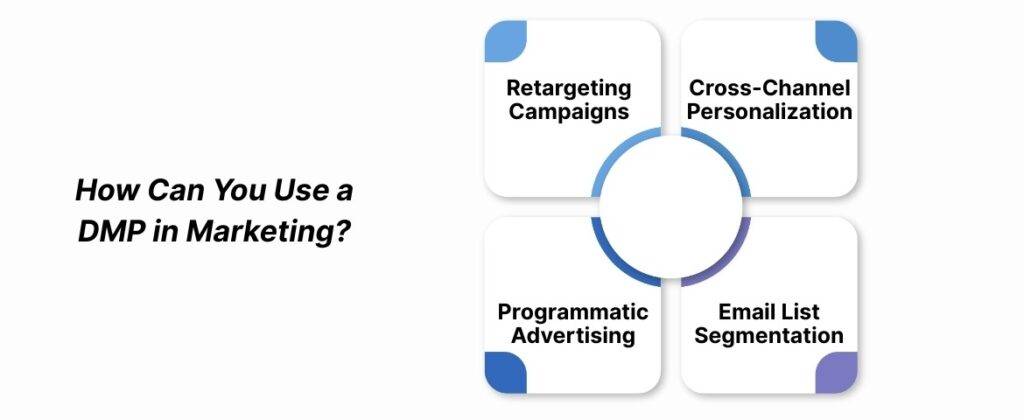
Here are some of the most impactful ways marketers use a DMP, along with real-world examples of application:
- Retargeting Campaigns
- A DMP helps identify visitors who showed intent but didn’t convert, enabling you to re-engage them effectively.
- Example: An e-commerce brand retargets users who abandoned carts by showing personalized ads with the exact products left behind.
- Cross-Channel Personalization
- With centralized audience data, you can deliver consistent, tailored experiences across ads, email, web, and mobile.
- Example: A retail chain personalizes in-app promotions and display ads simultaneously for users searching for seasonal discounts.
- Email List Segmentation
- DMPs enable smarter segmentation based on behavior, demographics, and interactions for hyper-relevant email campaigns.
- Example: A subscription service sends targeted renewal reminders only to users nearing the end of their membership.
- Programmatic Advertising
- By integrating with ad exchanges, a DMP automates audience targeting for precision-driven programmatic campaigns.
- Example: An agency uses programmatic ads to target high-intent travelers searching for last-minute hotel bookings online.
With Ingest IQ and Event IQ, Ingest Labs powers advanced targeting, personalization, and campaign optimization through accurate data tracking and insights.
Final Thoughts
A Data Management Platform simplifies how businesses collect, organize, and activate customer data across multiple channels. By understanding how it works, teams can unlock stronger targeting, personalization, and measurable marketing impact. Leveraging a DMP allows marketers to turn raw data into actionable insights that fuel better campaigns, stronger engagement, and higher revenue.
Ingest Labs makes this process seamless by offering solutions like Ingest IQ, Ingest ID, and Event IQ, designed to unify data, ensure compliance, and deliver precision-driven insights. Their platforms help digital marketers, e-commerce brands, and agencies achieve measurable growth while maintaining trust through privacy-first practices.
Ready to transform your data into results? Book a demo with Ingest Labs today and see the difference.
FAQ
1. What does DMP mean?
DMP stands for Data Management Platform. It is a centralized system that collects, organizes, and analyzes large volumes of data from various sources to help businesses make data-driven marketing decisions. DMPs play a critical role in targeting the right audience more effectively.
2. What is DMP used for?
A DMP is used primarily to manage and analyze customer data to enhance marketing strategies. It allows businesses to segment audiences, optimize campaigns, and gain insights into consumer behavior to improve their advertising efforts and ROI.
3. Is Google a DMP?
Google itself isn't a traditional DMP, but it offers products like Google Analytics and Google Audience Center, which provide similar data management and segmentation features. These tools help marketers collect and utilize data for more effective targeting in campaigns.
4. What is a DMP job?
A DMP job typically involves working with data to configure, manage, and optimize a company's data management platform. This includes analyzing data, identifying audience segments, and ensuring that the platform is aligned with the organization’s marketing goals and objectives.
5. What is the full form of DMP?
The full form of DMP is Data Management Platform. It refers to a technology system designed to centralize, manage, and activate data for better audience insights and more efficient digital marketing campaigns.