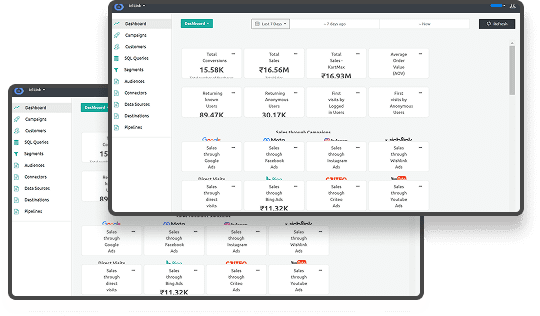





Data-driven attribution (DDA) is rapidly becoming a key pillar of modern marketing measurement, and for good reason. While traditional last-click models still dominate, they often misallocate budget, undervalue upper-funnel efforts, and mask long-term performance. According to a 2025 report, 68% of top-performing marketers now use advanced attribution models, like algorithmic or machine-learning based ones.
But simply activating DDA isn’t a silver bullet. Without clean data, consistent event tracking, and cross-channel alignment, marketers risk misjudging ROI, optimizing for the wrong touchpoints, or overlooking channels that drive incremental growth.
This guide explores practical strategies to optimize your attribution setup, improve accuracy, and ensure every marketing dollar is credited correctly, turning insights into actionable growth.
Key Takeaways
- 68% of top marketers now use advanced attribution models, marking a major shift away from last-click reporting in 2026.
- DDA accuracy depends on clean, unified, validated event data, as most failures come from inconsistent schemas and missing touchpoints.
- Server-side tracking and first-party identifiers are now required to preserve full journeys across devices and privacy limits.
- Most DDA errors come from bad data, not the model, including broken UTMs, duplicate conversions, and fragmented platform reporting.
- Recalibration, anomaly detection, and alignment with real buying cycles keep attribution accurate as channels and rules evolve.
What Is Data-Driven Attribution? Key Principles
Data-driven attribution (DDA) measures and analyzes how each marketing touchpoint contributes to conversions, helping marketers understand which campaigns, channels, and interactions truly drive results. Unlike last-click or rule-based models, DDA assigns fractional credit across multiple touchpoints based on actual performance data.
Without proper attribution, marketing spend can be misallocated, campaigns undervalued, or overcredited to channels that only appear last in the journey.
Key components often evaluated include:
- Conversion contribution per channel
- Customer journey paths and touchpoint interactions
- Revenue generated from specific campaigns
- Campaigns or channels driving high-intent engagement
- Anomalies or inconsistencies in conversion credit
Modern marketing journeys span multiple channels like paid search, social, email, display, and influencer campaigns. Accurate DDA ensures marketers can answer critical questions such as:
- Which campaigns and channels truly influence conversions?
- Are touchpoints receiving fair credit in complex customer journeys?
- How much ROI is each marketing dollar generating?
- Are there gaps or misattribution issues skewing strategy?
- Where should budgets and optimization efforts focus?
Similar Read: Setting Up Offline Conversion Tracking in Google Ads
Now that you have a good understanding of data driven attribution, let’s look at how it works.
How Data-Driven Attribution Works
Data-driven attribution (DDA) is more than a dashboard metric, it’s a systematic approach to assigning conversion credit across every touchpoint in a customer journey. Unlike last-click models, DDA evaluates interactions statistically, giving marketers insight into which channels and campaigns truly drive results.
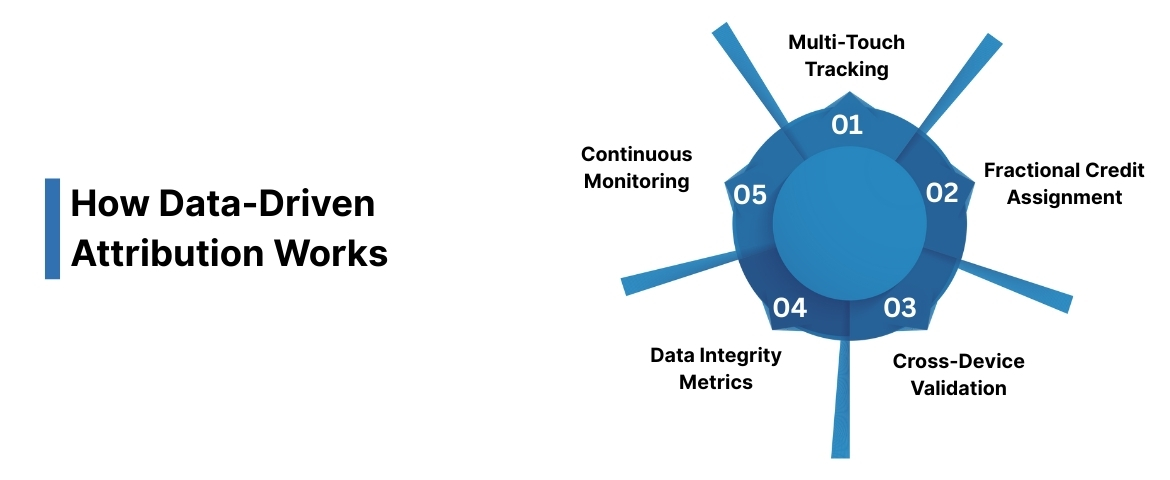
A strong setup blends event tracking, fractional credit assignment, server-side validation, and continuous monitoring:
Multi-Touch Tracking: Journey & Interaction Metrics
Tracks every customer interaction like ad impressions, clicks, emails, social engagements across devices and sessions. Key metrics include:
- Number of touchpoints per conversion
- Channel influence score per interaction
- Cross-device journey mapping
This helps identify which touchpoints contribute indirectly to conversions, not just last-click wins.
Fractional Credit Assignment: Influence Metrics
Statistical models assign proportional credit to interactions based on their contribution to conversion outcomes. Metrics include:
- Touchpoint contribution percentage
- Weighted conversion value by channel
- Time-decay or position-based influence
Fractional attribution ensures budgets focus on channels that drive true impact.
Server-Side & Cross-Device Validation: Accuracy Metrics
Server-side tracking consolidates touchpoints while persistent identifiers link sessions across devices. Metrics include:
- Deduplicated conversions across devices
- Verified multi-channel interactions
- Session continuity rates
This layer ensures attribution reflects real behavior, not fragmented or blocked data.
Anomaly Detection & Data Integrity Metrics
Identifies inconsistent patterns like duplicate conversions, bot clicks, or sudden anomalies. Metrics include:
- Conversion anomalies per channel
- Suspicious interaction flags
- Attribution accuracy percentage
Validates that the attribution model measures genuine user behavior.
Continuous Monitoring & Model Optimization: Performance Metrics
Attribution models evolve with changing customer journeys. Metrics tracked include:
- Channel ROI trends over time
- Contribution shifts across touchpoints
- Conversion velocity and path length analysis
Ongoing monitoring allows marketers to adjust spend, optimize campaigns, and maximize ROI.
Combining multi-touch tracking, fractional crediting, validation, and continuous optimization, data-driven attribution gives brands a precise view of what drives conversions and revenue. It enables smarter investment decisions and more efficient marketing strategies.
Similar Read: What Data is Google Analytics Unable to Track
Now that you have a better idea of how data-driven attribution works, let’s explore why it’s essential for marketers in 2026.
Why Data-Driven Attribution Matters for Marketers
Marketing performance is increasingly multi-channel and complex. Without accurate attribution, marketers risk overinvesting in low-impact channels, underestimating indirect contributors, and misaligning budgets.
Data-driven attribution (DDA) ensures every touchpoint is measured fairly, giving brands a clear picture of what truly drives conversions and revenue:
Gain Accurate Visibility Across Channels
- Tracks customer interactions across paid, owned, and earned channels.
- Reveals the true contribution of each touchpoint instead of overvaluing last-click conversions.
- Helps teams identify which campaigns influence conversions indirectly and which underperform.
Optimize Marketing Spend and ROI
- Allocates budget to channels with proven impact.
- Reduces wasted spend on low-performing ads or campaigns.
- Supports investment decisions based on measurable, high-value contributions.
Improve Campaign and Channel Performance
- Highlights which marketing tactics generate real engagement.
- Supports optimization across touchpoints with fractional crediting.
- Enables better planning and resource allocation for campaigns that move the needle.
Strengthen Data Accuracy and Model Integrity
- Uses server-side tracking and first-party identifiers to capture complete customer journeys.
- Identifies anomalies like duplicate conversions, bot traffic, or misreported interactions.
- Ensures attribution models reflect real behavior and reliable insights.
Future-Proof Your Measurement Strategy
- Adapts to evolving customer journeys, new channels, and privacy regulations.
- Maintains accuracy even with cross-device activity and tracking restrictions.
- Supports scalable, analytics-driven decision-making for long-term growth.
Data-driven attribution is more than a reporting model. It’s a framework for accountable, precise marketing decisions that maximize ROI and reveal the true value of every channel.
Want attribution that’s accurate, privacy-ready, and built for today’s customer journeys?
Ingest Labs helps validate and deduplicate conversions and tie them to more consistent user signals, so marketers get clean, reliable attribution data they can trust. With accurate touchpoint crediting, teams can optimize spend confidently and invest in the channels that truly drive revenue.
Strategies to Improve Data-Driven Attribution
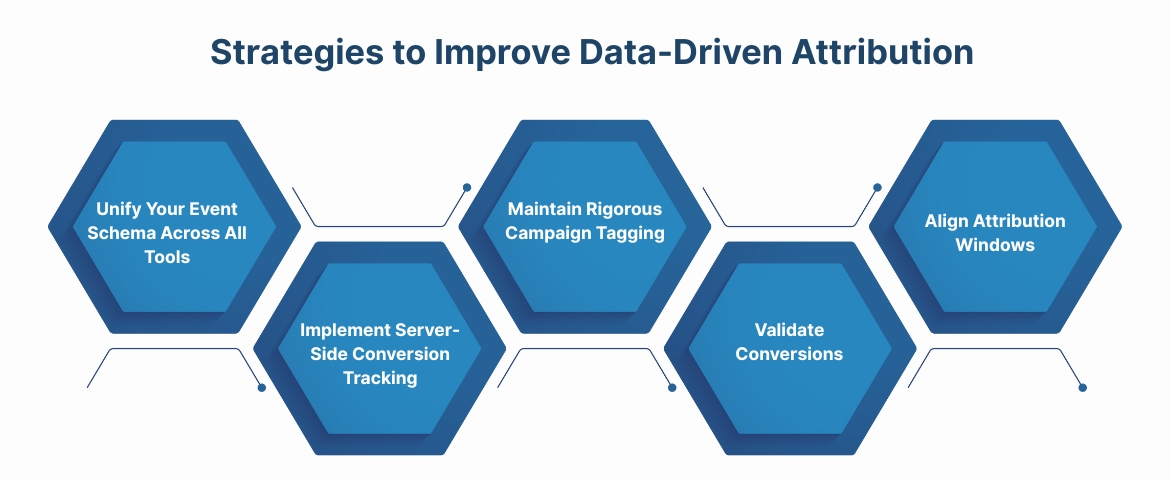
Data-driven attribution works only when the underlying data is consistent, validated, and connected across every touchpoint. For most teams, the challenge isn’t choosing the model, it’s ensuring the model has clean, trustworthy signals to work with.
Below are the key strategies marketers should adopt to make DDA accurate, scalable, and reflective of real customer behavior:
Unify Your Event Schema Across All Tools
- Attribution breaks when tools track the same action differently (e.g., signup vs. user_signup).
- A unified event naming schema ensures every platform, like GA4, Meta, CRM, CDP, interprets events the same way, giving the DDA model clean, consistent inputs.
Implement Server-Side Conversion Tracking
- Move conversion tracking to the server to prevent event loss from ad blockers, iOS restrictions, or script failures.
- Server-side capture reduces loss and helps more credit-worthy interactions reach your attribution models, even when client-side signals fail.
Maintain Rigorous Campaign Tagging
- Adopt strict UTM and click-ID governance for every channel, creative, and audience segment.
- Accurate tagging gives DDA models granular touchpoint context, improving credit allocation and downstream reporting.
Validate Conversions With Anomaly Detection
- Use automated checks to flag duplicate conversions, impossible timestamps, inflated touchpoints, or bot-caused events.
- Validation keeps the attribution model from assigning credit based on corrupted, manipulated, or low-quality signals.
Align Attribution Windows With Actual Buying Cycles
- Short attribution windows can undercount channels with slower influence (e.g., organic, content, video), while overly long windows inflate noise.
- Adjust windows based on real funnel behavior to ensure credit matches actual impact.
Continuously Recalibrate Models
- Customer journeys evolve, like new channels emerge, engagement behavior shifts, and privacy rules change.
- Regularly audit your DDA model’s outputs, compare against lift studies, and adjust rules or weights to maintain accuracy over time.
Applying structured event governance, server-side tracking, clean tagging, validation, and ongoing recalibration allows marketers to turn data-driven attribution into a reliable decision engine. It improves channel efficiency, strengthens budgeting decisions, and ensures every dollar is optimized for measurable impact.
Challenges of Data-Driven Attribution (And How to Fix Them)
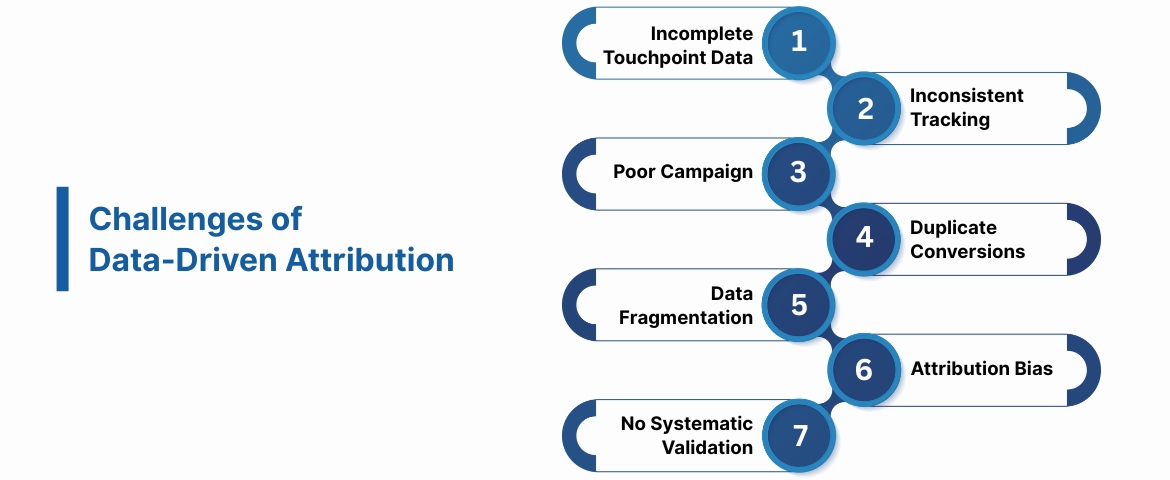
Data-driven attribution promises smarter budget allocation and clearer insight into what truly drives conversions. But in practice, most teams struggle with incomplete tracking, inconsistent data, mismatched touchpoints, and fragmented reporting systems.
When attribution signals are unreliable, models assign credit inaccurately, causing marketers to overinvest in the wrong channels and undervalue the ones that actually influence buying behavior.
Below are the most common challenges that break data-driven attribution, and how to solve them:
Missing or Incomplete Touchpoint Data
Most customer journeys span multiple devices, channels, and sessions. But privacy restrictions, tracking prevention, ad blockers, and script failures often result in missing touchpoints. When journeys are incomplete, attribution assigns credit only to the last visible interaction, distorting insights.
Solution: Shift critical events to server-side collection and use first-party identifiers to maintain continuity across sessions. This preserves full journeys even when client-side signals fail.
Inconsistent Tracking Across Channels
Paid search, paid social, email, web analytics, and CRM tools often track conversions differently. When timestamps, event names, or click IDs don’t align, attribution models struggle to connect touchpoints correctly, and credit becomes fragmented or duplicated.
Solution: Standardize event schemas, naming conventions, and timestamp formats across every analytics and ad platform. Unified data structures ensure models read signals consistently.
Poor Campaign Tagging and Lost UTMs
Untracked campaigns, missing UTMs, or inconsistent naming conventions break attribution chains. A single untagged email click or incorrectly formatted UTM can divert credit to “Direct,” making high-performing channels look weak.
Solution: Enforce strict UTM governance, mandate tagging for every campaign, and automate validation checks before launch to ensure attribution receives complete touchpoint data.
Overlapping or Duplicate Conversions
When client-side and server-side events fire simultaneously, or multiple platforms record the same conversion, attribution models double-count interactions. This inflates ROAS and misrepresents channel impact.
Solution: Deduplicate events at the data layer using event IDs, timestamps, and validation rules. Ensure each conversion exists once before attribution assigns credit.
Data Fragmentation Across Tools
Most teams pull data from GA4, Meta, Google Ads, CRM systems, and internal dashboards. Each applies different attribution rules, creating conflicting reports and making it impossible to determine the true performance of any one channel.
Solution: Centralize attribution inputs into one authoritative layer. Feeding consistent, cleaned data into all reporting tools eliminates contradictory insights and provides a single source of truth.
Attribution Bias from Incorrect Windows
If attribution windows are too short, upper-funnel channels (content, video, social) lose credit; if too long, noise and long-tail interactions dilute accuracy. Misaligned windows produce biased or misleading credit distribution.
Solution: Calibrate attribution windows based on actual buying cycles. Validate window choices through lift tests, time-to-conversion analysis, and cohort patterns.
No Systematic Validation of Attribution Outputs
Attribution often breaks silently. Spikes, drops, misassigned conversions, bot activity, or broken UTM parameters can skew credit for weeks before anyone notices.
Solution: Implement automated anomaly detection that monitors for irregular conversion patterns, channel inconsistencies, timestamp gaps, and sudden shifts in credit distribution.
Accurate data-driven attribution requires clean touchpoints, standardized tracking, unified data, and constant validation. When these foundations are in place, models can finally assign credit reliably, giving marketers a clear, confident view of which channels actually drive incremental impact.
Related Read: Event Tracking Tools for Google Analytics
Wrapping Up
Data-driven attribution is one of the most overlooked drivers of efficient marketing spend. When touchpoints are misattributed or identity breaks, channels get misvalued, ROAS models drift, and teams end up optimizing against incomplete journeys. Even small data gaps can distort channel contribution and lead to poor budget decisions.
Ingest Labs makes attribution reliable by grounding it in clean, validated, identity-stable data. Ingest IQ captures and standardizes all marketing touchpoints server-side. Ingest ID helps maintain more consistent first-party identifiers—when they are available and consented—so more journeys stay connected across devices and sessions. Event IQ audits and validates event flows in real time, flags anomalies, and prevents broken or duplicate signals from corrupting attribution.
Together, these tools give brands attribution they can trust, including clear insights, accurate channel weighting, and spend decisions guided by real customer behavior.
If you want attribution built for today’s privacy-first world, Ingest Labs can help. Book a demo today.
FAQs
1. How can organizations overcome data fragmentation caused by privacy regulations and tracking restrictions?
With the end of third-party cookies and new iOS privacy frameworks, attribution in 2026 must rely on first-party data integration and unified customer profiles. Success requires investment in cross-channel data unification tools, privacy-compliant measurement systems, and alternative methods like contextual targeting for filling in customer journey gaps.
2. What are the best practices for validating the accuracy of machine learning-based attribution models?
Data-driven attribution is often a “black box,” so regularly testing model outputs using incrementality experiments and comparing attribution results with actual business outcomes ensures decisions rely on true causal relationships rather than surface-level correlations.
3. How can small or niche brands effectively use data-driven attribution despite limited conversion volume?
Advanced attribution requires significant data. Small programs should aggregate longer time frames, pool similar campaigns, and layer in qualitative customer insights to supplement low conversion volumes and generate meaningful attribution reports.
4. How can brands balance attribution modeling with channel cannibalization and synergy effects?
Most attribution tools overlook how spend on one channel can decrease or increase performance in other channels (cannibalization/synergy). Running controlled incrementality tests and leveraging unified measurement platforms allows marketers to spot and adjust for cross-channel impact, improving budget allocation.
5. What strategies future-proof data-driven attribution models against evolving tech and regulatory changes?
Ongoing model updates, continuous team training in analytics methods, and combination of multiple approaches (e.g., multi-touch, marketing mix modeling, incrementality testing) ensure attribution remains robust despite changing regulations and consumer behavior.