



A visitor browses a blog on example.com and then moves to shop-example.com to make a purchase. Without cross-domain visitor identification, analytics treats this as two different users, breaking the journey and confusing attribution. This disconnect matters; cart abandonment rates reached 70% in 2025, the highest since 2013. Many of these drop-offs happen because businesses can’t trace what happens between domains. By using cross-domain visitor identification, you can link every action across sites, understand true customer behavior, and uncover where conversions fail. That visibility helps refine campaigns, personalize experiences, and recover lost sales with greater accuracy.
Quick Overview
- Cross-domain tracking follows users across your websites for a consistent experience and accurate attribution.
- Cross-domain tracking connects separate domains, while subdomains share cookies automatically, making cross-domain tracking more complex.
- Gain accurate attribution, reduce cart abandonment, and understand your customers’ true journey, from discovery to conversion.
- Implement tracking methods that respect user consent and privacy laws like GDPR and CCPA while delivering valuable data insights.
What Is Cross-Domain Visitor Identification?
Cross-domain visitor identification helps you recognize the same visitor when they move between different websites your business owns. For instance, a user may explore a product guide on www.brand.com and then make a purchase on shop-brand.com. Without this setup, your analytics tool would see two unrelated users, making it hard to understand their full journey or attribute conversions correctly.
Why It’s Different from Subdomain Tracking?
- Subdomains like blog.brand.com and store.brand.com share the same cookies, so tracking users is straightforward.
- Different domains can’t share cookies automatically, so you need to pass user identifiers through links or tracking scripts to keep sessions connected.
Let’s explore how this tracking method applies to real-world situations, bringing tangible benefits to your marketing efforts and customer experience.
Also read: Setting Up Offline Conversion Tracking in Google Ads
Why Cross-Domain Visitor Identification Is Important?
Cross-domain visitor identification is important because it helps you see the complete journey of your customers across multiple sites. Here are the main reasons why it matters for your business:
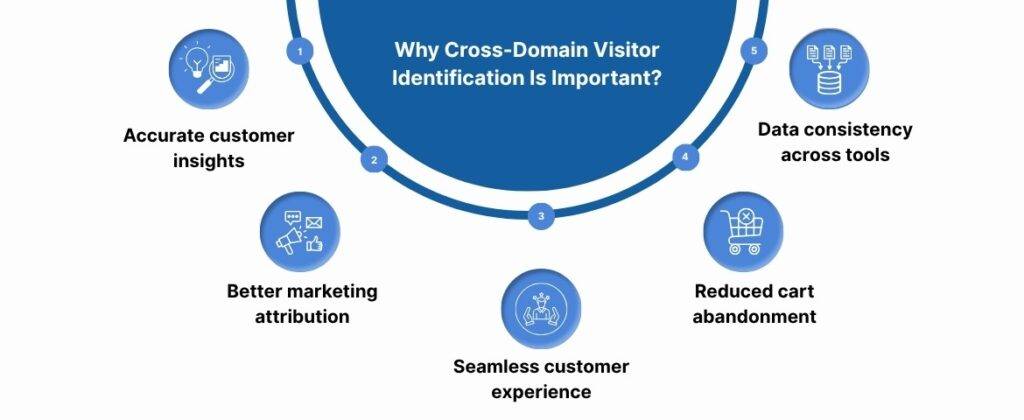
- Accurate customer insights: Without linking visits across domains, each session looks separate, making it hard to know where users came from or how they convert.
- Better marketing attribution: It connects traffic sources and conversions, so you can see which campaigns or channels truly drive results.
- Seamless customer experience: Users shouldn’t feel like they’re starting over when moving from your main site to a store or support portal.
- Reduced cart abandonment: When user sessions break across domains, carts can reset, or tracking gets lost.
- Data consistency across tools: Your analytics, CRM, and ad platforms rely on unified data to make accurate decisions and personalize experiences.
Following this, we’ll break down the technical side of things and how exactly the tracking mechanism works under the hood.
Use Cases & Benefits of Cross-Domain Visitor Identification
Cross-domain visitor identification helps businesses understand their users better and deliver smoother experiences across every website they own. Here are some practical use cases and the benefits they bring:
1. Unified Analytics Across Multiple Domains
When your marketing site, shop, and support portal run on different domains, analytics often break. Cross-domain tracking connects these touchpoints, allowing you to see how users move from learning about a product to purchasing or seeking help. This gives you complete visibility into the customer journey.
2. Consistent Personalization and Targeting
Visitors expect your website to remember their preferences, no matter which domain they’re on. With cross-domain identification, you can deliver consistent product recommendations, offers, or saved carts across all platforms. This reduces friction and keeps engagement high from the first visit to checkout.
3. Accurate Conversion Attribution
Without unified tracking, your analytics might credit the wrong source for a conversion. Cross-domain visitor identification ties all actions back to the correct campaign or channel. This helps you spend your marketing budget more wisely and measure ROI accurately.
4. Improved Retargeting and Audience Segmentation
When visitor data stays connected across domains, your ad and email tools get a clearer picture of user behavior. That allows you to build stronger audience segments and target users based on their entire journey, not just one session. As a result, your retargeting becomes more relevant and cost-efficient.
5. Enhanced Security and Compliance
Cross-domain tracking can be implemented in ways that maintain user privacy while keeping data consistent. With proper consent handling and secure identifiers, you can stay compliant with privacy laws while gaining a reliable understanding of user activity. This builds both trust and transparency with your customers.
After this, we’ll move on to the technical methods businesses use to maintain a smooth, continuous experience across domains.
Also read: Understanding Cross-Domain Cookies and How They Work
How Does Cross-Domain Visitor Tracking Work?
Cross-domain visitor tracking works by connecting user activity across different domains so you can see the complete customer journey. Here’s how it typically happens step by step:
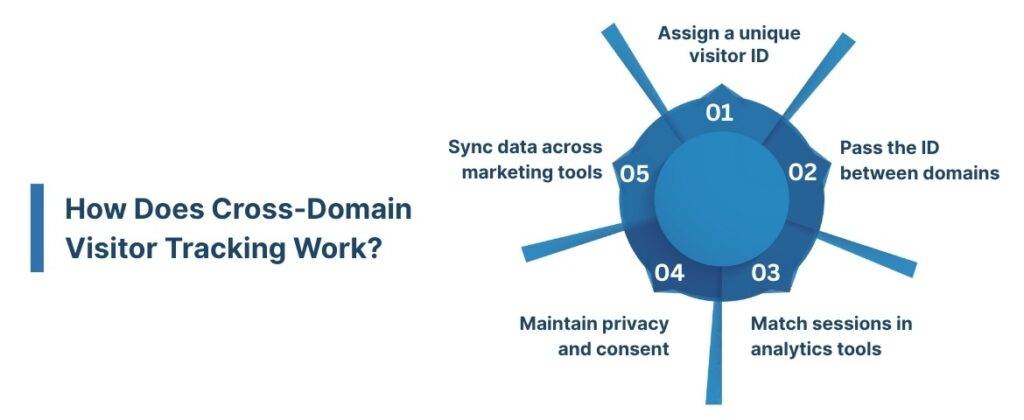
- Assign a unique visitor ID
- Every visitor receives a unique identifier (like a tracking ID or cookie) when they first visit one of your websites.
- This ID allows the system to recognize the same user on other domains without losing continuity.
- Using Ingest ID, these first-party identifiers are assigned automatically, giving you accurate attribution and a full view of the customer journey.
- Pass the ID between domains
- When a visitor navigates from one domain to another, the unique ID is shared via URL parameters or cookies.
- This ensures analytics tools treat it as the same session rather than splitting it into separate users.
- Ingest IQ makes this seamless with server-side tracking, reliably passing identifiers while maintaining website performance.
- Match sessions in analytics tools
- Analytics platforms or tag managers stitch together visits from both domains using the shared ID.
- This produces a continuous journey, showing all actions from the first interaction to conversion.
- Event IQ consolidates these interactions across multiple platforms, giving actionable insights into user behavior.
- Maintain privacy and consent
- Consent banners and privacy settings ensure tracking aligns with user permissions and global regulations.
- Proper consent management keeps your setup transparent while still capturing useful data.
- With Event IQ, you can manage GDPR, CCPA, and other privacy requirements efficiently while tracking accurately.
- Sync data across marketing tools
- The connected visitor ID can be shared with CRMs, email platforms, and advertising tools for a consistent experience.
- This enables personalized messaging, accurate conversion tracking, and fewer data mismatches.
- Combining Ingest ID and Ingest IQ, your data flows smoothly across platforms, improving targeting and marketing ROI naturally.
Now, we’ll move on to the technical methods businesses use to maintain a smooth, continuous experience across domains.
Core Technical Approaches
Cross-domain visitor identification relies on specific technical methods to connect user activity across different websites accurately. These approaches ensure that businesses can track the full customer journey without losing data or compromising privacy. Here are the main methods used:
- URL Parameter Passing
- Unique visitor IDs are appended to links when users navigate from one domain to another.
- This allows the next domain to read the ID and continue the same session seamlessly.
- With Ingest IQ, these identifiers are passed automatically and securely, reducing errors and manual setup.
- First-Party Cookies
- Cookies set by each domain store the unique visitor ID locally in the browser.
- When the user visits a connected domain, the cookie helps recognize them as the same visitor.
- Ingest ID utilizes first-party cookies to unify visitor profiles while maintaining privacy compliance.
- Server-Side Tracking
- Data about user actions is sent directly from the server rather than the browser, avoiding browser limitations.
- This ensures more reliable data collection and faster website performance.
- Ingest IQ provides server-side tracking that captures accurate signals while keeping the experience smooth for visitors.
- Identity Stitching
- Information from multiple touchpoints (cookies, login IDs, or device data) is combined to recognize the same user.
- This method fills gaps when cookies are blocked or users switch devices.
- Event IQ helps stitch together cross-domain data, giving a clear and complete picture of the customer journey.
We’ll explore how businesses can manage cross-domain tracking across multiple brands, especially when navigating the complexities of global data privacy laws.
Managing Cross-Domain Tracking in Multi-Brand and Global Enterprises
Tracking visitors across brands and regions is complex, but the right setup provides a clear, unified view. You need a system that unifies your data, respects privacy, and helps you make smarter marketing decisions across all your domains. Here’s how you can manage it effectively:
Challenges
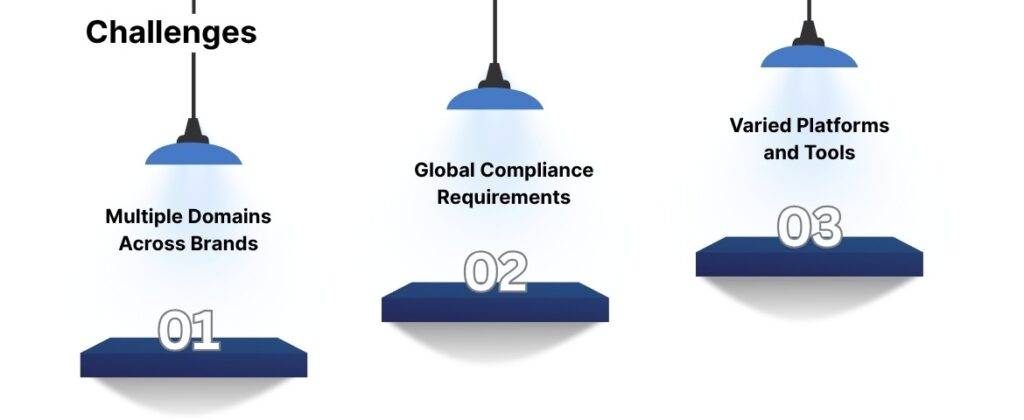
- Multiple Domains Across Brands
- If each of your brands has its own website, it’s easy to lose track of the same visitor moving between them.
- Without proper tracking, your analytics can become fragmented, giving you incomplete insights and misattributed conversions.
- Global Compliance Requirements
- Varied Platforms and Tools
- Your websites might use different analytics, CRMs, or marketing platforms.
- Without integration, this can lead to inconsistent data and unclear reporting.
Solutions
- Centralized Visitor Identification
- Assign a unique ID to each visitor that works across all your domains and brands.
- With Ingest ID, you can easily connect user journeys across multiple websites, keeping your data unified and actionable.
- Server-Side Tracking
- Move data collection from the browser to the server to reliably capture cross-domain signals.
- Ingest IQ ensures accurate tracking across all your domains while keeping your website performance smooth.
- Integrated Data Platform
- Sync your data across analytics, marketing, and CRM tools for a single, consistent view of your users.
- Event IQ consolidates behavior from all your domains, letting you personalize experiences and make better marketing decisions.
Final Thoughts
Cross-domain visitor identification is essential for understanding your customers’ complete journey across multiple websites and domains. It helps you connect user behavior, improve marketing attribution, reduce cart abandonment, and deliver a seamless experience. Without it, you risk fragmented data, misattributed conversions, and missed opportunities to optimize campaigns effectively.
To implement this efficiently, Ingest Labs offers a suite of solutions tailored for cross-domain tracking and data management. Ingest ID provides first-party identifiers for accurate user recognition, Ingest IQ enables server-side tracking and real-time insights, and Event IQ unifies data across platforms for personalized experiences. Together, they help you improve marketing ROI, maintain privacy compliance, and make smarter, data-driven decisions across all your domains.
Get in touch with Ingest Labs today to start tracking your customers seamlessly across all domains and boost your marketing impact.
Frequently asked questions (FAQ)
1. What is cross-domain visitor identification?
Cross-domain visitor identification is the process of recognizing the same user as they move across different websites or domains owned by your business. It helps create a unified view of their journey for accurate analytics and personalized experiences.
2. Why is cross-domain tracking important for my business?
It ensures you can see the complete customer journey, connect conversions to the right campaigns, reduce cart abandonment, and deliver consistent experiences across multiple sites. Without it, data can be fragmented and misleading.
3. How does cross-domain visitor tracking work?
Tracking works by assigning a unique visitor ID, passing it between domains via cookies or URL parameters, and stitching sessions together in analytics tools. This allows you to see a continuous journey across all your sites.
4. Can cross-domain tracking maintain user privacy?
Yes, when implemented with proper consent management and privacy-compliant identifiers, cross-domain tracking respects regulations like GDPR and CCPA while still providing actionable insights.
5. How can Ingest Labs help with cross-domain tracking?
Ingest ID, Ingest IQ, and Event IQ work together to assign visitor IDs, enable server-side tracking, unify data across platforms, and provide real-time analytics, making cross-domain tracking seamless and compliant.