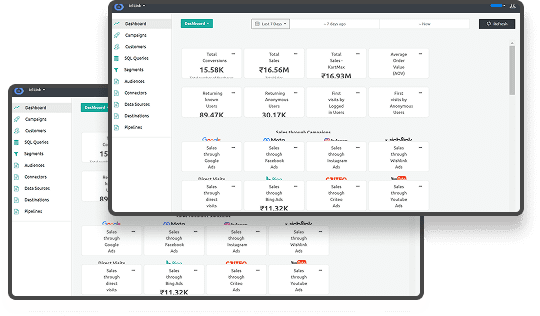





Marketing budgets are becoming more data-driven, and every dollar spent needs to prove its value. Conversion tracking helps your business understand exactly what’s working and what’s not. Instead of guessing which campaigns drive results, you can measure outcomes directly and invest where performance is proven.
Whether you run ads, manage email campaigns, or sell products online, conversion tracking connects marketing activity to real business results.
It answers key questions like: Which channel delivers customers? Which ad creates revenue? Which touchpoints deserve more budget?
In today’s privacy-first world, understanding conversions is more than a performance metric; it’s your roadmap to smarter decisions, better ROI, and sustainable growth. Now that we know why it matters, let’s define what conversion tracking actually is and how it works.
Key Takeaways
- Conversion tracking shows which campaigns truly drive revenue so you can spend smarter, not broader.
- It gives you clear ROI visibility, connecting every marketing dollar to measurable business outcomes.
- Privacy-first, server-side tracking keeps data accurate and compliant as cookies disappear.
- Ingest Labs makes conversion tracking easy with no-code tools that unify data, ensure compliance, and maximize performance.
What Is Conversion Tracking
Conversion tracking is the process of measuring the actions users take after interacting with your marketing, such as purchases, sign-ups, or form completions. It’s how you connect your marketing activity to actual business results rather than surface-level metrics like clicks or impressions.
In simple terms, when a visitor completes a desired action on your site or app, a tracking mechanism records that event. These actions are then attributed to the marketing source, such as a Google Ad, social campaign, or email, allowing you to evaluate what drove the conversion.
Common examples of conversions include:
- Completing a purchase or checkout
- Subscribing to a newsletter or service
- Downloading a whitepaper or guide
- Filling out a contact or demo request form
Conversion tracking can be done in different ways:
- Client-side tracking: Tags or pixels on your website collect data directly from the user’s browser.
- Server-side tracking: Data is processed securely on your server, offering more accurate, privacy-compliant tracking.
Businesses that use advanced tools like Ingest Labs’ conversion tracking solutions gain even deeper insights. Their privacy-first, no-code platform ensures that marketers can track essential user actions accurately while maintaining data compliance.
Now that you know what conversion tracking is, let’s explore why it matters and how it drives measurable impact for your business.
Also Read: How to Track Conversions in Google Analytics 4
Why Conversion Tracking Matters for Your Business
Every marketing activity your team runs, from paid ads to email campaigns, has one ultimate goal: to drive measurable outcomes.
Conversion tracking ensures you know whether those outcomes are being achieved. Without it, you’re left guessing which channels or campaigns are responsible for results.
When implemented correctly, conversion tracking acts as the foundation of a data-driven marketing strategy. It connects every click, ad impression, or email open to actual conversions, allowing you to understand what truly delivers value.
Here’s why it matters:
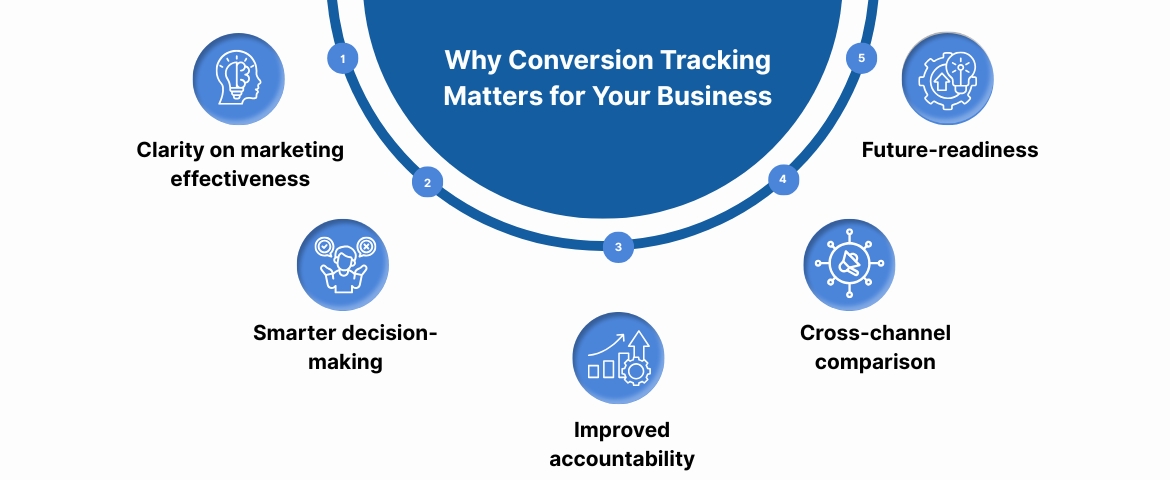
- Clarity on marketing effectiveness: Conversion tracking reveals which campaigns drive leads, sales, or sign-ups, helping you eliminate underperforming efforts.
- Smarter decision-making: It shifts decisions from instinct to evidence, showing exactly where to invest your time and budget.
- Improved accountability: Each dollar spent can be measured against real outcomes, giving your marketing team clear performance visibility.
- Cross-channel comparison: It allows you to evaluate different marketing channels side by side, helping you see whether paid search, social media, or email brings the highest returns.
- Future-readiness: In a world moving away from cookies, server-side and first-party conversion tracking safeguards your data accuracy and compliance.
For example, a retail brand running multiple ad campaigns can see that social ads bring more traffic, but search ads generate more purchases. With that insight, the marketing team can reallocate budget to the most effective channel and immediately improve ROI.
Conversion tracking transforms marketing from a guessing game into a measurable growth engine. Now that we understand its importance, let’s explore the specific benefits your business can gain from using conversion tracking effectively.
Also Read: Methods of Ads Conversion Tracking for Websites
Core Benefits of Conversion Tracking
Conversion tracking does more than count clicks; it shows you what’s working, what’s wasting money, and where to focus next. When you measure conversions correctly, every marketing decision becomes smarter, and every dollar spent becomes more efficient.
Here are the key benefits of conversion tracking and how they translate into measurable business outcomes.
1. Accurate ROI Measurement and Tracking
Knowing the exact return on investment (ROI) from your marketing spend is one of the biggest advantages of conversion tracking. It connects your advertising costs directly to the actions that drive revenue.
Why it matters:
- Measures the precise ROI for each campaign and channel.
- Reveals the true value of every marketing effort.
- Eliminates guesswork by linking spend to revenue outcomes.
For example, if your business runs campaigns on both Google Ads and Meta, conversion tracking can identify which channel delivers actual purchases versus just traffic. This ensures your marketing budget works harder and drives real profit.
Also Read: Tips to Optimize Your Marketing ROI
2. Identify Your Most Effective Marketing Channels
Not all marketing channels perform equally. Conversion tracking helps you identify which platforms and campaigns generate the most conversions, leads, or sales.
Key advantages:
- Determines which sources produce the highest-quality results.
- Allows you to double down on high-performing campaigns.
- Reduces waste by eliminating underperforming channels.
This insight helps businesses move from spending blindly to investing strategically. For example, a SaaS company might discover that email nurtures convert better than paid ads, leading them to refocus their efforts accordingly.
3. Real-Time Campaign Performance Analysis
In fast-moving markets, timing is everything. Conversion tracking gives you real-time visibility into how your campaigns perform, enabling immediate adjustments.
Benefits include:
- Monitor campaign results as they happen.
- Respond quickly when performance drops or peaks.
- Continuously optimize creatives, bids, and targeting.
A marketing agency, for instance, can track conversion data daily to pause ineffective ads or boost those outperforming expectations, saving both time and budget.
Also Read: Diagnose and Improve Shopify Website Performance
4. Optimize Budget Allocation Across Channels
Conversion tracking provides clear insights into where every dollar delivers value. Instead of splitting budgets evenly across channels, you can allocate more resources to what works best.
Why it’s essential:
- Focus your spend on high-impact campaigns.
- Reduce waste from low-performing channels.
- Ensure every marketing dollar contributes to growth.
When your data shows that organic search delivers higher-value leads than paid display ads, you can reallocate funds accordingly. This approach strengthens ROI and maximizes long-term profitability.
5. Understand Your Customer’s Complete Journey
Modern customer journeys are multi-touch; a person might discover your brand on social media, read a blog, and convert later through an ad. Conversion tracking connects these dots.
Key outcomes:
- Maps the entire path from first click to final conversion.
- Highlights the most influential touchpoints.
- Improves understanding of customer intent and timing.
For example, eCommerce marketers can identify that users often view a product page twice before buying. This insight helps refine retargeting strategies and improve conversion rates.
6. Improve Website User Experience
Conversion tracking also provides powerful insights into how users interact with your website.
Benefits:
- Pinpoints where visitors drop off in your funnel.
- Identifies pages or forms that cause friction.
- Informs UX improvements that boost completion rates.
Let’s say your data shows users abandon checkout after the shipping step. You can test faster checkout options or clearer delivery details, small changes that often create big performance lifts.
7. Better Understand Your Audience’s Behavior
Effective marketing relies on knowing your audience. Conversion tracking reveals which messages, products, and channels resonate most.
Advantages:
- Understand which content or offers attract your best customers.
- Identify audience segments most likely to convert.
- Personalize campaigns with precision.
This leads to smarter creative decisions and more meaningful customer engagement.
8. Enable Data-Driven Decision Making
With conversion data, decisions become based on facts, not assumptions.
Why it matters:
- Compare campaign performance objectively.
- Guide strategy using verified data instead of estimates.
- Empower teams with clear insights for better planning.
For example, marketing managers can identify which campaigns contribute the most to pipeline growth, helping justify budget increases or channel shifts with confidence.
9. Maximize Return on Ad Spend (ROAS)
Conversion tracking allows you to calculate true ROAS, showing how much revenue your ads generate for every dollar spent.
Key benefits:
- Measures ad performance beyond impressions and clicks.
- Reveals which creatives or campaigns drive the most value.
- Helps scale profitable campaigns while reducing wasted spend.
For example, an eCommerce brand can see that one ad variation drives more sales than others and scale that winning campaign quickly.
Conversion tracking transforms fragmented marketing data into actionable intelligence. It gives you the visibility and control needed to drive profitable, privacy-compliant growth.
In the next section, we’ll explore how these benefits become even more critical in a privacy-first, cookieless marketing world, and why conversion tracking is the foundation of future-ready analytics.
Also Read: Event Tracking Tools for Google Analytics
Conversion Tracking in a Privacy-First, Cookieless World
As browsers phase out third-party cookies and privacy laws grow stricter, marketers face a new reality: less visibility into user behavior. Conversion tracking is no longer just a performance tool; it’s the bridge between ethical data practices and accurate marketing insights.
Traditional, cookie-based tracking struggles under new privacy frameworks such as GDPR and CCPA. Data can be lost, misattributed, or blocked entirely. Server-side and first-party tracking, on the other hand, ensure that businesses maintain accurate data while respecting user consent.
Why this matters today:
- Preserve data accuracy: Even as cookies disappear, conversion tracking built on first-party data ensures continued visibility into real results.
- Maintain compliance: Control what data is collected and shared with third parties to meet global privacy standards.
- Protect customer trust: When data is collected transparently, customers are more willing to engage and convert.
For example, eCommerce brands using server-side conversion tracking can still track key events like “add to cart” or “purchase” even when browsers limit cookies. This allows them to optimize campaigns while staying compliant.
Platforms such as Ingest Labs make this process simple by offering no-code, privacy-first tracking tools that help marketers stay accurate, compliant, and competitive in the cookieless era.
Also Read: How Cookieless Tracking Works and Its Impact on Data Collection
Common Pitfalls & How to Avoid Them
Even the best marketing teams can make mistakes when implementing conversion tracking. These errors often lead to inaccurate data, poor optimization, or compliance issues. The good news? Each of these pitfalls is avoidable with the right strategy and tools.
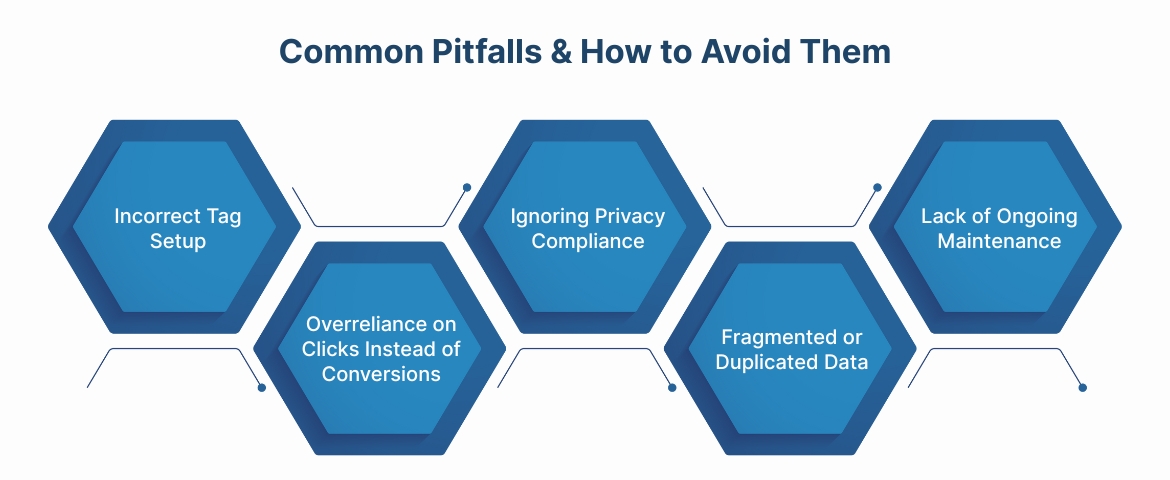
1. Incomplete or Incorrect Tag Setup
If your tags or pixels aren’t firing correctly, you might miss critical conversion data. This happens when tracking codes are placed on the wrong pages or configured incorrectly in the tag manager.
Avoid this by:
- Testing every conversion event before campaigns go live.
- Using preview modes in tools like Google Tag Manager.
- Considering server-side tagging for more stable and accurate event collection.
2. Overreliance on Clicks Instead of Conversions
High click-through rates don’t always mean success. Focusing only on clicks ignores what happens after users land on your site.
Avoid this by:
- Tracking meaningful actions like purchases, downloads, or sign-ups.
- Evaluating campaigns based on conversion data, not just clicks or impressions.
- Comparing engagement metrics with actual outcomes to measure value accurately.
3. Ignoring Privacy Compliance
Collecting personal data without user consent can lead to serious legal and reputational risks. Many marketers still overlook compliance requirements when setting up conversion tracking.
Avoid this by:
- Implementing consent banners that clearly inform users about data collection.
- Following GDPR, CCPA, and regional data protection laws.
- Using platforms like Ingest Labs, which provide privacy-first, compliant tracking solutions by design.
4. Fragmented or Duplicated Data
Using multiple tools without integration can lead to double-counting or missing conversions altogether.
Avoid this by:
- Centralizing tracking through a single data management platform or tag manager.
- Connecting all analytics and ad platforms consistently.
- Using first-party data pipelines for clean, unified reporting.
5. Lack of Ongoing Maintenance
Conversion tracking isn’t a “set it and forget it” process. Site updates, new campaigns, or changing compliance rules can easily break your setup.
Avoid this by:
- Auditing your tracking regularly.
- Revalidating tags and conversion paths whenever new campaigns are launched.
- Using automated monitoring tools to ensure all events fire correctly.
Avoiding these common mistakes helps you maintain accurate, compliant, and actionable data, the foundation for confident, data-driven marketing.
Now that you know what to avoid, let’s move to the next step: how to set up and optimize conversion tracking effectively.
Also Read: Third-Party Cookie Restrictions: Challenges and Solutions
How to Get Started: Practical Steps for Implementation
Getting started with conversion tracking doesn’t have to be complex. Whether you’re a small business or a large enterprise, the process follows a few consistent principles that ensure accurate and compliant results.
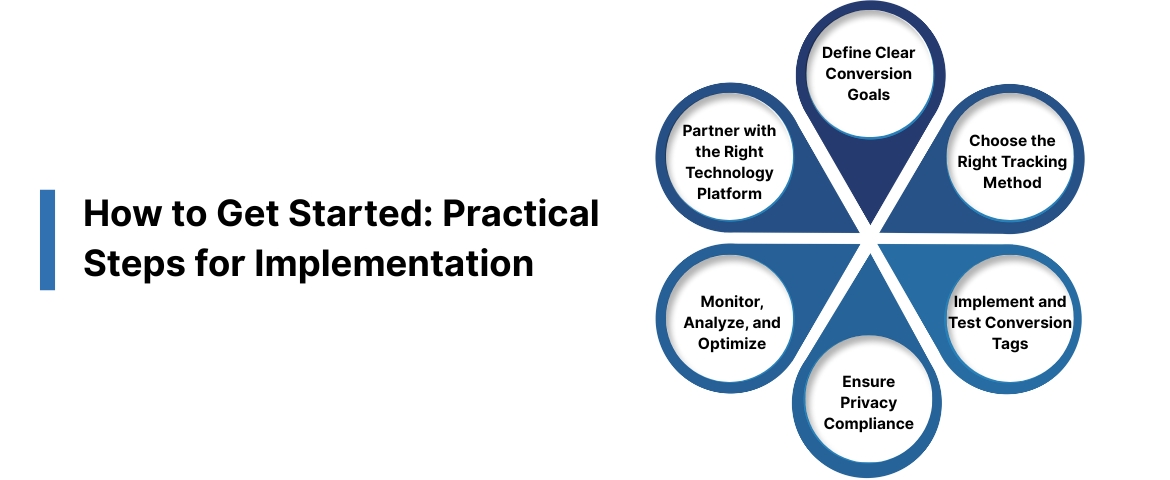
1. Define Clear Conversion Goals
Start by identifying the actions that matter most to your business, purchases, form submissions, demo bookings, or downloads.
Each goal should align with a measurable business outcome. Clear definitions prevent confusion and guide setup priorities.
2. Choose the Right Tracking Method
Decide between client-side (browser-based) or server-side (backend) tracking depending on your needs.
- Client-side is simpler but may be affected by ad blockers or cookie restrictions.
- Server-side offers higher accuracy, control, and privacy compliance.
Many businesses use a hybrid model for balanced insight. Platforms like Ingest Labs make this setup seamless with no-code deployment and first-party data control.
3. Implement and Test Conversion Tags
Add your tracking tags or scripts across relevant pages and user actions. Always test before going live to ensure every event fires correctly.
Use tag management tools and preview modes to confirm proper configuration.
4. Ensure Privacy Compliance
Set up consent management and data policies that align with regulations like GDPR and CCPA.
Make sure users understand what’s being tracked and why. Server-side tracking simplifies compliance by allowing you to filter and anonymize sensitive data before sharing it with analytics or ad platforms.
5. Monitor, Analyze, and Optimize
Once tracking is live, monitor your conversion data daily.
Identify patterns, which campaigns deliver, which audiences convert, and which pages need improvement.
Use these insights to adjust budgets, creative assets, and targeting for better ROI.
6. Partner with the Right Technology Platform
Accurate, compliant conversion tracking requires a reliable foundation. Ingest Labs empowers marketing teams to implement first-party, privacy-safe conversion tracking across all channels, without relying on developers.
From event tracking to data orchestration, it ensures accuracy, compliance, and efficiency at scale.
With these steps, your business can confidently track performance, protect user trust, and make informed marketing decisions that directly impact revenue.
Also Read: Setting Up Offline Conversion Tracking in Google Ads
How Ingest Labs Simplifies Conversion Tracking
Understanding the importance of conversion tracking is one thing; implementing it accurately and securely is another. That’s where Ingest Labs comes in.
Ingest Labs offers a complete MarTech suite designed to help businesses measure conversions with accuracy, compliance, and efficiency. Through tools like Ingest IQ, Event IQ, and Ingest ID, marketing teams can track every customer action, from page visits to purchases, using first-party, privacy-compliant data.
- Ingest IQ enables server-side tracking for clean, reliable conversion data across web and mobile.
- Event IQ provides real-time analytics to visualize performance and optimize ROI.
- Ingest ID creates unified customer profiles for precise attribution across devices and channels.
With Ingest Labs, marketers gain complete visibility into their conversion performance — all without writing a single line of code. It’s conversion tracking made simple, compliant, and ready for the cookieless future.
Conclusion
Conversion tracking is more than a marketing metric; it’s a complete feedback system for your business growth. It connects your marketing spend to real outcomes, identifies where your customers come from, and helps you invest confidently in the channels that truly perform.
In a data-driven, privacy-conscious world, the brands that measure accurately are the ones that scale sustainably. Whether you’re improving ad performance, optimizing website experience, or refining customer journeys, conversion tracking gives you the insight needed to make every decision count.
With Ingest Labs, implementing accurate, privacy-first conversion tracking is simple. Our no-code tools let you manage conversions across platforms, maintain compliance, and measure true ROI, all in real time.
Contact us to discover how Ingest Labs can help your team track with confidence and grow with precision.
FAQs
1. What is the main benefit of conversion tracking?
Conversion tracking connects marketing activity directly to measurable outcomes like sales, leads, or sign-ups, giving you clarity on what drives revenue.
2. Is conversion tracking only for eCommerce businesses?
No. It applies to any business with a defined goal, from lead generation to content downloads, webinar registrations, or demo requests.
3. How does conversion tracking improve ROI?
By revealing which channels and campaigns generate actual conversions, it helps you focus spending on high-performing efforts and eliminate wasted budget.
4. How does privacy impact conversion tracking today?
With cookie restrictions and privacy laws like GDPR and CCPA, conversion tracking must rely on first-party or server-side methods to stay accurate and compliant.
5. Do I need coding skills to set up conversion tracking?
Not necessarily. Tools like Ingest Labs make setup no-code, allowing marketing teams to implement reliable tracking without technical complexity.