



Think of a shopper browsing a fashion website: they view several jackets, spend time reading descriptions, and even check reviews, but leave without adding anything to the cart. Traditional analytics may record a pageview, but it often misses the fact that this visitor showed clear interest.
This behavior, known as abandoned browse, is growing more common as privacy regulations tighten, browsers restrict tracking, and consent signals become inconsistent. Without accurate tracking, marketers can’t follow up with personalized experiences or understand why users are disengaged.
This guide explains the most reliable ways to track abandoned browse behavior in a privacy-first environment. You’ll learn what signals to capture, how to collect them accurately, and how to use these insights to improve engagement and boost conversions.
Key Takeaways
- Abandoned browse captures early shopping intent your analytics often miss, making it a critical signal in a privacy-first environment.
- Tracking browse behavior helps identify interest earlier, improve engagement, and guide users toward conversion with relevant experiences.
- First-party, server-side tracking keeps browsing data accurate even when scripts fail, browsers block cookies, or consent signals vary.
- A unified data stream turns fragmented browse signals into consistent insights for personalization, attribution, and audience segmentation.
- Ingest Labs ensures reliable abandoned browse tracking with durable identifiers, clean events, and privacy-aligned data delivery.
What Abandoned Browse Really Means
Abandoned browse refers to when a visitor explores products or pages on your website but leaves without taking further engagement actions, such as signing up, clicking “add to cart,” or interacting with a promotion. Unlike cart abandonment, which tracks items added to the cart, abandoned browse captures early-stage signals of interest.
These browsing signals are critical because they reveal intent before the user reaches the purchase stage. By tracking abandoned browse behavior, your marketing team can understand which products or pages capture attention, which lose it, and how users move through your site. This insight helps improve personalization, engagement, and conversion strategies.
In practical terms, abandoned browse might look like:
- A visitor spends several minutes exploring a product category but exits the site without signing up for updates.
- Someone reads multiple product pages, compares options, and then leaves without taking further action.
- Returning visitors explore new arrivals but fail to engage with promotions or recommendations.
Abandoned Browse vs. Cart Abandonment
Although both provide insights into user intent, abandoned browse and cart abandonment track very different behaviors. Let’s explore their differences in more detail:
| Aspect | Cart Abandonment | Abandoned Browse |
| Data Source | Products added to cart but not purchased | Pages or products viewed without further engagement |
| Stage of Journey | Late-funnel | Early- to mid-funnel |
| Reliability | Often accurate if cart events fire correctly | Requires consistent tracking of pageviews and interactions |
| Use Cases | Recovery emails, retargeting campaigns | Personalization, engagement strategies, product recommendations |
| Future Readiness | Dependent on reliable cart tracking | Essential for privacy-first measurement and understanding intent |
Now that you understand what abandoned browse is, let’s explore why tracking this behavior matters for your marketing and e-commerce strategies.
Related: How to Reduce Cart Abandonment and Recover Sales
Tracking an Abandoned Browse
Audience behavior has changed. Visitors explore products and categories without committing immediately, and traditional analytics often fail to capture these early signals. At the same time, privacy rules and browser restrictions make it harder to track browsing patterns accurately.
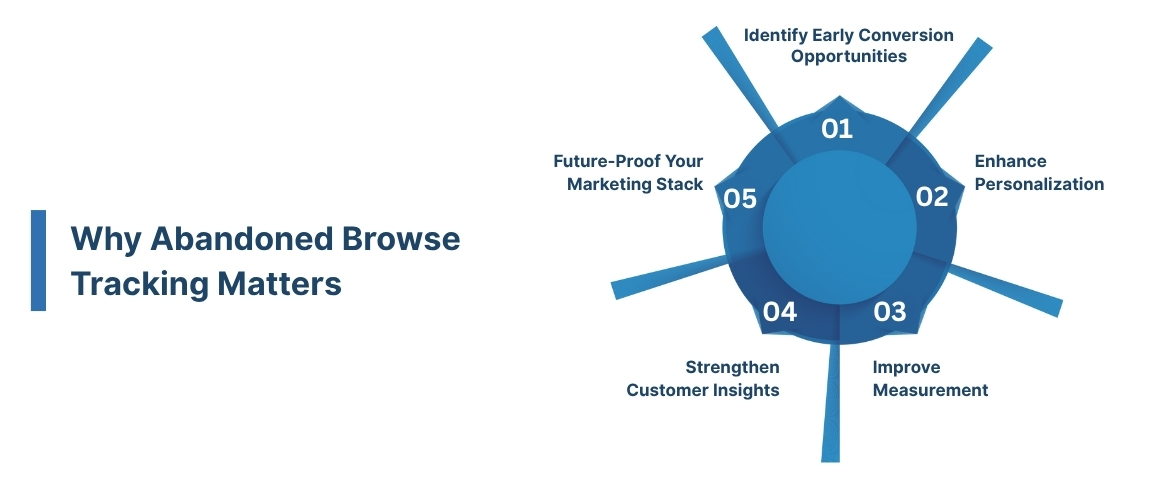
This makes abandoned browse behavior a critical source of insight for marketers. Understanding it helps brands identify interest early, improve engagement, and optimize the path to conversion. Here’s why tracking abandoned browse properly is essential:
Identify Early Conversion Opportunities
- Captures interest signals before visitors reach the cart or checkout stage.
- Reveals which products or pages attract attention and which fail to engage.
- Helps marketing teams intervene with personalized campaigns before potential customers disengage.
Enhance Personalization and Recommendations
- Uses browsing behavior to tailor product suggestions and content in real time.
- Supports on-site messaging, emails, and retargeting that aligns with actual user intent.
- Improves engagement by showing relevant options based on what users actually viewed.
Improve Measurement and Attribution
- Tracks user journeys consistently, even when browser scripts or cookies are blocked.
- Reduces gaps in understanding which pages or categories contribute to conversions.
- Helps quantify the value of early-stage engagement in your overall marketing performance.
Strengthen Customer Insights
- Captures genuine interest rather than inferred behavior.
- Provides actionable data for audience segmentation and targeting.
- Supports privacy-first strategies while still allowing brands to understand what drives users to explore products.
Future-Proof Your Marketing Stack
- Works independently of third-party tracking that may be restricted by browser or platform updates.
- Creates a durable foundation for collecting browsing data that can feed analytics, CRMs, and personalization tools.
- Ensures your measurement strategy adapts to privacy changes without losing visibility into user intent.
Want to turn early-stage browsing signals into actionable marketing insights?
Ingest Labs tracks abandoned browse behavior with privacy-aligned, server-side events and first-party identifiers, helping you understand users, optimize engagement, and increase conversions even in a cookieless world.
How to Track Browse Abandonment
Tracking browse abandonment requires a mix of behavioral data, automation, and clear reporting. The goal is simple: identify when a shopper shows interest but leaves before adding anything to the cart, then use that data to trigger timely, relevant emails.
Start with site tracking tools. Most email and CRM platforms offer tracking pixels or scripts that record product views, category visits, time spent on a page, and return visits. Once installed, they help you understand exactly what a user looked at before exiting.
Next, set up behavior-based segments so you can personalize messaging. Common segments include:
- Viewed a product but didn’t add to cart
- Viewed multiple products
- Spent significant time on a product or category page
- Viewed high-value or limited-stock items
These segments allow your browse abandonment workflow to pull the right content, such as product names, images, and prices, directly into the email.
Use automated triggers in your email platform so messages are sent immediately after abandonment. Automations typically activate within minutes to a few hours, ensuring the product remains top of mind.
Finally, measure performance using UTM parameters and analytics tools like GA4. Key metrics include:
- Open and click-through rates
- Return visits after receiving an email
- Conversions attributed to browse abandonment
- Products or categories with the highest abandonment patterns
This data helps refine both your emails and your on-site experience.
With the right tracking setup, like pixels, segmentation, automation, and analytics, brands can understand intent earlier in the customer journey and turn passive browsing into meaningful conversions.
Launching an Abandoned Browse Campaign
A successful browse abandonment campaign bridges the gap between casual interest and purchase intent. Since these visitors haven’t added anything to their cart, the goal is to gently guide them back without feeling pushy. An effective browse abandonment email should include:
- Customer’s name to create a personalized, human touch
- A brief summary of the items they viewed, reminding them of what caught their attention
- A clear, compelling CTA that leads them back to the product page
- A value-add or incentive such as free shipping or a limited-time discount (especially in follow-up emails)
- Related product suggestions to widen their options and boost relevance
- Customer reviews or social proof to increase trust and reduce hesitation
Because browsing shows early-stage interest, timing and frequency matter. The first email should be sent within 1–3 hours after the shopper leaves. This keeps the product fresh in their mind while signaling helpfulness instead of pressure.
If you’re sending a second email, 24 hours later works best, often paired with a small incentive to encourage completion. Some brands also support this flow with retargeting ads, SMS, or push notifications to stay top of mind without overwhelming the shopper.
A well-planned browse abandonment campaign feels like friendly guidance, not a sales push, bringing curious visitors one step closer to becoming buyers.
Browse Abandonment Email Examples for Re-Engagement
The best browse abandonment emails do more than remind shoppers of what they viewed. They reduce friction, reinforce value, and re-spark interest through tone, design, or incentives.
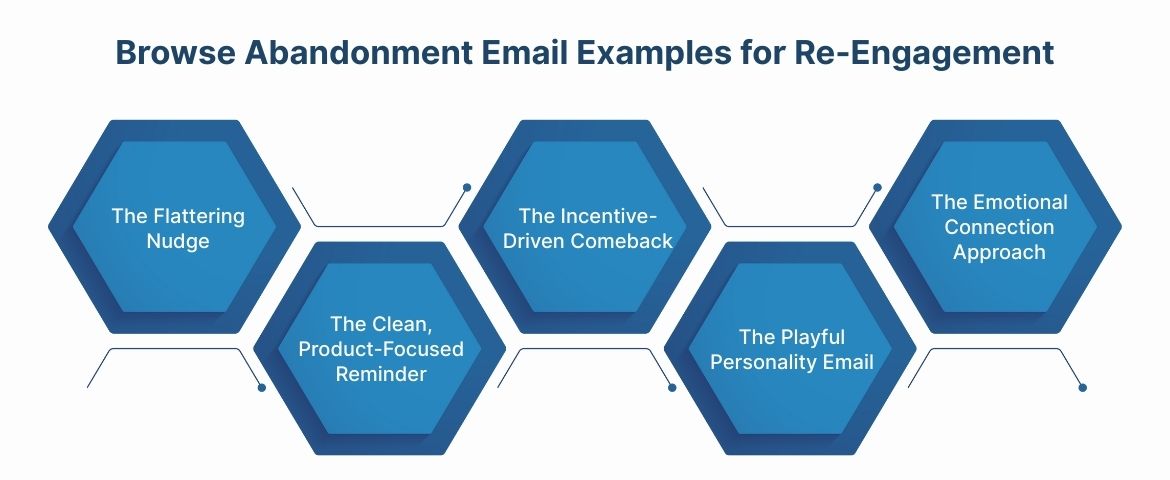
Here are five effective browse abandonment examples that show how brands recapture interest and guide shoppers back to the products they viewed:
1. The Flattering Nudge
A beauty or lifestyle brand uses a confidence-boosting headline like “You’ve got great taste” to make shoppers feel good about what they browsed. The email opens with a gentle acknowledgment (“We noticed you checking out…”) and pairs it with clean product images and clear pricing. This approach works because it feels personal without being intrusive.
2. The Clean, Product-Focused Reminder
A fashion retailer sends a bold headline such as “Take another look” and keeps the design intentionally minimal. The browsed items appear front and center with crisp photography, two or three CTAs, and zero clutter. This layout appeals to shoppers who already know what they want. Your job is simply to bring the item back into view.
3. The Incentive-Driven Comeback
A footwear or apparel brand opens with urgency (“Still thinking it over?”) and immediately removes friction with a perk like free shipping or easy returns. A product grid offers similar or complementary items, giving undecided shoppers options. This style is powerful for higher-consideration purchases where small incentives can tip the decision.
4. The Playful Personality Email
A fun consumer brand leans into bold colors, quirky copy, or emojis (“Window shopping?”) to stay true to its identity. Alongside the browsed item, it includes quick feature callouts, including ingredients, sustainability notes, or unique product traits. This keeps the email memorable and aligns with brands that rely on personality to differentiate.
5. The Emotional Connection Approach
Pet, baby, or wellness brands often use emotional imagery and warm copy (“Make it theirs today”). Social proof, including star ratings, reviews, or “bestseller” tags, helps build trust. Including category links or related products gives shoppers a second path back to purchase, especially when they weren’t fully committed to the original item.
Whether it’s flattery, urgency, personality, or emotional appeal, the goal is to reconnect with intent and guide shoppers smoothly toward a buying decision.
Challenges of Abandoned Browse Campaigns (And How to Solve Them)
Abandoned browse campaigns may look simple, identifying what a shopper viewed and follow up with a helpful reminder, but in practice, they’re one of the hardest automations to get right. Limited data, privacy restrictions, missing context, and inconsistent event setups often lead to irrelevant messages or low conversions.
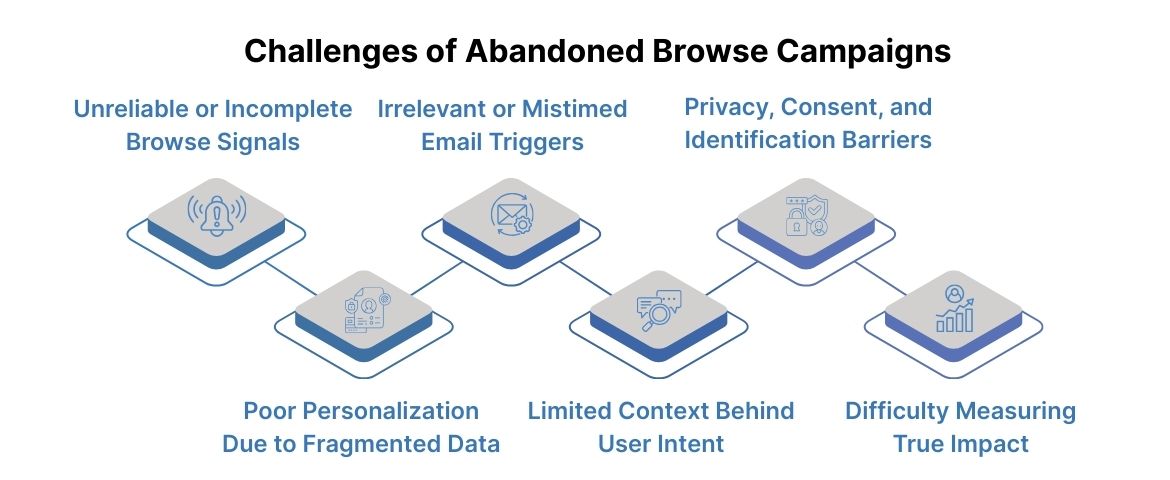
Here are the most common challenges brands face when running browse abandonment campaigns, along with practical ways to solve them:
1. Unreliable or Incomplete Browse Signals
If pageview or product-view events don’t fire correctly, campaigns trigger at the wrong time, or not at all. Without dependable data, emails lose relevance.
Solution: Use a combination of server-side and client-side tracking to ensure product views, category visits, and time-on-page signals are captured consistently. This gives campaigns steady, reliable behavioral data.
2. Poor Personalization Due to Fragmented Data
When product data, user profiles, and behavioral signals live in different systems, browse emails end up generic instead of tailored to what the user actually viewed.
Solution: Unify browse events and product data into a single source of truth. This allows templates to dynamically pull product titles, prices, variants, and availability, creating sharper, more personalized emails.
3. Irrelevant or Mistimed Email Triggers
Browse abandonment happens earlier in the buying journey than cart abandonment. Sending emails too soon feels intrusive; too late and the shopper forgets what they viewed.
Solution: Trigger the first browse email 1–3 hours after the visit, and send only one reminder within 24 hours. This timing balances helpfulness with respect for the customer’s buying cycle.
4. Limited Context Behind User Intent
A browse session doesn’t always mean purchase intent, some users are just scrolling, comparing products, or researching options. This often leads to low engagement rates.
Solution: Layer intent signals such as number of pages viewed, time spent on page, price range browsed, or return visits. Trigger campaigns only for “qualified” browse sessions that indicate real interest.
5. Privacy, Consent, and Identification Barriers
With stricter tracking restrictions, many users remain anonymous or limit consent, making it difficult to identify who should receive browse abandonment emails.
Solution: Use first-party cookies, preference centers, and on-site login/light signup prompts to encourage voluntary identification. Tie your browse events to consent logic to stay compliant while keeping campaigns operational.
6. Difficulty Measuring True Impact
Browse abandonment sits early in the funnel, so attribution becomes tricky. Brands often struggle to understand whether emails actually drive meaningful conversions.
Solution: Use UTM tracking, holdout tests, and assisted-conversion reporting to measure incremental impact. Comparing performance against a control group helps quantify how much the campaign contributes to revenue.
By solving these challenges, brands can transform abandoned browse campaigns into high-performing, intent-driven touchpoints that re-engage shoppers early, without feeling intrusive or sending irrelevant messages.
Also read: How to Reduce and Recover Shopify Abandoned Carts
Conclusion
Abandoned browse has become one of the most important early-intent signals in modern ecommerce. But capturing this behavior accurately isn’t simple. Teams run into missing pageviews, inconsistent schemas, duplicate events, consent issues, and disconnected systems. These gaps weaken personalization, distort retargeting, and hide valuable demand signals long before your user reaches the cart.
Ingest Labs removes these obstacles by giving you a privacy-first foundation for reliable browse tracking. Ingest IQ ensures pageviews and product interactions stay intact through server-side delivery. Ingest ID maintains durable recognition across sessions so early-stage engagement connects cleanly to later conversions. Event IQ unifies all browsing events into a consistent, compliant stream that every tool can trust.
Together, they turn abandoned browse from a noisy, unreliable signal into a clear indicator of intent.
If you’re ready to strengthen your measurement and capture intent earlier in the journey, explore how Ingest Labs can support your growth. Book a demo today.
FAQs
1. How do advanced segmentation techniques enable more effective abandoned browse campaigns than basic rules?
Instead of simply targeting everyone who views products without purchase, advanced platforms use rolling time windows (e.g., last four days), combine behavioral events (e.g., excluding anyone who completed an order recently), and even create custom attributes such as specific SKU views, product categories, or user engagement scores. This allows dynamic micro-segmentation, enabling much more personalized messaging and improved conversion for different visit recency, value signals, or funnel stages.
2. Is it possible to trigger dynamic website personalization based on past browse abandonment?
Yes. Modern CDPs and personalization engines dynamically alter banners, product recommendations, or even pricing as soon as a returning visitor lands, using stored session attributes about what was previously browsed and/or abandoned. This approach works even without login if persistent, privacy-compliant identifiers are in place, and allows retailers to nudge users with contextually relevant offers the moment they return.
3. How do privacy regulations and new browser restrictions impact the tracking and targeting of anonymous browse abandoners?
With third-party cookie deprecation and tightening privacy laws, advanced solutions rely on first-party data collection and anonymized profiling. Campaigns must respect opt-in/consent statuses and non-personally identifiable attributes, sometimes sacrificing some targeting precision but ensuring compliance. Platforms now enable segmentation based on in-session behavior, consented device IDs, and real-time signals rather than delayed or third-party cross-site identifiers.
4. Can abandoned browse segments be enriched in real-time with external or omnichannel data sources?
Absolutely. Some platforms ingest data from multiple customer touchpoints, including mobile apps, email clicks, affiliate channels, and even physical store visits to refine browse abandonment triggers. Real-time data integration means abandoned browse campaigns can reference not only the current session but also relevant upsell, inventory, or loyalty program data, making reminders and offers far more tailored and timely.
5. What forecasting or lead-scoring models are used to prioritize abandoned browse recovery efforts?
Machine learning models analyze variables like number of products viewed, category affinity, average session value, and view frequency to predict a user’s likelihood to return and purchase. Retailers can then prioritize high-conversion-probability users with more resource-intensive recovery campaigns (e.g., personal calls or concierge outreach), while automating lower-probability contacts, optimizing resources and maximizing ROI for each segment.