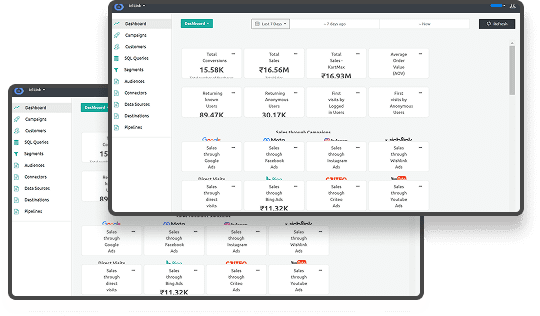





Ever opened two dashboards, checked the same metric, and still walked away with two different answers? Or maybe you trusted a report only to realize later the data was outdated or plain wrong. When data starts contradicting itself, decisions slow down, teams argue, and confidence quietly drops.
Here’s the uncomfortable part. Poor data quality is estimated to cost businesses about $12.9 million annually. And it’s not always because data is missing. Sometimes it’s there, just inaccurate in one place and inconsistent in another. So the real question becomes: is your data wrong, or is it just not aligned?
That’s exactly what this blog tells you. We explain the difference between data accuracy and consistency, why both matter, and how you can improve data quality without complicating processes. If clean, reliable data feels harder than it should, you’re in the right place.
Quick Look:
- Data accuracy ensures correctness, while data consistency ensures uniform values across systems, reports, and customer touchpoints.
- Inconsistencies often stem from incomplete entries, outdated sources, poor integrations, and manual processes across teams.
- Measuring data quality requires profiling, validation, error tracking, consistency checks, and ongoing monitoring against defined benchmarks.
- Achieving consistency depends on strong validation rules, clear entry standards, integrated systems, and shared ownership.
- Long-term data accuracy depends on governance, automation, audits, and reducing manual data entry.
Data Accuracy and Consistency: What’s the Difference?
Data accuracy and data consistency often get used together, but they solve different problems inside your data ecosystem. You need both to trust your insights, campaigns, and customer experiences. When one breaks, decision-making becomes unreliable, even if the other looks fine.
Here’s a simple way to think about it before we go deeper:
| Aspect | Data Accuracy | Data Consistency |
| Core focus | Correctness of data | Uniformity across systems |
| Main question | Is this data right? | Is this data the same everywhere? |
| Common risk | Errors, outdated values | Duplicates, mismatched formats |
| Business impact | Wrong insights and decisions | Broken integrations and reporting |
Understanding this difference makes it easier to fix the right problem instead of treating all data issues the same way.
What Is Data Accuracy?
Data accuracy measures whether your data reflects reality without errors or gaps. Accurate data gives you confidence that reports, attribution models, and customer insights are dependable. When accuracy slips, everything built on that data becomes questionable.
- Correctness: Data should be free from errors introduced during collection, tracking, or manual entry.
- Precision: Values should be clear and specific, without room for misinterpretation across teams or tools.
- Reliability: Teams should trust the data enough to use it for decisions, not second-guess it.
- Timeliness: Data must reflect the most current state of customer behavior and system updates.
Example: An accurate event records a completed purchase with the correct product, price, and timestamp. If any detail is wrong, insights built on that event become unreliable.
What Is Data Consistency?
Data consistency ensures your data stays uniform across platforms, channels, and systems. It answers whether the same customer, event, or attribute appears the same everywhere it lives. Without consistency, integration and reporting become fragile.
- Standardized formats: Data should follow the same structure across tools, databases, and platforms.
- Naming conventions: Events, fields, and attributes should use consistent names across systems.
- Data types: Text, numeric values, and dates should follow the same data type rules.
- Synchronized updates: Changes should reflect across systems without delays or mismatches.
Example: A customer action should trigger the same event name across analytics, advertising, and data platforms. When consistency breaks, integrations fail and records fragment.
Once you see how accuracy and consistency work together, the impact of poor data quality becomes much easier to recognize.
How Does Poor Data Quality Impact Business?
When data accuracy and consistency break down, the effects ripple across marketing, customer experience, and compliance. These issues rarely stay contained within analytics teams.
- Disconnected customer experiences: Inconsistent profiles create fragmented journeys, making it hard to deliver relevant and timely interactions.
- Wasted marketing spend: Inaccurate or incomplete data leads to targeting the wrong audiences with the wrong messages.
- Unreliable personalization: Poor data prevents teams from tailoring experiences that reflect real customer behavior and preferences.
- Compliance and trust risks: Inconsistent consent data or tracking gaps increase the risk of privacy missteps.
- Missed revenue opportunities: Without a unified customer view, teams overlook signals for upsells, cross-sells, or re-engagement.
These challenges compound quickly, especially for organizations running campaigns across multiple channels and platforms. Fixing surface-level issues without addressing data quality rarely delivers lasting results.
This is why accuracy and consistency are not technical nice-to-haves. They directly shape business performance.
Also Read: What is Data Tagging?
Why Are Data Accuracy And Consistency So Important?
Accurate and consistent data forms the backbone of reliable marketing, analytics, and customer engagement. Without it, even the best tools produce questionable outcomes.
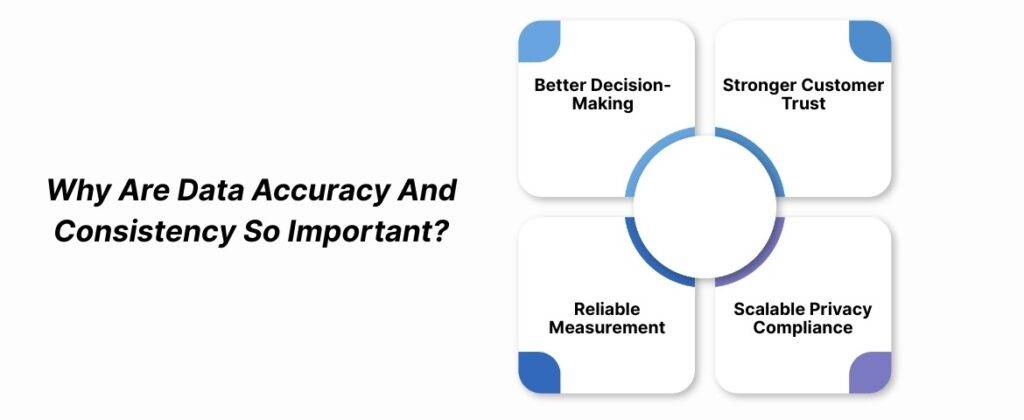
These qualities support several critical business priorities:
Better Decision-Making
- Reliable data gives you confidence to act without hesitation. Teams spend less time validating reports and more time improving performance.
- Decisions grounded in trustworthy data reduce risk and improve alignment across departments.
Stronger Customer Trust
- Consistent experiences show customers you understand and respect their preferences. Accurate data prevents awkward or repetitive interactions.
- Trust grows when customers feel recognized across every touchpoint.
Reliable Measurement and Attribution
- Accurate tracking ensures conversions reflect real user actions. Consistent data keeps attribution aligned across platforms.
- Together, they help you understand what truly drives growth.
Scalable Privacy Compliance
- Clean data supports clear consent records and responsible data use. Consistency ensures preferences apply everywhere they should.
- That foundation becomes essential in a cookieless, privacy-focused environment.
Once the value is clear, the focus shifts to where things start going wrong. Data inconsistency often builds quietly, shaped by everyday systems and processes.
Common Causes of Data Inconsistency
Data inconsistency rarely starts with one obvious mistake. It usually develops over time as systems, teams, and processes drift out of alignment. Understanding where inconsistency begins helps you fix the root cause instead of chasing symptoms.
Below are some common reasons data loses uniformity across tools and platforms:
- Human Errors During Input: Typos, incorrect formats, or skipped fields introduce variations that systems treat as separate records. These issues grow quickly when manual processes scale.
- Outdated or Incorrect Sources: Pulling data from stale sources leads to conflicting values across platforms. This becomes harder to detect when multiple systems update at different times.
- Incomplete Data Entry: Missing fields often occur due to form errors, tracking gaps, or system limitations. Even small gaps can create mismatches when data flows across systems.
- Poor System Integration: Disconnected tools create silos where updates fail to sync. Over time, this results in duplicates, broken attribution, and incomplete customer profiles.
- Inconsistent Update Processes: When updates apply to one system but not others, records drift apart. Historical accuracy becomes difficult to maintain across channels.
Data consistency depends on knowing where data originates, how it moves, and where it lands. Once you understand that flow, preventing mismatches becomes far more manageable.
With consistency covered, accuracy brings its own set of challenges worth addressing separately.
Key Factors That Affect Data Accuracy
While consistency focuses on alignment, accuracy depends on correctness at the point of capture and beyond. Even with well-set-up systems, accuracy can slip due to everyday operational factors. These issues often build gradually, which makes them harder to detect early.
- Data source reliability: Accuracy depends heavily on where the data comes from. Using unverified or unreliable sources increases the risk of flawed insights and incorrect decisions.
- Sampling errors: When data represents only a portion of a larger group, poor sampling methods can skew results. This leads to conclusions that do not reflect actual customer behavior.
- Measurement errors: Faulty tools, misconfigured trackers, or poorly defined events can distort collected data. Even small measurement issues can impact downstream reporting.
- Bias and subjectivity: Human bias can influence how data is collected, labeled, or interpreted. This is especially common in manual categorization or qualitative inputs.
- External interference: Unauthorized access, accidental changes, or malicious activity can alter data unexpectedly. These disruptions often go unnoticed until accuracy is compromised.
Accuracy problems often feel subtle at first. Measuring data quality helps bring these issues into focus before they affect performance.
How Do You Measure Data Quality?
Measuring data quality means checking both data accuracy and consistency at the same time. You want to confirm that your data is correct and that it stays aligned across platforms. A structured approach helps teams stay proactive instead of reactive.
Start With Clear Standards
- Define what accurate and consistent data looks like for your business.
- Use this as a shared reference across teams and tools.
Review And Validate Data Regularly
- Profile datasets to spot anomalies, missing fields, or unusual patterns.
- Validate key data points against trusted systems or known sources.
Check Alignment Across Systems
- Run consistency checks to identify format or naming mismatches.
- Detect duplicates that may distort reporting and attribution.
Monitor Change Over Time
- Compare current data against historical patterns.
- Watch for sudden shifts that signal tracking or integration issues.
Here’s a simple way to look at how accuracy and consistency get evaluated together:
| Focus Area | Accuracy Check | Consistency Check |
| Validation | Correct values | Same values everywhere |
| Monitoring | Trend changes | Duplicate detection |
| Review | Sampling checks | Cross-platform alignment |
Once you know how to measure data quality, the next step is making sure data stays aligned as it moves across tools and teams.
Also Read: Understanding the Process, Tools, and Types of Data Ingestion
How Can Organizations Achieve Data Consistency?
Data consistency improves when organizations control how data enters, moves through, and exits their systems. Without clear guardrails, even accurate data can lose alignment over time.
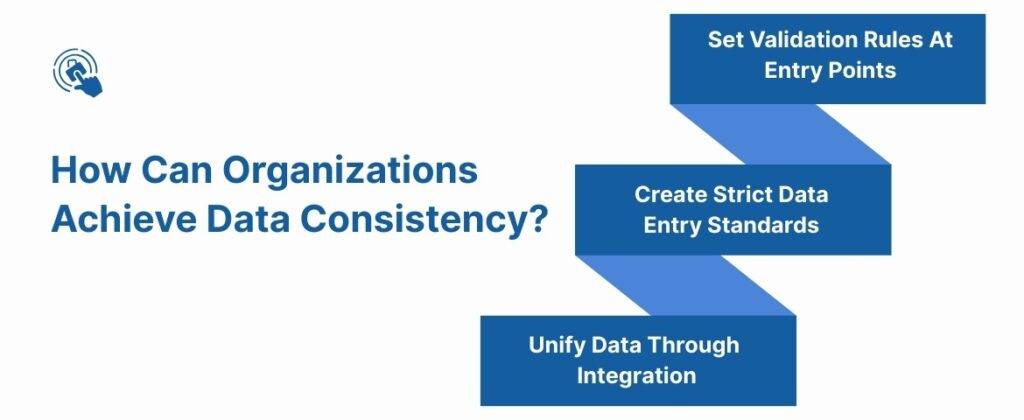
Here are practical ways to keep data uniform across platforms:
Set Validation Rules At Entry Points
Validation checks ensure data meets defined formats and requirements before it moves forward. These rules prevent incomplete or mismatched records from spreading. Early validation protects downstream tools from cleanup work.
Create Strict Data Entry Standards
Clear rules around naming, formats, and required fields reduce guesswork. Training ensures everyone follows the same approach. Standards work best when reviewed regularly and updated as tools change.
Unify Data Through Integration
Integrated systems share updates instead of storing conflicting versions. A unified view reduces duplication and mismatched records. Integration supports consistency across analytics, marketing, and storage platforms.
Being disciplined at entry and integration points limits how much correction is needed later. With consistency in place, accuracy becomes easier to sustain.
Struggling to keep data consistent across tools while staying privacy-compliant? Ingest Labshelps you standardize tracking, unify events, and reduce data gaps without relying on third-party cookies.
How Can You Maintain Long-Term Data Accuracy?
Accuracy does not hold on its own. It requires continuous attention as systems, sources, and customer behavior evolve. Instead of one-time fixes, long-term accuracy depends on repeatable habits like:
- Adopt a data quality framework: A framework defines how data should be collected, processed, and reviewed. It creates shared expectations across teams.
- Run regular audits: Audits uncover errors before they impact decisions. They also reveal patterns that signal deeper issues.
- Automate validation checks: Automated rules catch incorrect formats or missing fields instantly. This reduces reliance on manual reviews.
- Train teams consistently: Education reinforces why accuracy matters and how to protect it. Well-trained teams make fewer mistakes.
- Verify data sources: Reliable sources reduce the risk of inaccurate inputs. Regular reviews keep external data trustworthy.
- Limit manual entry where possible: Automation reduces human error when implemented correctly. Fewer touchpoints mean fewer chances for mistakes.
- Act quickly on discrepancies: Prompt corrections prevent errors from spreading. Delays often create larger downstream problems.
Accuracy improves when these practices run continuously, not occasionally. That foundation supports both trust and performance.
Best Practices To Ensure High Data Quality
Strong data quality does not happen by chance. It comes from clear standards, consistent ownership, and repeatable processes that scale as your data grows.
Below are the core best practices to protect data accuracy and consistency over time:
Establish Clear Data Quality Standards
Data quality standards define what “good data” actually means for your organization. Without shared benchmarks, teams often collect and use data differently.
Key steps to set effective standards include:
- Define expectations for accuracy, consistency, timeliness, and validity
- Review existing processes to identify gaps or inconsistencies
- Set monitoring routines to track quality on an ongoing basis
- Train teams so everyone understands and follows the same rules
Strengthen Data Governance and Management
Data governance assigns ownership and accountability, while data management focuses on execution. Together, they keep data reliable, organized, and compliant.
Effective governance and management usually involve:
- Assigning clear owners for critical data assets
- Defining rules for how data is collected, stored, accessed, and shared
- Managing storage, integration, and maintenance consistently
- Ensuring data practices align with business and compliance needs
Validate and Clean Data Routinely
Validation and cleaning protect data before issues affect reporting or decisions. These practices work best when applied consistently, not reactively.
Routine validation and cleaning typically include:
- Verifying data types, formats, and required fields
- Checking values against predefined rules
- Removing duplicates that distort analysis
- Filling gaps and resolving inconsistencies
Create a Unified Data Quality Strategy
A unified strategy brings standards, governance, and validation together into one approach. This helps teams work toward the same goals instead of fixing issues in isolation.
To build a strong data quality strategy:
- Align stakeholders around shared data goals and responsibilities
- Set measurable quality benchmarks and review cycles
- Identify core data systems and critical data elements
- Conduct regular audits to track accuracy and consistency
When data quality becomes a shared responsibility, improvements last longer and scale more easily.
How Ingest Labs Supports Data Accuracy and Consistency
When your data feels fragmented or unreliable, it usually starts with how it is collected, identified, and shared. Ingest Labs helps you fix these gaps by simplifying tracking, identity, and compliance in one connected system. You spend less time validating reports and more time acting on insights you actually trust.
Here’s how Ingest Labs supports data accuracy and consistency across your marketing stack:
- Tag Management and Server-Side Tracking:
Ingest IQ standardizes how events are collected across platforms. By moving tracking server-side and enforcing structured tagging, it reduces data loss, duplication, and mismatched event definitions, keeping your datasets aligned across tools. - First-Party Identity and Attribution:
Ingest ID creates persistent, first-party identifiers that help maintain consistent user profiles across sessions, devices, and channels. This minimizes identity fragmentation and ensures attribution data remains accurate even as cookies decline. - Unified Customer Data and Intelligence:
Event IQ brings data from multiple sources into a single, structured view. This eliminates reporting conflicts between teams and ensures that insights are based on the same, consistent set of customer data. - Privacy-First Data Handling as a Differentiator:
Ingest Labs applies consent, governance, and compliance rules directly within data flows. This ensures privacy requirements don’t distort or fragment datasets, allowing organizations to maintain accuracy without sacrificing compliance.
Together, these capabilities help teams build trust in their data and use it with confidence as they scale.
Concluding Thoughts
Accurate and consistent data forms the foundation of reliable marketing decisions, meaningful customer experiences, and long-term trust. By understanding where data issues begin, measuring quality, and applying consistent practices, you can prevent small errors from becoming systemic problems.
Improving data accuracy and consistency starts at collection and continues through integration, validation, and governance. When these steps work together, your data becomes easier to trust, activate, and scale across channels.
If you’re looking to strengthen data quality without adding complexity, Ingest Labs can help. The privacy-first, server-side solution supports accurate collection, consistent data flows, and reliable attribution. Contact us to learn how Ingest Labs can support confident, data-driven marketing decisions.
FAQs
Q1. What means that the data is accurate and consistent?
Data is accurate when it correctly reflects real-world information, and consistent when the same data matches across all systems and sources. Together, they ensure you can trust insights without second-guessing numbers.
Q2. What are the 3 C's of data quality?
The three C’s are correctness, consistency, and completeness. These ensure your data is reliable, aligned across platforms, and usable for decision-making.
Q3. What are the most challenging data quality issues you face frequently?
Common challenges include duplicate records, mismatched data across tools, missing values, and tracking gaps caused by browser restrictions or privacy changes.
Q4. How do you make sure your data is correct?
You ensure data correctness through validation rules, regular audits, automation, and reducing manual entry wherever possible. Consistent documentation and trained teams also play a key role.
Q4. How do you deal with inconsistent data across multiple systems?
Start by integrating data into a single, governed source of truth and applying standardized rules across platforms. Tools like Ingest Labs help unify first-party data through server-side tracking, making cross-system consistency easier to maintain without added complexity.