




As digital marketing evolves, businesses are facing increasing restrictions on how customer data is collected and used. The deprecation of third-party cookies, along with strict privacy laws like GDPR in Europe and CCPA in the US, has changed the data landscape. You can no longer rely on traditional tracking to understand customer behavior.
In this environment, zero-party data emerges as a reliable and ethical solution. Unlike third-party or even first-party data, zero-party data is explicitly shared by customers, giving businesses direct insight into preferences, interests, and intentions. In fact, 91% of consumers are more likely to shop with brands offering relevant, preference-based offers and recommendations. This transparency builds trust and enables more accurate, personalized marketing.
In this blog, we’ll explore what zero-party data is, why it matters for your marketing team, and how you can use it effectively across digital channels.
Key Highlights:
- Zero-party data is information your customers willingly share, giving you direct insights into their preferences, intentions, and needs without relying on tracking or inference.
- It enables personalized experiences, stronger customer trust, compliance with privacy rules, and consistent messaging across all channels.
- Methods such as preference centers, quizzes, feedback forms, chatbots, and loyalty programs help your business collect meaningful data while staying transparent.
- Clear strategies, centralized systems, activation across channels, and privacy-conscious processes ensure zero-party data drives engagement, conversions, and business results effectively.
What Is Zero-Party Data and Why It Matters?
Zero-party data is information that your customers intentionally and directly share with your business. It reflects what they want you to know, rather than what you infer from their behavior. Unlike data inferred from behavior or collected through background tracking, this data is provided with clear intent and awareness.
Here’s why it matters:
- Explicitly shared by the customer: This data comes from direct inputs like preferences, intentions, or stated needs. Customers choose to provide it, removing guesswork from your data collection.
- Collected with clear consent: Customers share zero-party data with full awareness of how you will use it. This aligns with consent requirements under CCPA and GDPR.
- Not inferred or tracked passively: Unlike behavioral or third-party data, zero-party data does not rely on cookies, device fingerprinting, or background tracking methods.
- Built for a cookieless environment: As browser restrictions increase, zero-party data gives you a dependable way to understand customers without relying on third-party identifiers.
- Owned and controlled by your business: Since customers share this data directly with you, it stays within your ecosystem and can be managed using your internal data policies.
In the next section, let's understand how zero-party data translates into tangible business and marketing advantages.
Also Read: How to Build Accurate First-Party Tracking in 2026
Benefits of Zero-Party Data for Businesses
Zero-party data brings clear advantages for your marketing strategies, customer engagement, and overall business performance.
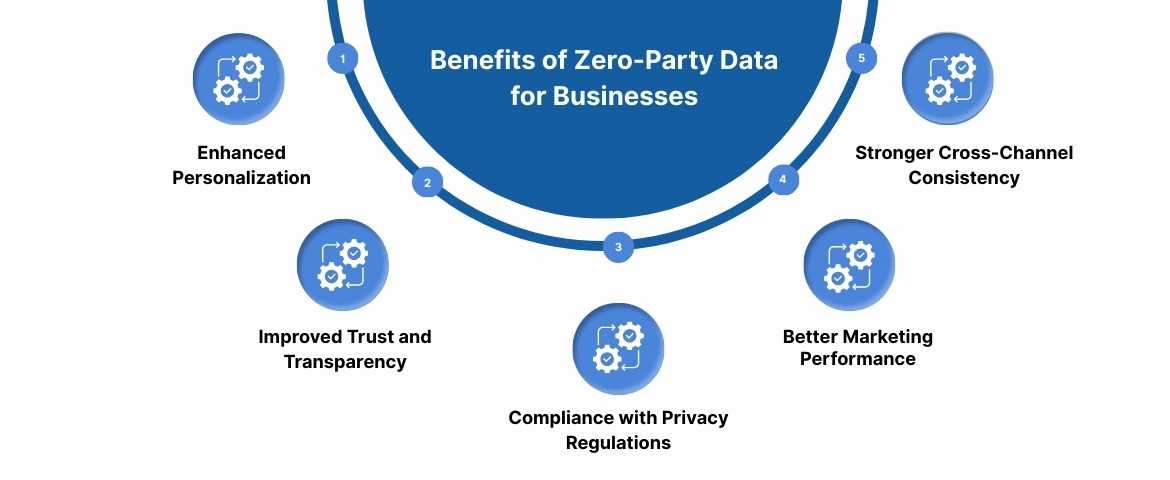
Key benefits include:
1. Enhanced Personalization
Zero-party data allows you to personalize experiences using information customers willingly provide, rather than inferred behavior. This leads to messaging, offers, and product recommendations that feel relevant instead of intrusive. When customers see content that reflects their stated preferences, engagement naturally improves.
Example: An e-commerce brand asks shoppers to select product categories they are interested in during account setup. Email campaigns are then tailored around those selections, resulting in higher open rates and fewer unsubscribes compared to generic promotions.
2. Improved Trust and Transparency
When customers knowingly share their preferences, they understand how and why their data is being used. This transparency helps your brand build credibility and encourages ongoing engagement. Trust becomes a competitive advantage, especially in markets where privacy concerns influence buying decisions.
Example: A SaaS company uses a preference center that clearly explains how user inputs shape product updates and communications. Customers are more willing to share feedback because they see direct outcomes from their participation.
3. Compliance with Privacy Regulations
By using zero-party data, you stay aligned with privacy laws like CCPA and GDPR. Because the data is shared with clear consent, your business reduces exposure to compliance risks tied to passive tracking or third-party data usage.
Example: A US-based retailer replaces third-party cookie tracking with customer-declared preferences collected through on-site surveys. This approach helps the marketing team continue personalization efforts without relying on restricted tracking methods.
4. Better Marketing Performance and Spend Efficiency
Because zero-party data reflects declared intent, it improves targeting accuracy across campaigns. You can focus your marketing spend on audiences more likely to convert, rather than broad segments based on assumptions.
Example: An advertising agency collects campaign goal preferences directly from users through interactive forms. Campaigns built on this data show improved conversion rates and lower cost per acquisition compared to behavior-only targeting.
5. Stronger Cross-Channel Consistency
Zero-party data helps you align messaging across email, ads, and on-site experiences. When customer preferences are centralized, your teams can deliver consistent experiences across all touchpoints.
Example: A technology company syncs preference data collected through forms with its CRM and ad platforms. Customers receive consistent messaging across email and paid campaigns, improving brand clarity and engagement.
Now that the benefits are clear, let’s look at the practical methods to collect zero-party data efficiently.
Methods to Collect Zero-Party Data
Collecting zero-party data requires direct engagement with your customers. The goal is to gather insights they willingly share, while maintaining transparency and trust.
Here are the most effective methods.
- Preference Centers: A preference center allows your customers to specify the types of content, products, or communications they want to receive. This input guides your marketing campaigns and keeps messaging aligned with customer expectations.
- Preference Centers and Surveys: You can create structured channels for your customers to share their preferences, interests, and communication choices. Online surveys, preference forms, or interactive questionnaires allow them to actively communicate what they want.
- Quizzes and Interactive Content: Engaging quizzes, polls, or assessment tools educate and entertain your users while collecting information about their preferences, intentions, and needs. You can then use this data to inform personalized experiences and recommendations.
- Account Registration and Onboarding Forms: During signup or onboarding, you can request optional but valuable information to understand customer preferences. Well-designed forms emphasize transparency and explain how the data will be used.
- Loyalty Programs and Memberships: Loyalty programs encourage your customers to share insights in exchange for rewards. You can collect preferences, purchase intentions, and feedback, which support personalized offers and campaigns.
- Direct Customer Feedback: Collecting zero-party data through customer reviews, feedback forms, or live chat interactions lets you understand satisfaction levels, expectations, and specific needs while reinforcing trust and engagement.
- Chatbots and AI-Powered Assistants: Conversational interfaces can collect zero-party data seamlessly during interactions. Your customers often provide preferences or needs in chat environments, giving you rich insights while improving their service experience.
Once businesses know how to gather zero-party data, the next step is to implement a strategy that integrates this information into marketing, personalization, and analytics efforts effectively.
Also Read: The Complete Attribution Tags Guide Every Marketer Needs
How to Create a Zero-Party Data Strategy Effectively?
A well-designed zero-party data strategy ensures you capture, manage, and utilize customer-provided information to drive measurable results.
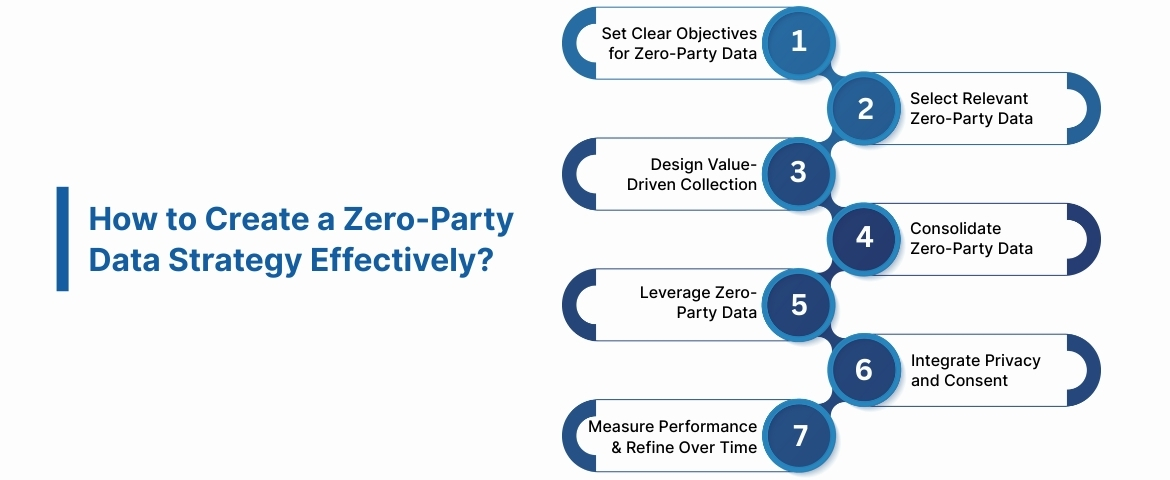
The steps below break the process into clear, manageable actions that help you collect meaningful data and put it to work responsibly.
Step 1: Define Clear Business Objectives for Zero-Party Data
Start your zero-party data strategy with clear business outcomes. Collecting data without a defined purpose leads to fragmented insights and low adoption across your teams.
Before asking customers to share information, align internally on what problems zero-party data should solve. This focus prevents unnecessary friction in the customer experience.
Key objectives to document:
| Business Goal | Why It Matters | How Zero-Party Data Supports It |
| Personalization | Improves engagement and relevance | Uses declared preferences instead of inferred behavior |
| Attribution accuracy | Reduces blind spots in measurement | Connects consented identifiers to conversion events |
| Privacy compliance | Reduces regulatory risk | Ensures data use aligns with explicit consent |
| Retention and loyalty | Increases lifetime value | Adapts experiences to stated expectations |
When objectives are clear, every data point you request serves a defined business need instead of becoming unused information.
Step 2: Identify the Right Zero-Party Data to Collect
Once your goals are defined, decide what information is worth asking for. Zero-party data should focus on intent and preferences rather than static or low-impact attributes.
If you collect too much information early, your users may drop off, and asking for the wrong data can reduce activation.
High-value zero-party data categories:
- Preference data: Communication channels, content interests, frequency choices
- Intent data: Product interest, purchase timing, use-case selection
- Experience expectations: Support needs, onboarding goals, service preferences
- Consent signals: What data can be collected and how it can be used
By narrowing the scope to actionable inputs, you reduce friction for your users and make downstream segmentation and personalization simpler.
Step 3: Design Transparent, Value-Focused Collection Experiences
Customers share zero-party data only when the value exchange is clear to them. Every collection moment should explain why you request the data and how it improves their experience.
Transparency matters, especially if you operate in North America under CCPA and similar regulations, where consent and disclosure face close scrutiny.
Common collection touchpoints:
| Collection Element | What to Do | Business Impact |
| Contextual prompts | Ask for data at relevant moments | Increases completion rates |
| Clear explanations | State how data improves the experience | Builds trust and clarity |
| Optional fields | Let users control what they share | Reduces friction |
| Progressive collection | Gather data over time | Improves data accuracy |
Well-designed collection flows improve both the quality and reliability of the zero-party data you collect.
Step 4: Centralize Zero-Party Data Across Systems
You risk losing the value of zero-party data if it sits in isolated tools. To activate it effectively, use a centralized system that connects declared data with behavioral, transactional, and campaign data.
First-party identifiers and server-side infrastructure play a key role. Centralizing your data keeps profiles consistent across channels and prevents conflicts.
Systems that should connect to zero-party data:
- CRM platforms: For account-level insights and sales alignment.
- Marketing tools: For campaign targeting and personalization.
- Analytics platforms: For performance measurement and optimization.
- Customer data platforms: For unified customer profiles and segmentation.
Platforms like Ingest Labs let you unify zero-party data with other customer signals while keeping compliance and data accuracy in check.
Step 5: Activate Zero-Party Data for Personalization and Engagement
Collecting zero-party data is valuable only if you use it to improve customer experiences. Activation should happen in real time across marketing, e-commerce, and engagement channels.
Zero-party data lets you personalize experiences based on what your customers say they want, not just what algorithms infer from past behavior.
| Activation Use Case | How Zero-Party Data Is Used | Outcome |
| Content personalization | Show resources based on stated interests | Higher engagement |
| Product recommendations | Adapt suggestions to declared needs | Better conversion rates |
| Campaign targeting | Align messaging with user preferences | Lower unsubscribe rates |
| Journey orchestration | Adjust flows based on intent signals | Smoother customer journeys |
Consistent activation reinforces trust because customers see their inputs reflected in the experience.
Step 6: Embed Privacy and Consent Management Into the Strategy
You cannot treat privacy as a separate workflow. Consent management must be embedded into how you collect, store, and activate zero-party data. This protects your business and reinforces customer trust.
Regulations like CCPA require clear consent tracking, purpose limitation, and data access controls. A strong strategy ensures you meet these requirements without slowing your marketing operations.
Key privacy components to include:
- Consent tracking: Record when and how permission was granted.
- Purpose limitation: Use data only for the stated reason.
- Access controls: Restrict data visibility based on role and function.
- Audit readiness: Maintain logs for regulatory reviews or internal audits.
Event IQ helps you manage consent logic and ensures zero-party data is activated only when allowed, reducing compliance risk across your channels.
Step 7: Measure Performance and Refine Over Time
Your zero-party data strategy should evolve based on performance data. Measuring outcomes helps you see whether the data you collect actually improves engagement, conversions, or retention.
Don’t focus only on participation rates; track how zero-party data influences outcomes across the funnel.
| Metric Area | What to Measure | Why It Matters |
| Engagement | Click-through rates, content interaction | Shows relevance of personalization |
| Conversion | Form completions, purchases, demo requests | Connects data to revenue outcomes |
| Retention | Repeat visits, subscription renewals | Indicates long-term value |
| Compliance | Consent coverage, opt-out rates | Validates ethical data use |
Regular analysis helps you refine your data collection methods, remove low-value inputs, and expand successful use cases.
Even with an effective strategy, implementing zero-party data comes with its own set of challenges.
Challenges of Implementing Zero-Party Data
Implementing zero-party data strategies can be complex, and businesses may encounter several challenges:
1. Ensuring Data Quality and Accuracy
Zero-party data comes directly from users, but that doesn’t automatically guarantee accuracy or consistency. Customers may give incomplete information, outdated preferences, or vague responses, weakening your personalization and analytics.
How you can fix it:
- Design clear, simple questions that guide users toward specific and useful responses.
- Use progressive data collection instead of requesting too much information at once.
- Validate and refresh zero-party data regularly using behavioral signals and updated interactions.
This approach keeps your data reliable while respecting user intent and attention.
2. Low Customer Participation Rates
Not every customer wants to share preferences or personal insights upfront. If the value exchange is unclear, users may skip surveys, preference centers, or forms, limiting the data you collect.
How you can fix it:
- Clearly explain how sharing information improves the customer’s experience or outcomes.
- Offer meaningful incentives such as personalized recommendations, exclusive content, or tailored offers.
- Integrate zero-party data collection naturally into journeys like onboarding, checkout, or account updates.
When customers see direct benefits, participation improves without pressure.
3. Integration Across Disconnected Systems
Zero-party data often sits in silos across forms, CRMs, marketing platforms, and analytics tools. Without proper integration, your team may struggle to act on insights in real time or maintain a unified customer view.
How you can fix it:
- Centralize zero-party data using a unified data layer or customer data platform.
- Connect zero-party inputs with CRM, analytics, and activation tools to ensure consistency.
- Use server-side data flows to reduce dependency on browser-based tracking limitations.
A connected ecosystem allows teams to act on insights instead of storing unused data.
4. Managing Privacy and Consent at Scale
Even though zero-party data is willingly shared, your business must manage consent carefully. Mishandling permissions or failing to document consent can create regulatory risk and erode trust.
How you can fix it:
- Implement clear consent frameworks aligned with CCPA, GDPR, and regional privacy laws.
- Store consent signals alongside customer data to ensure proper usage across platforms.
- Regularly audit data collection and activation processes to confirm compliance standards are met.
Strong consent management supports ethical data use while protecting your organization.
5. Operational and Resource Constraints
Collecting, managing, and activating zero-party data requires coordination across your marketing, data, and technology teams. Without proper tools or processes, this effort can strain internal resources.
How you can fix it:
- Use platforms that simplify data collection, orchestration, and activation without heavy engineering effort.
- Automate workflows wherever possible to reduce manual data handling.
- Start with a focused use case, then expand once the foundation is stable.
Overcoming these challenges is possible with the right platform and tools that support privacy-first data strategies.
How Ingest Labs Can Help Implement a Zero‑Party Data Strategy?
Ingest Labs offers a suite of tools designed for marketers to manage first-party and zero-party data effectively. The platform ensures compliance, simplifies technical processes, and enables actionable insights.
Here’s how we can support you:
- Data Integration with Ingest ID: Ingest ID allows businesses to collect, unify, and analyze zero-party data across multiple sources, including CRMs, e-commerce platforms, and marketing tools. This ensures a single source of truth for customer profiles.
- Privacy Compliance with Event IQ: Event IQ manages consent and ensures GDPR, CCPA, and other privacy regulations are respected. Businesses can adopt ethical data practices without sacrificing personalization or insights.
- Enhanced Personalization with Ingest IQ: Ingest IQ enables real-time personalization based on zero-party data. Marketers can deliver tailored content, product recommendations, and offers while tracking customer interactions across channels.
- Streamlined Marketing Campaigns: By combining zero-party data with advanced analytics, businesses can optimize campaigns, reduce ad spend waste, and improve ROI. Ingest Labs provides actionable insights for decision-making.
- Simplified Multi-Channel Management: Ingest Labs supports server-side tracking and cross-channel orchestration, enabling businesses to maintain consistent messaging and measure campaign effectiveness across platforms.
Utilizing Ingest Labs empowers businesses to collect and use zero-party data effectively while staying privacy-compliant and performance-driven.
Conclusion
Zero-party data represents a shift toward more ethical, transparent, and effective marketing. By capturing data directly from customers, businesses gain highly reliable insights that enable personalization, improve engagement, and ensure privacy compliance.
Implementing a zero-party data strategy requires careful planning, transparent collection methods, and integration across marketing and analytics platforms. Platforms like Ingest Labs simplify the process, providing tools to collect, unify, and analyze zero-party data while maintaining regulatory compliance.
Contact us today to explore how Ingest Labs can help your business harness zero-party data for better personalization, trust-building, and marketing performance.
FAQs
1. How Does Zero-Party Data Differ from First-, Second-, and Third-Party Data?
Zero-party data is voluntarily shared directly by customers, reflecting their preferences, intentions, and interests. Unlike first-party data (collected via interactions), second-party data (someone else’s first-party data), or third-party data (aggregated externally), zero-party data is explicit, intentional, and highly accurate for personalisation.
2. How Can Zero-Party Data Lead to Higher Conversion Rates and Revenue?
By capturing customers’ preferences and intentions directly, zero-party data enables precise personalisation of offers, content, and experiences. This relevance increases engagement, reduces friction in the buyer journey, strengthens loyalty, and ultimately boosts conversion rates and revenue.
3. What Are Common Examples of Zero-Party Data Collected from Customers?
Examples include product preferences, style or feature choices, purchase intentions, survey responses, subscription interests, and self-declared demographic information. Essentially, any data customers willingly provide to customize their experience or guide brands in tailoring offers is considered zero-party data.
4. Why is Zero-Party Data Valuable in a Cookieless and Privacy-Focused World?
With declining reliance on cookies and stricter privacy regulations, zero-party data offers a privacy-compliant way to understand customers. It provides actionable insights directly from users, reduces dependency on tracking technologies, and ensures data collection is transparent and consent-based.
5. In What Ways Does Zero-Party Data Build Trust and Transparency with Customers?
When customers voluntarily share their data, they feel in control of their experience. Transparent use of this information for personalisation, rather than hidden tracking, fosters trust, strengthens brand credibility, and demonstrates respect for privacy and customer choice.